OU will strengthen its global leadership in weather science and hazard preparedness by advancing research across the full prediction-to-response pipeline, supporting public safety, infrastructure protection, and informed decision-making.
Weather and Earth-System Prediction: Advanced atmospheric and Earth-system modeling, data assimilation, and AI-enabled forecasting to improve accuracy and lead time
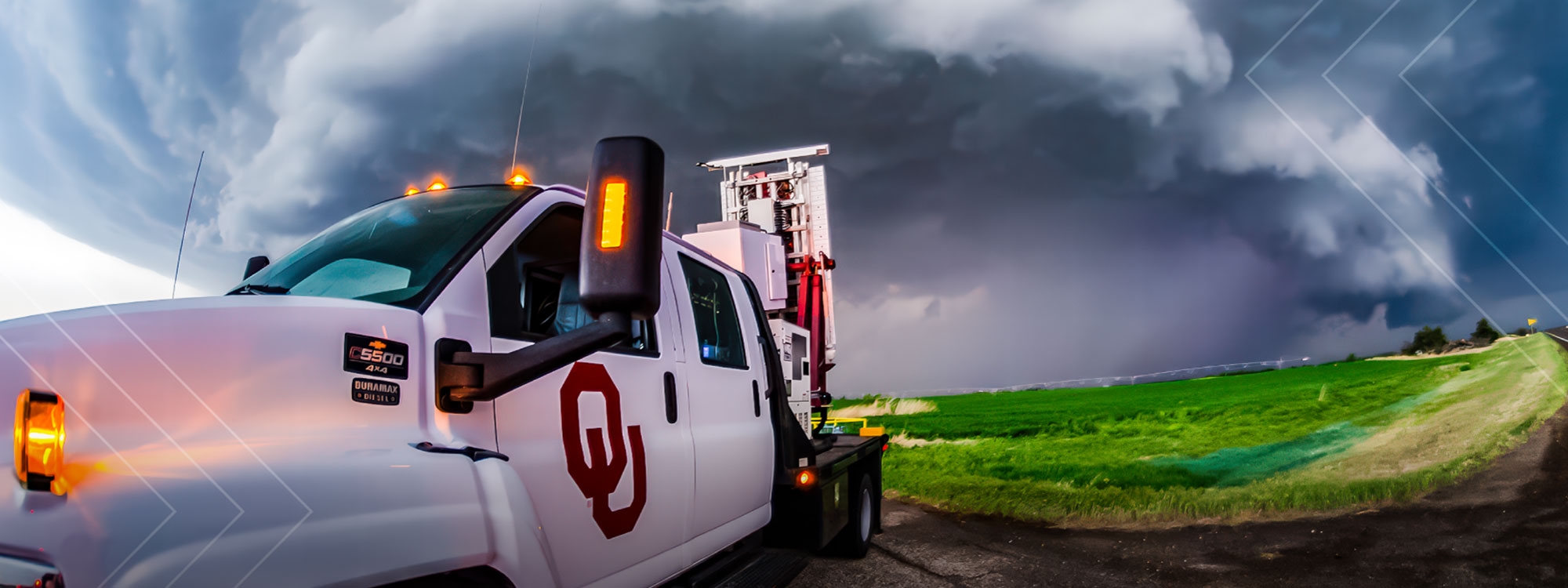
Extreme Weather Observations: Innovative sensing platforms, field campaigns, and observational technologies that improve detection, monitoring, and warning capabilities
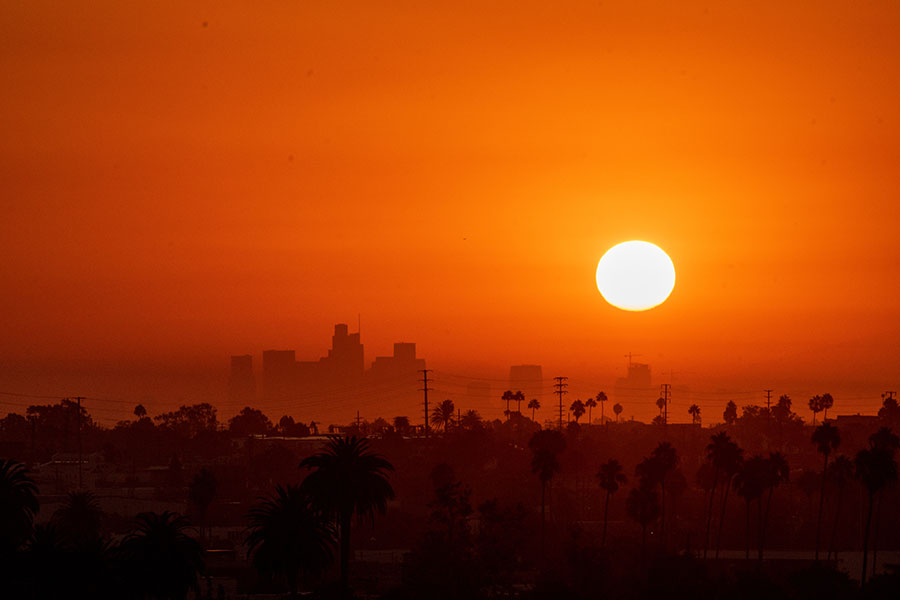
Fire Weather: Forecasting, risk assessment, and mitigation strategies to support land management, emergency response, and community protection
Infrastructure Resilience: Assessment and management of critical infrastructure performance under severe weather and hazard conditions
Risk, Decision, and Community Resilience: Translating forecasts and hazard information into actionable guidance for emergency managers, industry, and communities
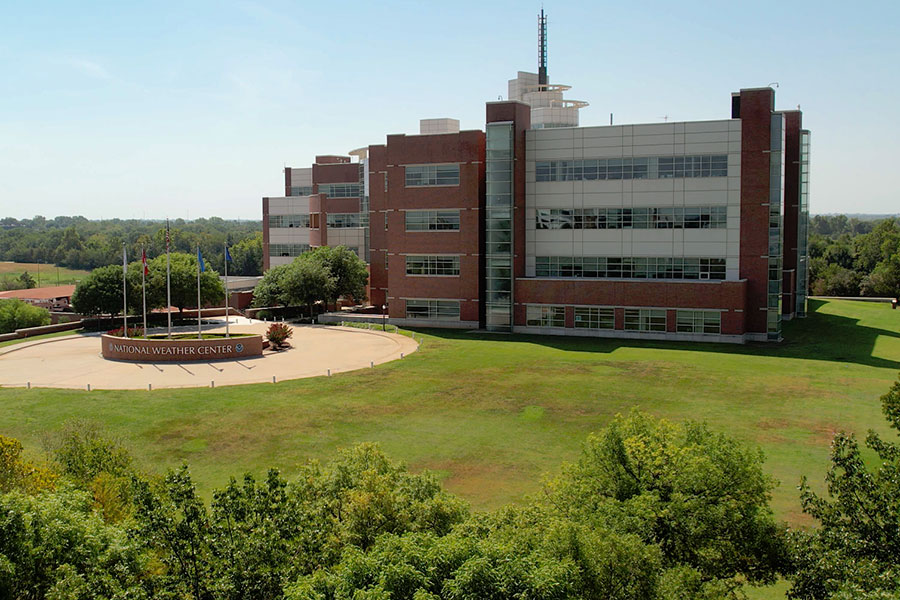
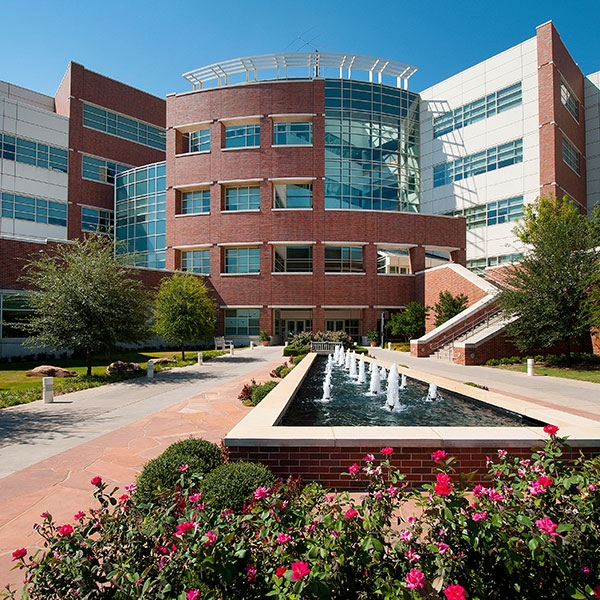
The National Weather Center provides a one-of-kind collaborative work environment for federal, state, and academic units. These entities work together to improve our understanding of Earth’s atmosphere, provide accurate and timely forecasts for severe weather, and to educate and train future meteorologists.
Researchers from the Hydrometeorology and Remote Sensing (HyDROS) Laboratory at the University of Oklahoma published a review synthesizing 50 years of geostationary satellite meteorology, from the launch of the first Geostationary Operational Environmental Satellite (GOES-1) in 1975 to the present-day GOES-19.
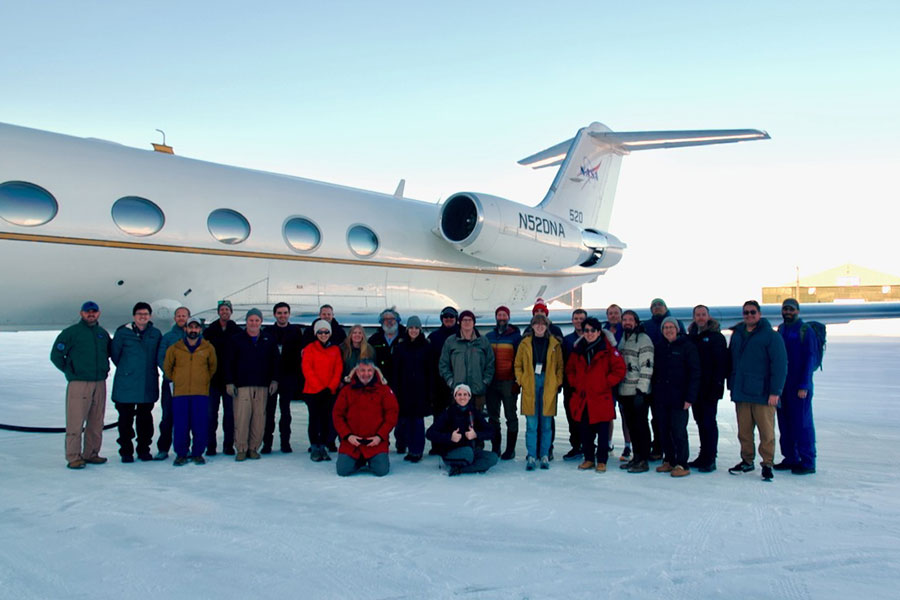
With funding from NASA, Steven Cavallo is leading a global study of how small disturbances in the polar tropopause, a region roughly 30,000 feet above Earth’s surface, eventually grow into massive winter storms impacting millions.
Scott Salesky, a researcher with the University of Oklahoma, has been awarded funding from the U.S. Department of Defense (DoD) to study how clouds above the sea surface are created and changed by factors such as airborne particles and atmospheric instability.
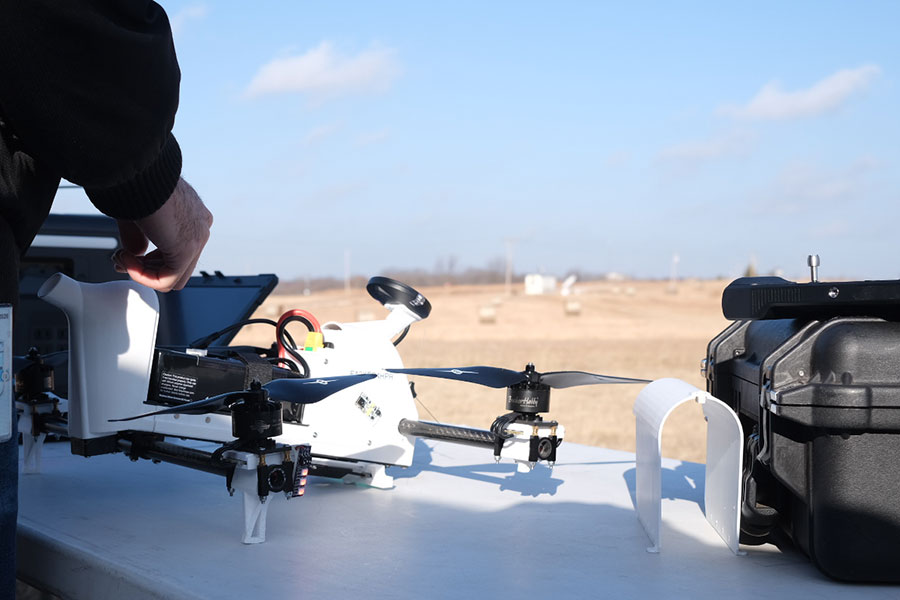
The 3D Mesonet project aims to make advancements in gathering spatiotemporal atmospheric data in the United States, allowing scientists to better predict short-term, high-impact weather, like thunderstorms, severe winds and winter precipitation.
Greg McFarquhar, director of the Cooperative Institute for Severe and High-Impact Weather Research (CIWRO) and Operations and a researcher at the University of Oklahoma, has been awarded funding from the U.S. Department of Defense (DoD) to compile and analyze cloud property measurements from around the world.
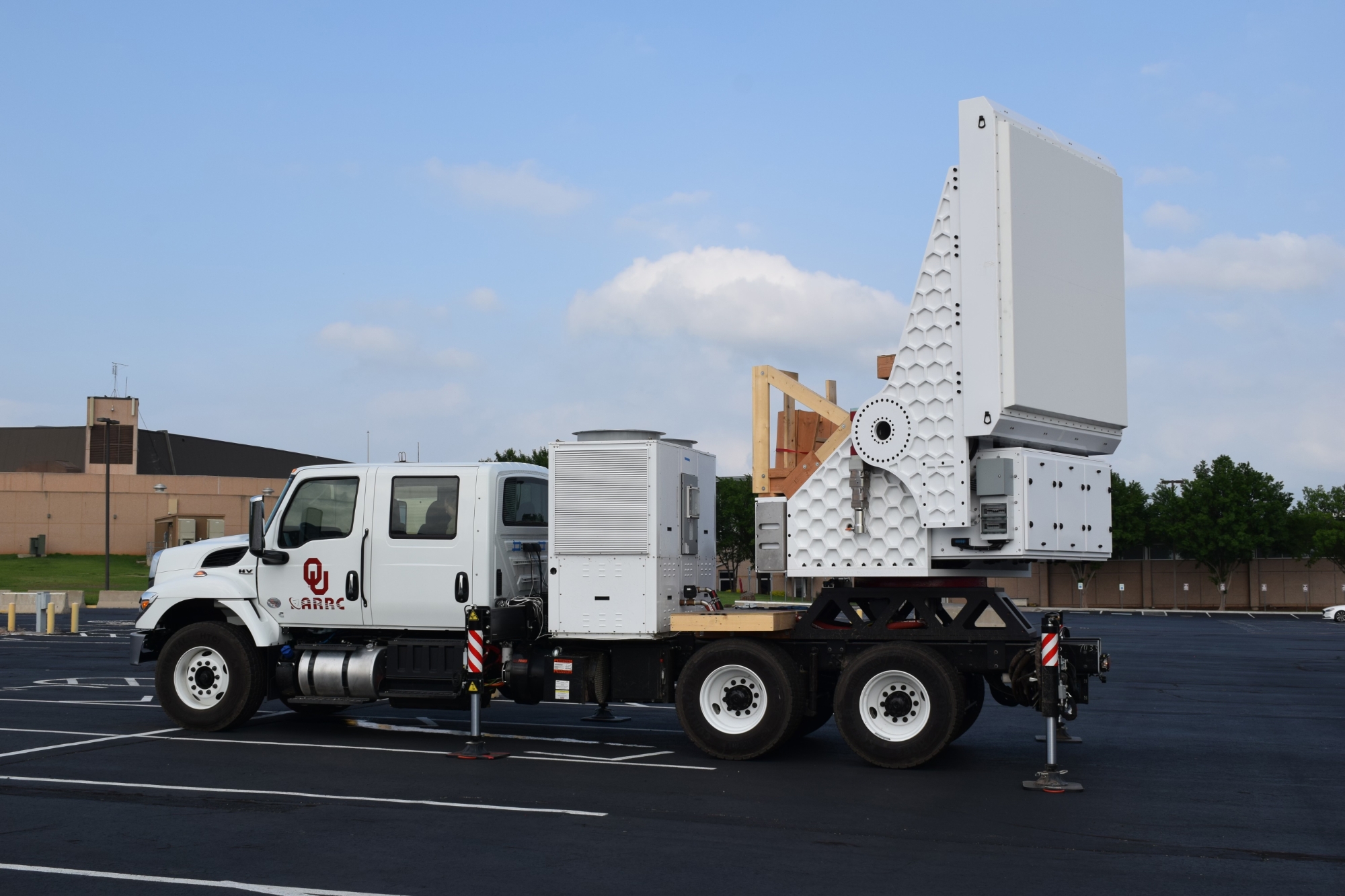
A $19.9 million award from the U.S. National Science Foundation will fund the development of two groundbreaking KaRVIR systems (Dual-Doppler 3D Mobile Ka-band Rapid-Scanning Volume Imaging Radars for Earth System Science), state-of-the-art radars that will provide unique capabilities to close critical observational gaps in the atmospheric science community.
Nationally, individuals facing wildfire threats have no unified system to rely on. A team of researchers, led by Joe Ripberger from the University of Oklahoma, is looking to fill that gap.
An interdisciplinary team of researchers from across the University of Oklahoma has received a $1.2 million grant from the National Science Foundation to transform how communities anticipate and mitigate risks from treefall during extreme weather events.
The American Meteorological Society (AMS) has announced its 2026 Awards and Honors recipients, recognizing outstanding contributions to the weather, water and climate community. Several individuals connected with the National Weather Center (NWC) at the University of Oklahoma were named as award winners.
New research from the University of Oklahoma reveals that “compound events” — periods when heat wave conditions coincide with high air pollution levels — are becoming more frequent and intense in urban areas across the United States.