NEWS


Norman, Okla. – Researchers from the Hydrometeorology and Remote Sensing (HyDROS) Laboratory at the University of Oklahoma published a review synthesizing 50 years of geostationary satellite meteorology, from the launch of the first Geostationary Operational Environmental Satellite (GOES-1) in 1975 to the present-day GOES-19. The study provides a comprehensive overview of how continuous observations from geostationary satellites have transformed precipitation estimation and advanced hydrologic prediction worldwide.
The paper, published in the Institute of Electrical and Electronics Engineers' Geoscience and Remote Sensing Magazine, highlights how geostationary infrared-based precipitation estimation has evolved over the past 50 years. These advances — from early empirical relationships between cloud-top temperature and rainfall to modern artificial intelligence-driven modeling — now support global flood forecasting, drought monitoring, and water-resource management, particularly in regions with limited ground observations.
“Since GOES-1, geostationary satellites have provided an uninterrupted view of cloud systems evolving over the past half-century,” said Yang Hong, director of the HyDROS Laboratory. “That continuity made it possible to move from qualitative cloud observation to quantitative, near-real-time global precipitation estimation, fundamentally changing how we monitor the global water cycle.”
The work also highlights OU’s long-standing leadership in satellite precipitation science, advanced hydrologic modeling and global hazard prediction. Since the early 2000s, the HyDROS Laboratory has contributed to global precipitation retrieval and hydrologic applications through the Tropical Rainfall Measuring Mission (TRMM) and, over the past 20 years, as part of the NASA Global Precipitation Measurement (GPM) science team, advancing algorithms and applications that support global flood monitoring and water-cycle research.
“This work helps clarify how we arrived at the current state of the field, at a time when a new generation of algorithms is rapidly emerging that employs as many channels as possible from geostationary satellites,” said Dr. George Huffman, NASA Global Precipitation Measurement project scientist, a co-author of the paper.
The work emphasizes that the geostationary satellite era marks a fundamental shift, from intermittent observation to continuous, dynamic monitoring of the water cycle. These satellites are a cornerstone of modern hydrologic science and early-warning systems.
“This work shows that geostationary infrared observations still hold substantial and often underappreciated potential,” said first author Siyu Zhu, a former postdoctoral research associate in the HyDROS Laboratory who is now a research scientist at Columbia University’s Lamont-Doherty Earth Observatory. “As we mark 50 years since GOES-1, this review is both a reflection of the legacy and a reaffirmation of the critical role geostationary satellites will continue to play in global precipitation science.” Zhu also sincerely acknowledges all the researchers whose pioneering and sustained efforts have advanced precipitation estimation over the past half-century.
According to the authors, future progress will depend on sustained investment in satellite missions, long-term climate-quality data records and the integration of physics-based understanding with artificial intelligence.
“Geostationary satellites have transformed how we observe global precipitation dynamics,” Hong said. “The next frontier is to translate those observations into reliable, decision-ready hydrologic intelligence that better serves society, especially in data-sparse regions of the Global South.”
About the research
“A review of the Past Half Century of Geostationary Satellite Thermal Observations for Global Precipitation Estimation” is published in IEEE Geoscience and Remote Sensing Magazine at 10.1109/MGRS.2026.3665828.
About the University of Oklahoma
Founded in 1890, the University of Oklahoma is a public research university located in Norman, Oklahoma. As the state’s flagship university, OU serves the educational, cultural, economic and health care needs of the state, region and nation. For more information about the university, visit www.ou.edu.
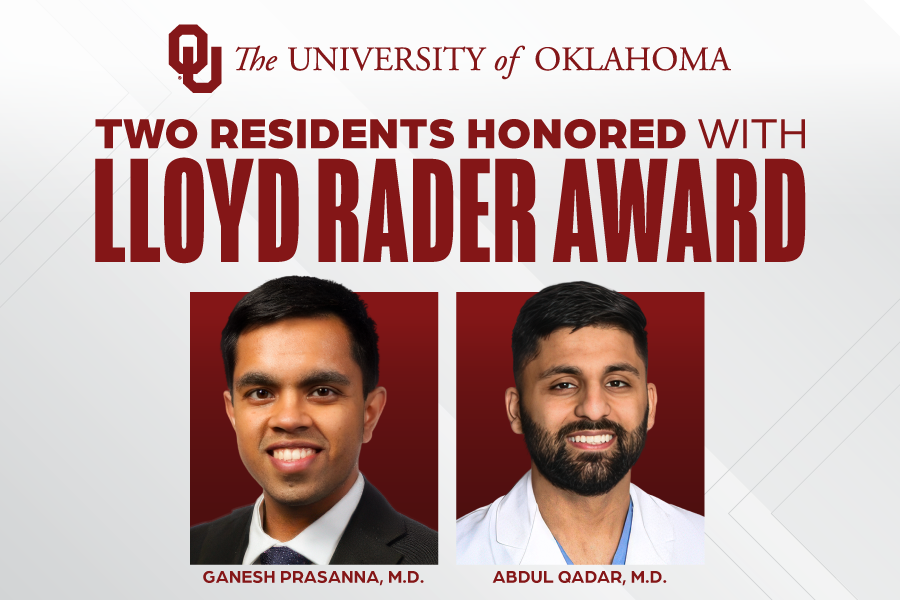
The University of Oklahoma College of Medicine has honored two residents with the Lloyd Rader Award, which recognizes outstanding clinical and research achievements in residency.
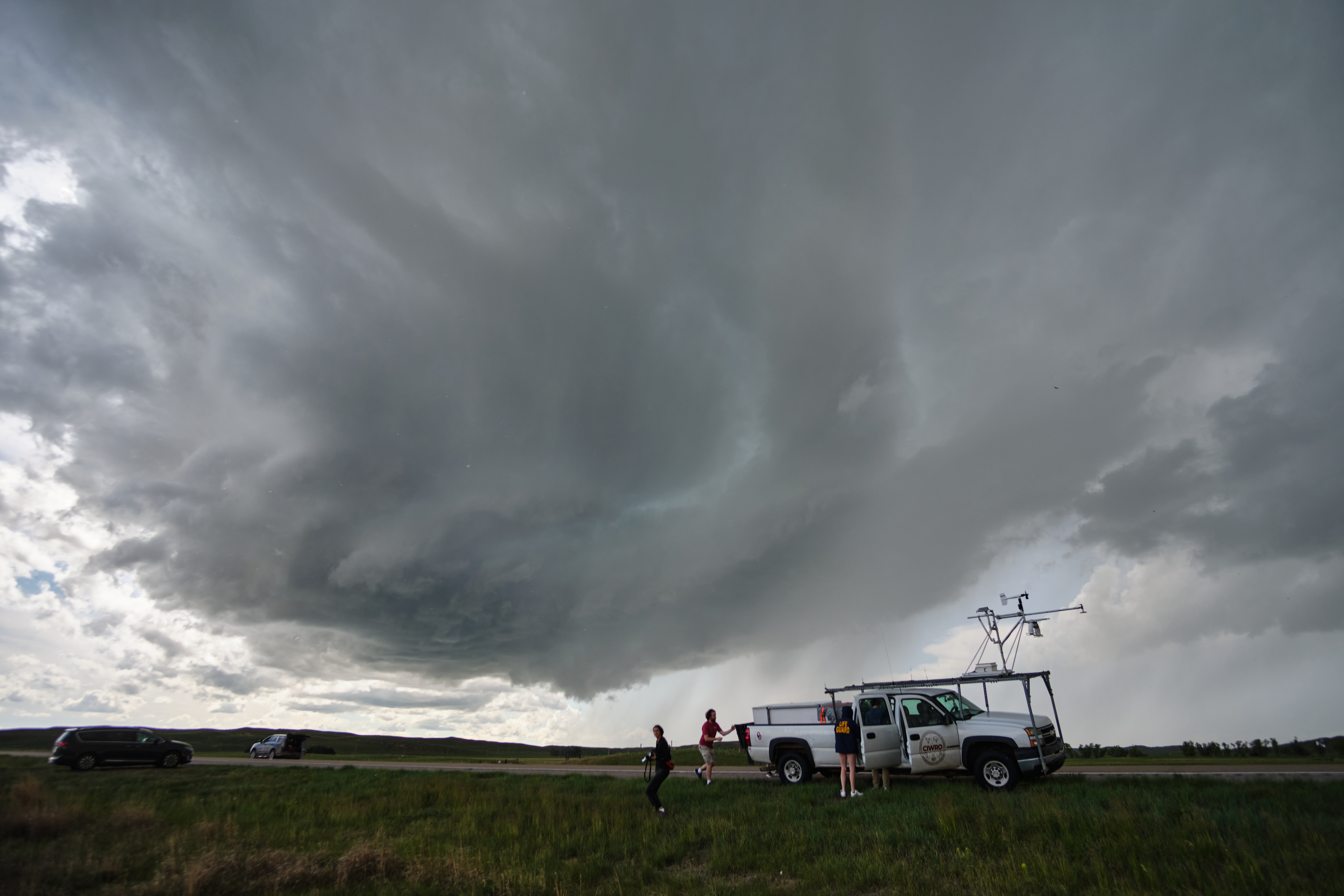
The University of Oklahoma will receive up to $220 million over five years from the U.S. Department of Commerce and the National Oceanic and Atmospheric Administration to continue the life-saving weather research led by the OU-NOAA Cooperative Institute for Severe and High-Impact Weather Research and Operations, extending a nearly 50-year partnership that has helped give Americans earlier, more accurate weather warnings
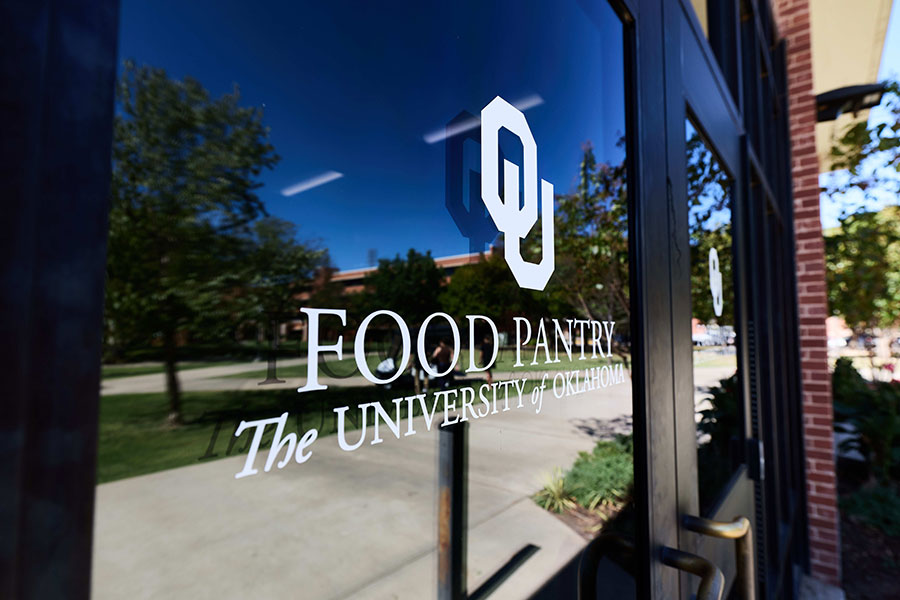
The OU Food Pantry won the annual Red River Food Fight, collecting 31,815.9 pounds of shelf-stable food and drinks to top UT Outpost’s 22,567 pounds. OU has won the competition four years in a row.