NEWS

NORMAN, OKLA. – Kathy Pegion, associate professor in the School of Meteorology at the University of Oklahoma, has been awarded funding for her project to examine whether initialized multi-year to decadal predictions can better predict high-impact climate futures than uninitialized projections.
The funding for the project — “Bridging Predictions and Projections: Understanding Predictability from Initialized Multi-Year to Decadal Predictions for High-Impact Climate Futures” — comes from the National Oceanic and Atmospheric Administration through the Modeling, Analysis, Predictions, and Projections, or MAPP, program, which aims to advance Earth system models to build resistance to climate impacts.
Pegion and her collaborators will examine whether the North Atlantic Subtropical High is a source of predictability for high-impact climate events, such as extreme precipitation and heat, drought, and coastal inundation.
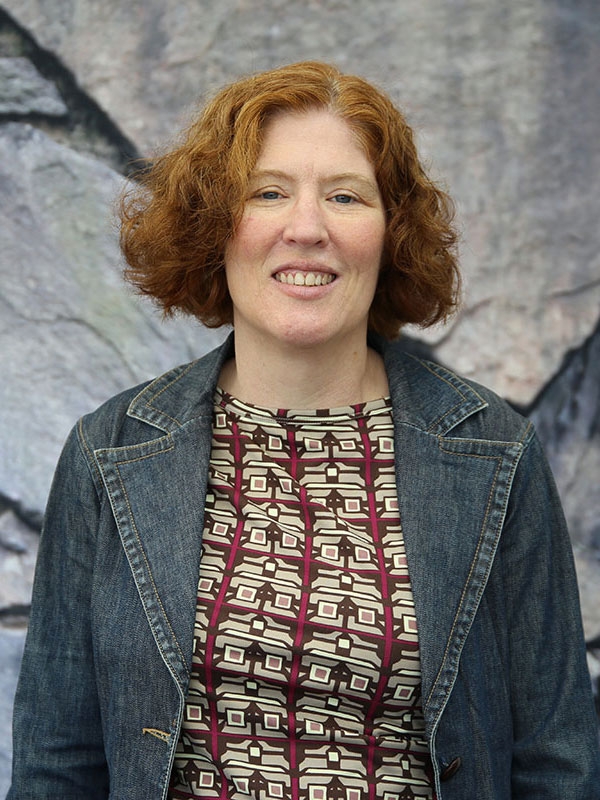
“Given that we have this connection where it seems like the state of the ocean matters to ultimately impact our extremes in precipitation, our hypothesis is that for these multi-year to decadal timescales we actually need to be using initialized predictions and not just projections,” said Pegion. “When we go to these timescales, do we need initialization of the atmosphere, the ocean, and the land, or are we getting the same information from these projections where we’re only using external forcing?”
The success of this research could lay the foundation for a real-time multi-year to decadal prediction system. Such a system would enhance understanding of what causes high-impact events and consequently enhance climate resilience. An outcome of this project will be whether initialized projections are needed for the kinds of climate-related services NOAA aims to build.
In addition to leading this project, Pegion will serve as co-lead of the Projections Task Force, one of several NOAA MAPP Task Forces, leading the initiative to enhance engagement across the climate projections teams. Pegion said the task force brings together all the principal investigators and all that is being learned under this call for projections. The task force will also collectively pull information that could lead to guidance on how to connect with and provide useful information around climate services to stakeholders, such as civil engineers and building standards.
About the project
The project, "Bridging Predictions and Projections: Understanding Predictability from Initialized Multi-Year to Decadal Predictions for High-Impact Climate Futures," is funded by NOAA grant NA23OAR4310613-T1-01. It began Sept. 1, 2023 and is expected to conclude Aug. 31, 2026.
About the University of Oklahoma
Founded in 1890, the University of Oklahoma is a public research university located in Norman, Oklahoma. As the state’s flagship university, OU serves the educational, cultural, economic and health care needs of the state, region and nation. OU was named the state’s highest-ranking university in U.S. News & World Report’s most recent Best Colleges list. For more information about the university, visit ou.edu.
The University of Oklahoma College of Medicine has honored two residents with the Lloyd Rader Award, which recognizes outstanding clinical and research achievements in residency.
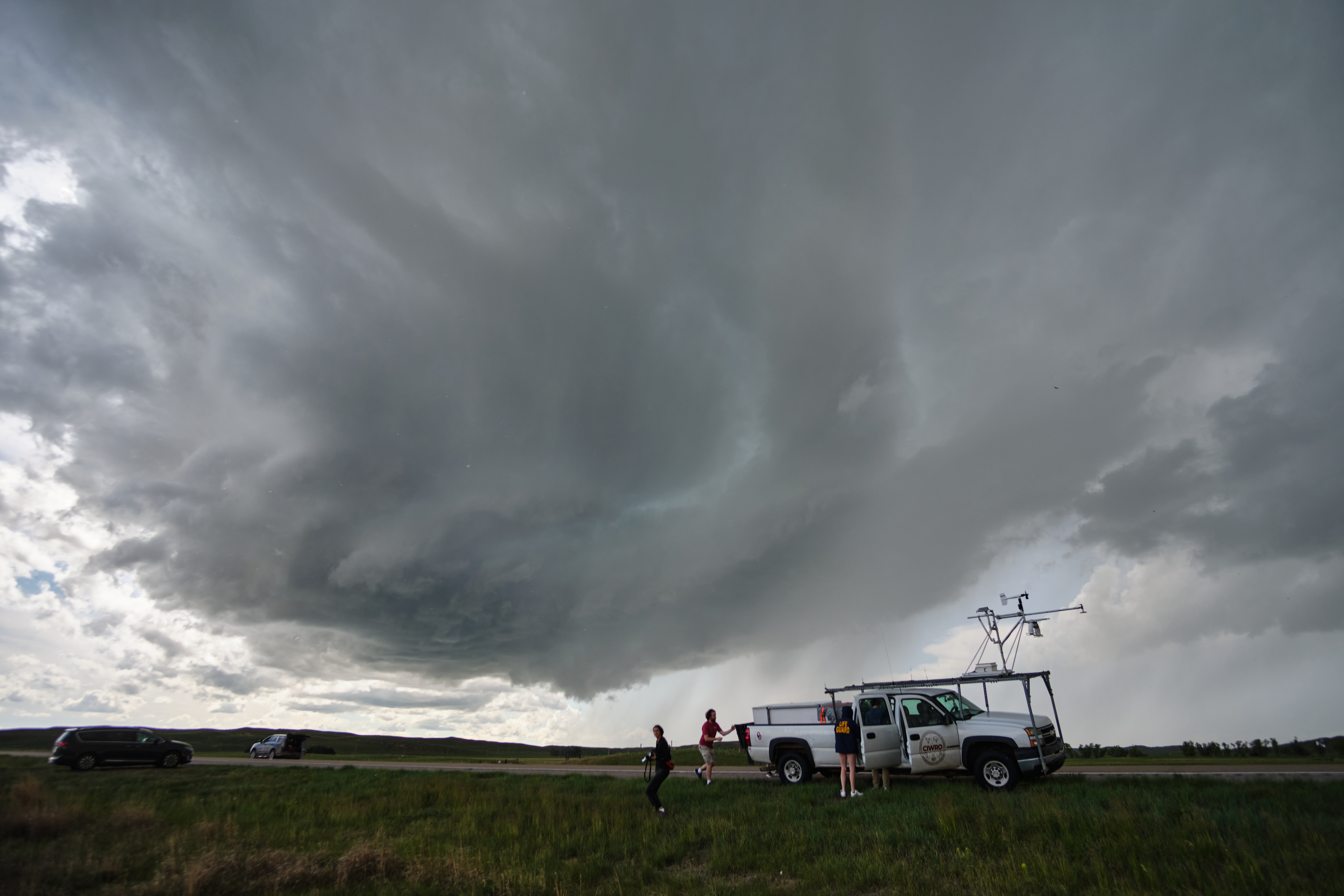
The University of Oklahoma will receive up to $220 million over five years from the U.S. Department of Commerce and the National Oceanic and Atmospheric Administration to continue the life-saving weather research led by the OU-NOAA Cooperative Institute for Severe and High-Impact Weather Research and Operations, extending a nearly 50-year partnership that has helped give Americans earlier, more accurate weather warnings
The OU Food Pantry won the annual Red River Food Fight, collecting 31,815.9 pounds of shelf-stable food and drinks to top UT Outpost’s 22,567 pounds. OU has won the competition four years in a row.