NEWS

By
April Wilkerson
april-j-wilkerson@ou.edu
Date
OKLAHOMA CITY – Researchers at the OU Health Harold Hamm Diabetes Center are investigating diabetes from numerous angles, including how the disease affects other organs, what factors contribute to its development and complications, and how new approaches to prevention and treatment could improve health. Those questions were among the many explored at the recent Harold Hamm Diabetes Center Research Symposium, which brought together faculty, graduate students and postdoctoral fellows to share their latest work.
The symposium included research presentations throughout the day, followed by a poster session highlighting additional work by trainees and faculty. John Hawley, Ph.D., a professor at Australian Catholic University, gave the keynote address on the effects of GLP-1 medications on skeletal muscle. John Kirwan, Ph.D., executive director of the Harold Hamm Diabetes Center and vice provost for diabetes programs at OU, outlined his vision for the center’s future.
Diabetes presents a significant public health challenge in Oklahoma. According to the American Diabetes Association, approximately 12.8% of the state’s adults have diabetes, and 34.9% have prediabetes.
“Diabetes is not just a research problem. It is Oklahoma’s health crisis,” Kirwan said.
Kirwan outlined four priorities that will guide the center’s growth: cures, remission, complications and community.
For type 1 diabetes, the goal is to advance research toward a cure, including identifying people at risk earlier and exploring cell-based treatments that could restore the body’s ability to produce insulin.
For type 2 diabetes, the center aims to make remission a greater focus of research. Kirwan described plans to compare approaches such as metabolic surgery, medications and lifestyle changes to better understand their effectiveness in helping people achieve remission.
Another priority is preventing or reducing the complications that diabetes can cause throughout the body, including damage to the heart, kidneys, liver, eyes and limbs. Research will focus on better understanding these complications and finding new ways to prevent them, detect them earlier and improve health outcomes.
Finally, Kirwan emphasized the importance of community partnerships, particularly with Oklahoma’s tribal nations and in rural areas of the state, as well as research focused on the first 1,000 days of life, from pregnancy through a child’s second birthday. These efforts reflect the center’s interest in addressing diabetes risk not only through research and treatment, but also through early intervention and community engagement.
“These four areas are going to be the central mission for the Harold Hamm Diabetes Center,” he said. “Four missions on one discovery platform.”
Powering all four missions is what Kirwan calls the engine: a shared discovery platform that gives every investigator the tools to move from cells to society. Plans include a human research platform with whole-room calorimeters (designed to measure a person’s energy expenditure and metabolism over extended periods), a metabolic kitchen and a clinical research unit, along with multi-omics (combining several types of molecular data at once) and other core technologies that connect discoveries in the laboratory to patients in the clinic and communities across Oklahoma.
Kirwan also highlighted mitochondria, the energy producers inside cells, as a central focus of the center’s discovery science. Mitochondrial dysfunction is linked to insulin resistance, the loss of insulin-producing beta cells and many of the complications of diabetes. Understanding these mechanisms of disease could point to new ways to prevent and treat diabetes, put it into remission and, ultimately, cure it.
To advance these priorities, Kirwan said the center plans to recruit 40 research faculty over the next five years as part of OU’s strategic faculty hiring initiative, bringing established, funded investigators and their teams to Oklahoma. The expansion will significantly increase the center’s research capacity as it works toward becoming one of the nation’s premier diabetes research programs and earning national designation as a diabetes center. Kirwan credited Harold Hamm’s recent gift to OU, which includes a major commitment to the diabetes center, with making that growth possible.
“The Harold Hamm Diabetes Center has every asset it needs to become one of the nation’s great diabetes centers: extraordinary philanthropy, an integrated academic medical center, aligned leadership, and the communities that need this work the most,” he said.
About the University of Oklahoma
Founded in 1890, the University of Oklahoma is a public research university with campuses in Norman, Oklahoma City and Tulsa. As the state’s flagship university, OU serves the educational, cultural, economic and healthcare needs of the state, region and nation. In Oklahoma City, the OU Harold Hamm Health Campus is one of the nation’s few academic health centers with seven health profession colleges located on the same campus. The OU Harold Hamm Health Campus serves approximately 4,000 students in more than 70 undergraduate and graduate degree programs spanning Oklahoma City and Tulsa and is the leading research institution in Oklahoma. For more information about the OU Harold Hamm Health Campus, visit www.ouhsc.edu.
Researchers at the OU Health Harold Hamm Diabetes Center are investigating diabetes from numerous angles, including how the disease affects other organs, what factors contribute to its development and complications, and how new approaches to prevention and treatment could improve health.
A new five-year, $3 million grant from the National Cancer Institute will enable researchers at OU’s TSET Health Promotion Research Center (HPRC) to scale up a smartphone-based mHealth solution that uses targeted and tailored messages to motivate smokers to kick the habit.
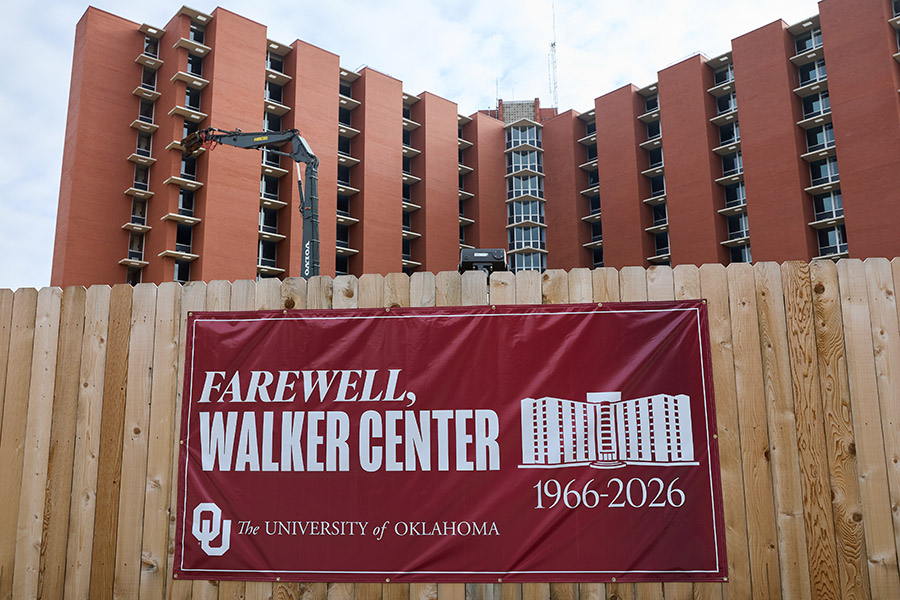
The University of Oklahoma has begun the demolition of Walker Center, marking a new step in the university’s refresh of student housing. The 12-story building has served as a home for thousands of students on the Norman campus.