NEWS

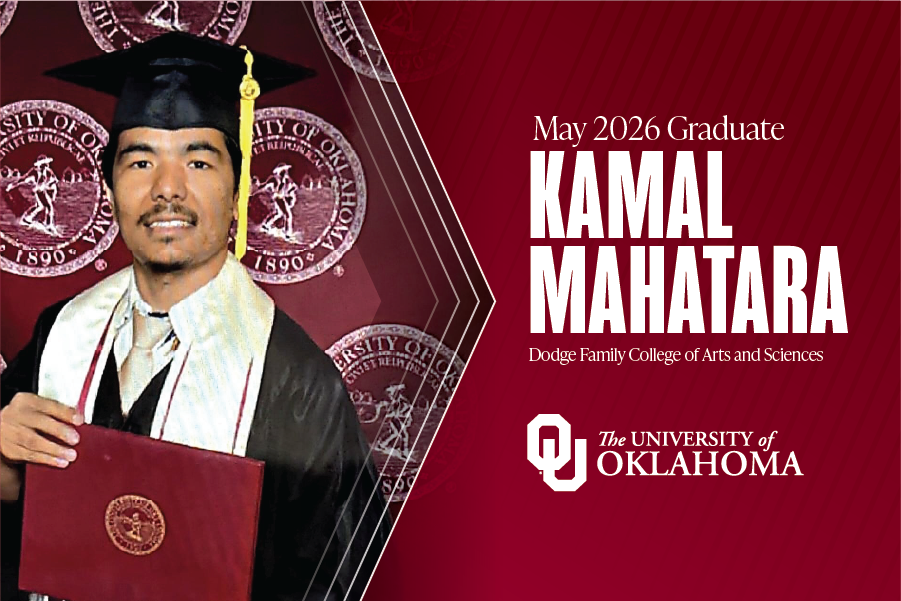
NORMAN, Okla. – By the time Kamal Mahatara arrived at the University of Oklahoma, the international student had already persevered through challenges that few people in his new country could relate to. He had experienced deep-rooted poverty growing up in Nepal, restricting opportunity for many in his remote home village. Walking to his primary school, which lacked pencils and notebooks for him until the fifth grade, took two hours in each direction.
But Mahatara did not give up on himself. When the path to a brighter future emerged, he followed it despite needing to make sacrifices: he traveled through Himalayan Mountain terrain for nearly two weeks amid the Covid-19 pandemic to interview for a German high school.
“That kind of environment taught me resilience, adaptability and a very deep appreciation for the community,” Mahatara said. “Because resources were very limited, people heavily relied on each other.”
Mahatara was accepted into Germany’s Robert Bosch College, one of more than a dozen schools and colleges that make up the United World Colleges (UWC) system. Through exposure to UWC’s English-centered curriculum, he learned the language and later graduated as a Davis UWC Scholar. With his scholarship, he chose to study at OU, which has enrolled more Davis students than any other American institution 11 times in the past 13 years.
He joined OU’s Dodge Family College of Arts and Sciences and was named to the prestigious President's Leadership Class (PLC) for first-year students — completing his improbable journey from Nepal to Norman. “Working so hard for my education from such a young age has shaped my work ethic and perspective,” said Mahatara, who is graduating with a Bachelor of Science in Biology and Community Health. “Education was never something I assumed I was entitled to.”
Mahatara has embraced his new community at OU, including its UWC alumni, and found valuable support through leaders such as PLC director Nanette Hathaway and Student Life director Quy Ngyuen. “I left home when I was 10 years old, so I did not really grow up experiencing the kind of close family life many people have,” he said. “Because of that, finding communities where I feel seen, valued and supported has meant everything to me. Over time, I learned that home is not always a place: sometimes it is the people you find wherever you go.”
He has also taken on research opportunities, such as examining intestinal malrotation in pediatric patients at OU Health. Mahatara attributes his interest in improving global health outcomes to his experiences back home dealing with limited resources. “OU helped me turn that passion into something more actionable and informed,” he said. “I have learned to take a look at health not just from the clinical or biological perspective, but through the lens of systems, policy, access and equity.”
While his life journey has taken him far from Nepal, Mahatara remains committed to his hometown and others like it. In 2024 established the Pragati Path Educational Foundation to provide scholarships, school supplies and other resources to children experiencing generational poverty. Working with Nepalese schools and partners, along with UWC contacts, Mahatara aims to bring about change through a community-centered approach. “We believe in sustainability,” he said. “It’s not about charity from the outside, but it’s investing in local potential and dignity.”
Looking ahead, Mahatara plans to attend McDaniel College in Maryland to pursue his Master’s in Human Service Management. He’ll also be working with a disability center in the state, giving him more experience with healthcare and how people from low-resource and underrepresented communities interact with it.
“Most of the research that has already been published is centered in high-income settings, which does not always translate well to the regions where infrastructure access and cultural context are very different,” Mahatara said. “That gap is something I am deeply aware of, because I have lived through these realities.”
About the University of Oklahoma
Founded in 1890, the University of Oklahoma is a public research university located in Norman, Oklahoma. As the state’s flagship university, OU serves the educational, cultural, economic and health care needs of the state, region and nation. For more information about the university, visit www.ou.edu.
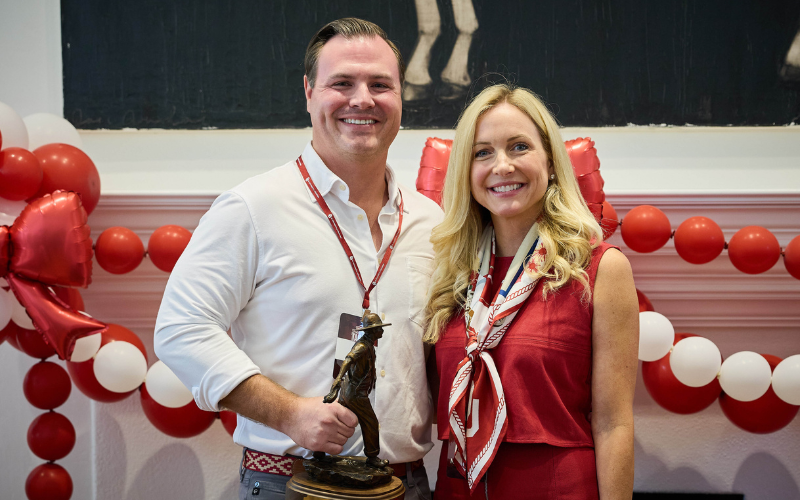
The University of Oklahoma has received a transformative gift from Jon and Shannon McCartney, which will name the McCartney Family Tunnel of Champions, the McCartney Family Gate of the Gaylord Family - Oklahoma Memorial Stadium and the McCartney Family Grand Lecture Hall in the Michael F. Price College of Business. The gift will also support the Inspiring Champions and the Athletic Director’s Discretionary Fund, in addition to establishing the McCartney DFW Career Trek program at Price College.
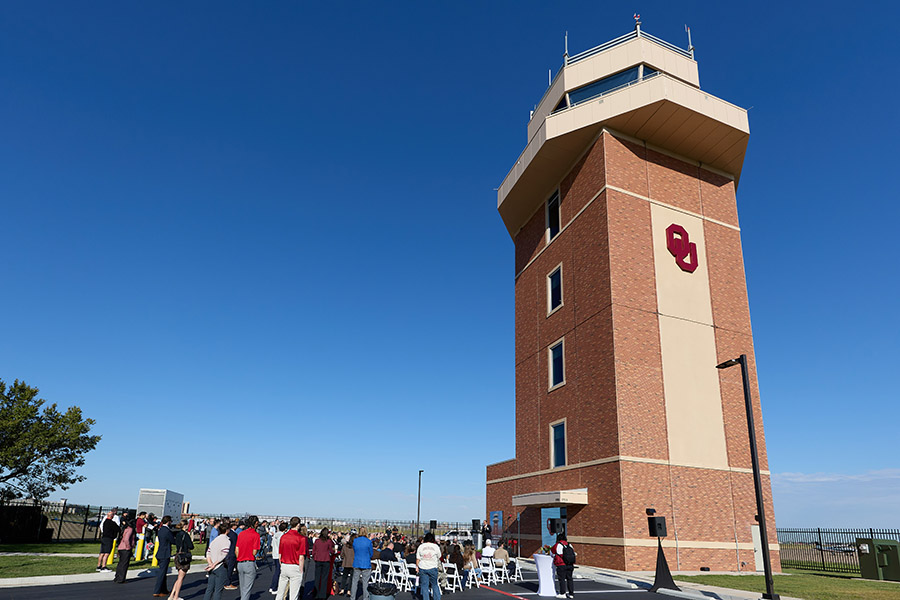
The University of Oklahoma today celebrated the opening of a new air traffic control tower at the OU Max Westheimer Airport. Standing 106 feet tall, more than double the current 52-foot facility, the new tower will modernize air traffic control operations and improve safety for pilots and students operating in the airspace.
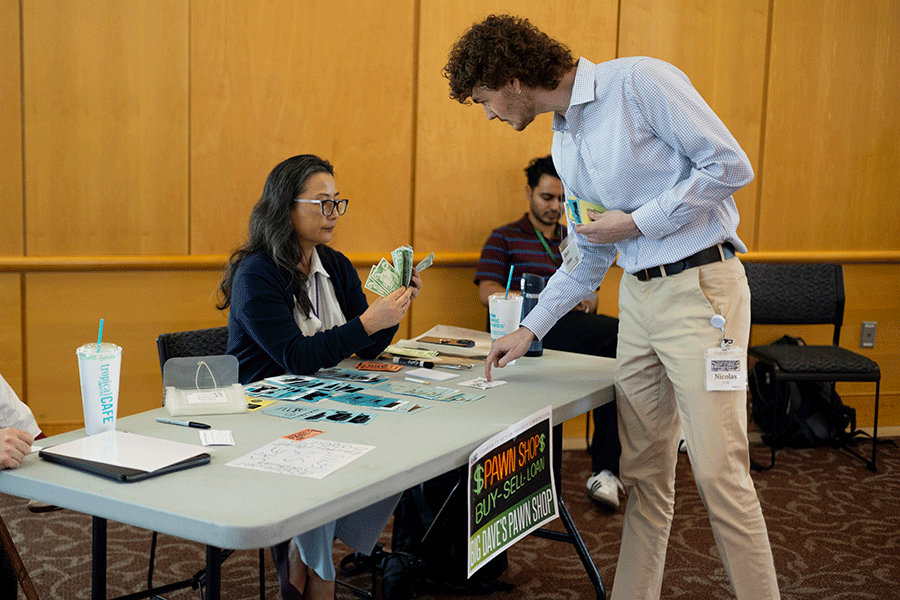
Do I buy groceries or pay the electric bill? Should I pawn some of my belongings to afford my prescription? My child is sick, so I will have to miss work to take care of him. Those are just a few of the difficult choices that OU-Tulsa health professional students confronted during the Community Access to Resources Experience. The role-playing activity challenged students to navigate the financial, family and other pressures that can affect a person’s health and ability to follow medical advice. Held annually during the SCM Institute orientation week, the experience is designed to generate understanding and build empathy.