NEWS


OKLAHOMA CITY – As childhood obesity and diabetes continue to rise worldwide, a researcher at the University of Oklahoma is investigating whether a simple addition to a breastfeeding mother’s diet – chia seeds – could help lower a child’s future risk of these conditions while improving the mother’s own health. Packed with fiber, omega-3 fatty acids and beneficial plant compounds like polyphenols, chia seeds have been shown to improve factors linked to obesity and Type 2 diabetes.
The research project will examine whether adding chia seeds to the diets of breastfeeding mothers with obesity can improve how their bodies process sugar and fat into energy (metabolism), while also influencing the composition of their breast milk in ways that may benefit infants’ physical and metabolic health and cognitive development.
The team’s previous research suggests that a mother’s metabolic health may influence the qualities of her breast milk, which, in turn, affects the health of her infant. When mothers have obesity or poor metabolic health, their milk composition may change to include higher levels of fat and inflammation, as well as lower amounts of beneficial bacteria. These differences could potentially increase a child’s long-term risk of obesity and Type 2 diabetes.
Chia seeds may influence the nutritional makeup of breast milk in ways that support both mother and infant health by fostering a relationship in which biological signals are exchanged from mother to infant and infant to mother.
“Our goal is to find practical, affordable ways to support mothers and babies during a critical window of development. Even small dietary changes could make a meaningful difference,” said lead investigator David Fields, Ph.D., associate professor in the Department of Pediatrics, OU College of Medicine.
In parallel laboratory studies, the team will examine how compounds found in chia seeds affect human intestinal cells. The experiments will explore whether the compounds can strengthen the gut barrier, reduce inflammation and cellular stress, and improve the way cells generate energy, particularly under conditions that mimic excess fat exposure. The researchers will also explore whether chia seed compounds activate certain receptors in the body that may play a role in metabolism.
If successful, the study could identify an easy-to-implement dietary strategy to help reduce children’s future risk of obesity and diabetes.
“This research focuses on supporting both mother and baby,” Fields said. “By improving maternal health during breastfeeding, we may be able to influence a child’s health trajectory in a positive way.”
For information about enrolling in the study, email babypeas@ouhsc.edu or call (405) 271-8001, extension 42792.
About the project
This study is funded by Presbyterian Health Foundation in Oklahoma City.
About the University of Oklahoma
Founded in 1890, the University of Oklahoma is a public research university located in Norman, Oklahoma. As the state’s flagship university, OU serves the educational, cultural, economic and health care needs of the state, region and nation. For more information about the university, visit www.ou.edu.
The University of Oklahoma has received a transformative gift from Jon and Shannon McCartney, which will name the McCartney Family Tunnel of Champions, the McCartney Family Gate of the Gaylord Family - Oklahoma Memorial Stadium and the McCartney Family Grand Lecture Hall in the Michael F. Price College of Business. The gift will also support the Inspiring Champions and the Athletic Director’s Discretionary Fund, in addition to establishing the McCartney DFW Career Trek program at Price College.
The University of Oklahoma today celebrated the opening of a new air traffic control tower at the OU Max Westheimer Airport. Standing 106 feet tall, more than double the current 52-foot facility, the new tower will modernize air traffic control operations and improve safety for pilots and students operating in the airspace.
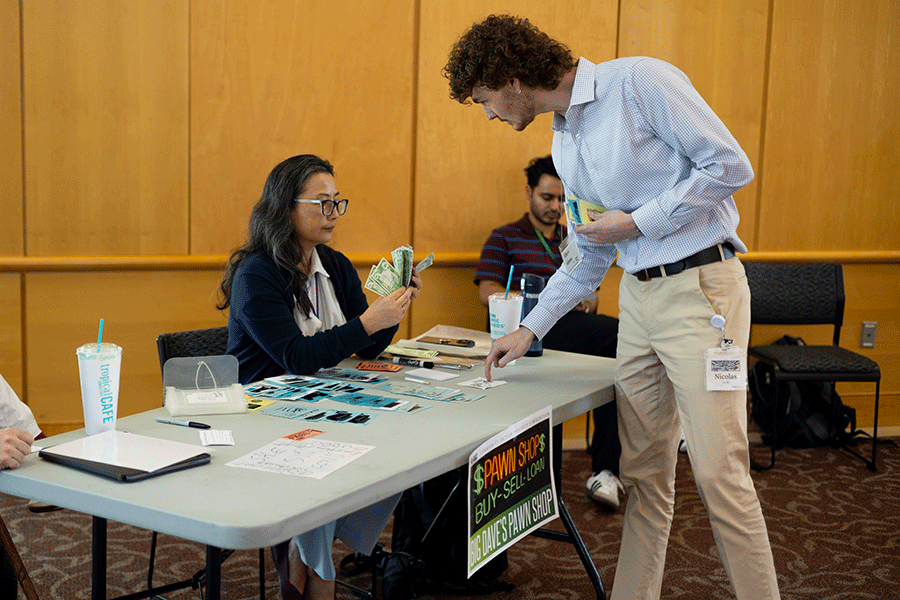
Do I buy groceries or pay the electric bill? Should I pawn some of my belongings to afford my prescription? My child is sick, so I will have to miss work to take care of him. Those are just a few of the difficult choices that OU-Tulsa health professional students confronted during the Community Access to Resources Experience. The role-playing activity challenged students to navigate the financial, family and other pressures that can affect a person’s health and ability to follow medical advice. Held annually during the SCM Institute orientation week, the experience is designed to generate understanding and build empathy.