NEWS

OKLAHOMA CITY – A University of Oklahoma researcher is part of an international team developing a new way to discover obesity drugs using human cells instead of animal models, an approach that could speed the development of more effective and affordable treatments. The effort is supported by a $12 million grant from the Novo Nordisk Foundation.
Huxing Cui, Ph.D., an associate professor of cell biology in the OU College of Medicine and associate director of neurometabolic research at the OU Health Harold Hamm Diabetes Center at the University of Oklahoma, is part of the six-year project, which aims to overcome several challenges in developing new obesity drugs. Although GLP-1 medications have transformed obesity treatment for many people, they are expensive, often require injections and can cause side effects. In addition, many drugs that appear promising in mice ultimately fail in people, creating a bottleneck in the development of new obesity therapies.
Cui is joining forces with leading scientists from Denmark and the United States, including Matthew Paul Gillum, Ph.D., and Agnete Kirkeby, Ph.D., from the Department of Biomedical Sciences at the University of Copenhagen, and Noah Palm, Ph.D., from the Department of Immunobiology at Yale University. They will develop an innovative platform for obesity drug discovery using human-induced pluripotent stem cell-derived brain organoid models – essentially, miniature brain models grown from human stem cells.
In the laboratory, the researchers will test thousands of potential drug compounds on specialized brain cells that regulate appetite, looking for those that activate the protein adenylate cyclase 3 (ADCY3), a key regulator of appetite and body weight. Because researchers can measure how ADCY3 responds when compounds interact with these cells, it provides a reliable way to identify which compounds may have the greatest potential as obesity treatments. Those candidates will then be evaluated in genetically modified mice in Cui’s laboratory to confirm their ability to reduce food intake and body weight.
“I have been studying ADCY3 for many years to understand how this obesity-associated protein functions in the brain to regulate appetite and body weight using mice as a model organism,” Cui said. “I’m excited to be part of this international collaborative translational project, which builds in part on my years of research in mice and aims to discover new obesity medications using human-centered models.”
About the University of Oklahoma
Founded in 1890, the University of Oklahoma is a public research university with campuses in Norman, Oklahoma City and Tulsa. As the state’s flagship university, OU serves the educational, cultural, economic and healthcare needs of the state, region and nation. In Oklahoma City, the OU Health Campus is one of the nation’s few academic health centers with seven health profession colleges located on the same campus. The OU Health Campus serves approximately 4,000 students in more than 70 undergraduate and graduate degree programs spanning Oklahoma City and Tulsa and is the leading research institution in Oklahoma. For more information about the OU Health Campus, visit www.ouhsc.edu.
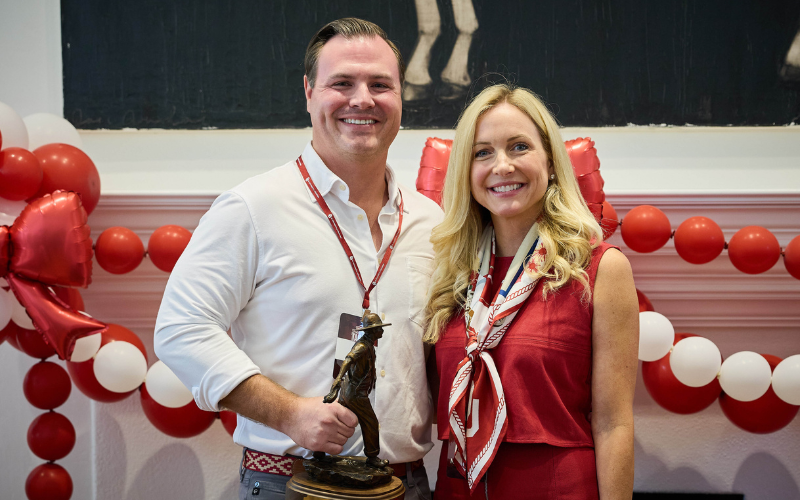
The University of Oklahoma has received a transformative gift from Jon and Shannon McCartney, which will name the McCartney Family Tunnel of Champions, the McCartney Family Gate of the Gaylord Family - Oklahoma Memorial Stadium and the McCartney Family Grand Lecture Hall in the Michael F. Price College of Business. The gift will also support the Inspiring Champions and the Athletic Director’s Discretionary Fund, in addition to establishing the McCartney DFW Career Trek program at Price College.
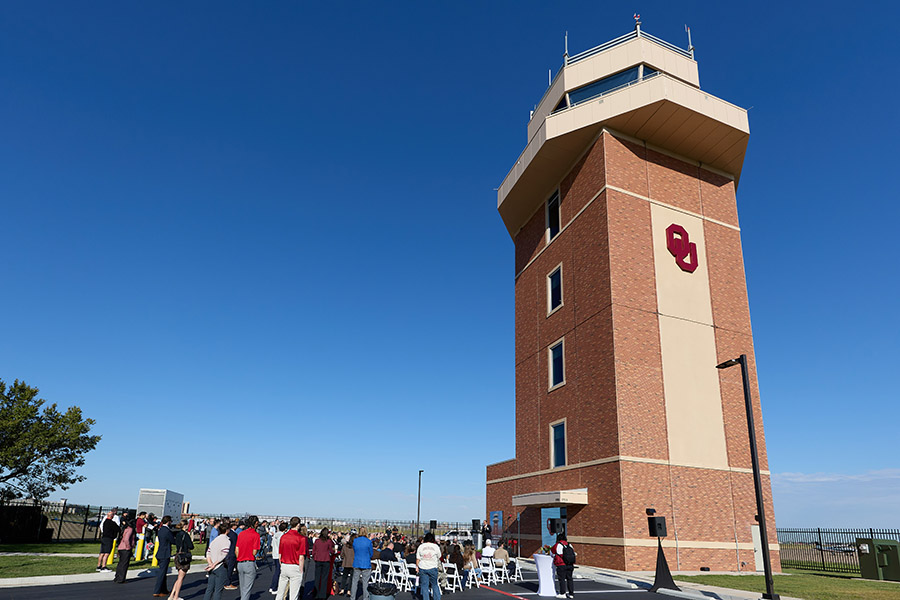
The University of Oklahoma today celebrated the opening of a new air traffic control tower at the OU Max Westheimer Airport. Standing 106 feet tall, more than double the current 52-foot facility, the new tower will modernize air traffic control operations and improve safety for pilots and students operating in the airspace.
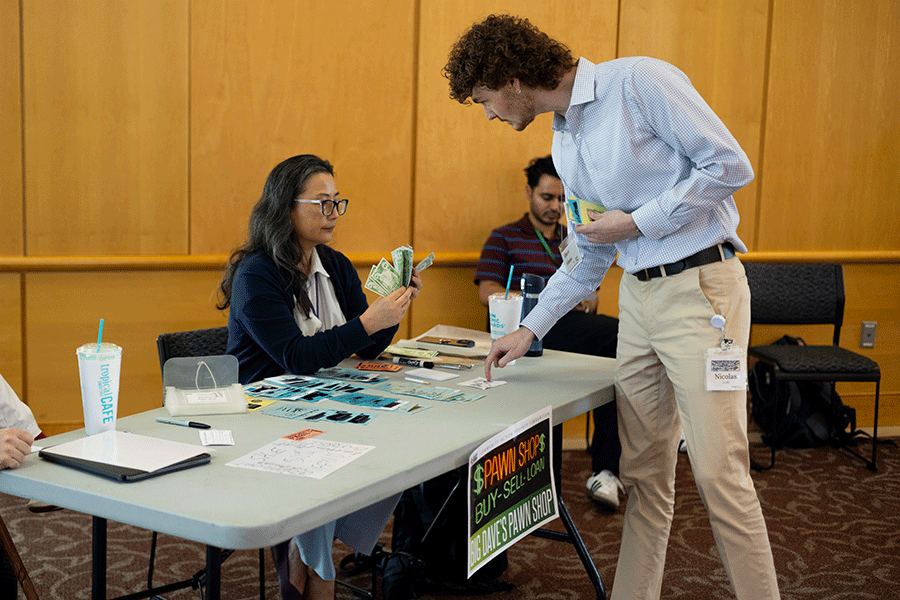
Do I buy groceries or pay the electric bill? Should I pawn some of my belongings to afford my prescription? My child is sick, so I will have to miss work to take care of him. Those are just a few of the difficult choices that OU-Tulsa health professional students confronted during the Community Access to Resources Experience. The role-playing activity challenged students to navigate the financial, family and other pressures that can affect a person’s health and ability to follow medical advice. Held annually during the SCM Institute orientation week, the experience is designed to generate understanding and build empathy.