NEWS

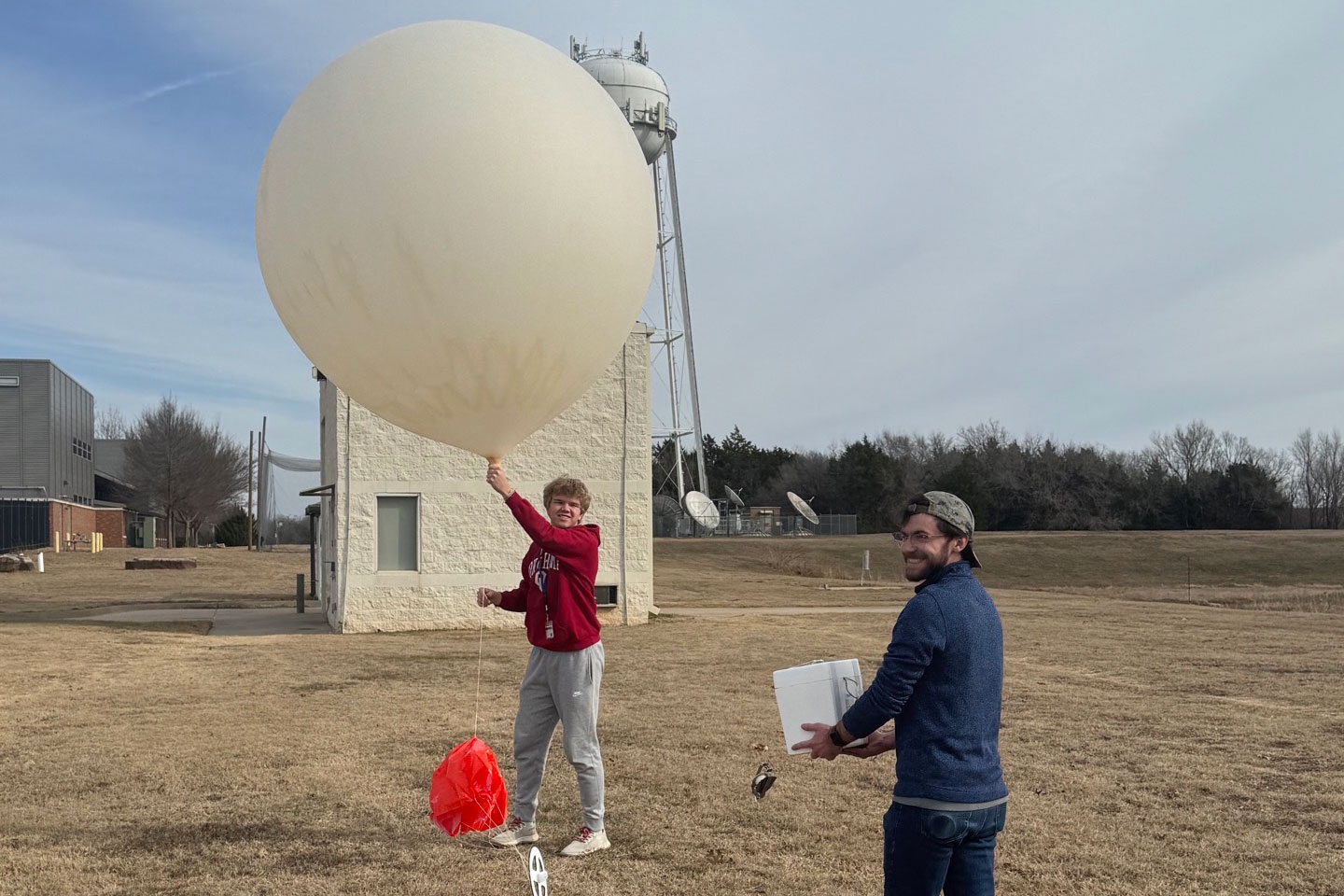
NORMAN, Okla. – A program focused on key storm systems, known as atmospheric rivers, that provides students with hands-on research experience, launched its second season in January.
The Coordinated University Sounding Program for Atmospheric River Reconnaissance (CUSP-ARR), led by the Center for Western Weather and Water Extremes (CW3E) at Scripps Institution of Oceanography at UC San Diego, will run through late February. It engages 16 universities in the U.S. and Canada in data collection to study atmospheric rivers and other high-impact weather events.
CUSP-ARR is the land-based component of Atmospheric River Reconnaissance (AR Recon), a research and operations partnership led by CW3E, NOAA, and the U.S. Air Force in collaboration with federal agencies and international institutions. The main function of CUSP-ARR is to launch weather balloons equipped with high-tech sensors called radiosondes, in coordination with AR Recon missions, to provide broad-coverage observations during atmospheric rivers and other major precipitation events, said CW3E officials.
CW3E founding director and principal investigator of AR Recon, Marty Ralph, added that CUSP-ARR is unique in that it is entirely powered by teams of faculty, staff, and students in university meteorology and atmospheric science programs. Students help lead launch planning, weather balloon deployment, and tracking of radiosonde output through the upper atmosphere. University participants can also join daily AR Recon briefings to learn how science teams across agencies work together in real time to plan missions in response to evolving storm forecasts.
“Providing our students with such hands-on experience is both a privilege and a foundation of the School of Meteorology's mission,” said Cameron Homeyer, director of the OU School of Meteorology. “The shared excitement and academic conversations inspired by analysis of the data in real time are unique educational elements which are hard to reproduce in a classroom and my personal favorite fruits from this project.”
This year, more than 150 undergrad and graduate students across 16 universities are expected to participate in CUSP-ARR. The program is organized by CW3E in collaboration with North Carolina State University, Indiana University Bloomington, and the University of Maryland, Baltimore County.
University partners include:
“This project is a great reminder that all observations matter and targeted sampling of our atmosphere can have immediate impacts on high-impact weather forecasts,” said Aaron Hill, a professor in the School of Meteorology.
“The CUSP-ARR project provided an incredible opportunity to work together with weather enthusiasts like myself, along with experts in the field,” said RJ Downing, a freshman meteorology major. “It’s always rewarding watching your physical work get turned into useful data.”
This year, as AR Recon evolves into a globally coordinated effort known as the Global Atmospheric River and Reconnaissance Program (GARRP), CUSP-ARR plays an important role by providing land-based data that complements airborne campaigns over the Pacific, Gulf, and Atlantic Ocean basins. Through this unique partnership between research institutions, government agencies, and universities, the program is creating a scalable model for distributed observation networks that can fill key gaps in the global observing system.
Radiosonde launch equipment for CUSP-ARR partners is funded by the U.S. Army Corps of Engineers Forecast Informed Reservoir Operations award.
Partners with * indicates volunteer partners who provide their own consumables.
About the University of Oklahoma
Founded in 1890, the University of Oklahoma is a public research university located in Norman, Oklahoma. As the state’s flagship university, OU serves the educational, cultural, economic and health care needs of the state, region and nation. For more information about the university, visit www.ou.edu.
The University of Oklahoma has received a transformative gift from Jon and Shannon McCartney, which will name the McCartney Family Tunnel of Champions, the McCartney Family Gate of the Gaylord Family - Oklahoma Memorial Stadium and the McCartney Family Grand Lecture Hall in the Michael F. Price College of Business. The gift will also support the Inspiring Champions and the Athletic Director’s Discretionary Fund, in addition to establishing the McCartney DFW Career Trek program at Price College.
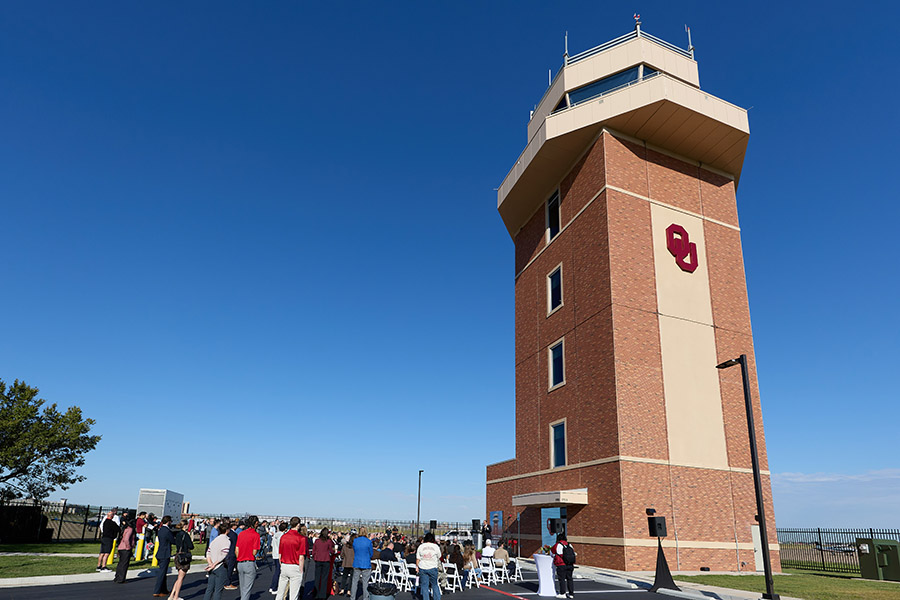
The University of Oklahoma today celebrated the opening of a new air traffic control tower at the OU Max Westheimer Airport. Standing 106 feet tall, more than double the current 52-foot facility, the new tower will modernize air traffic control operations and improve safety for pilots and students operating in the airspace.
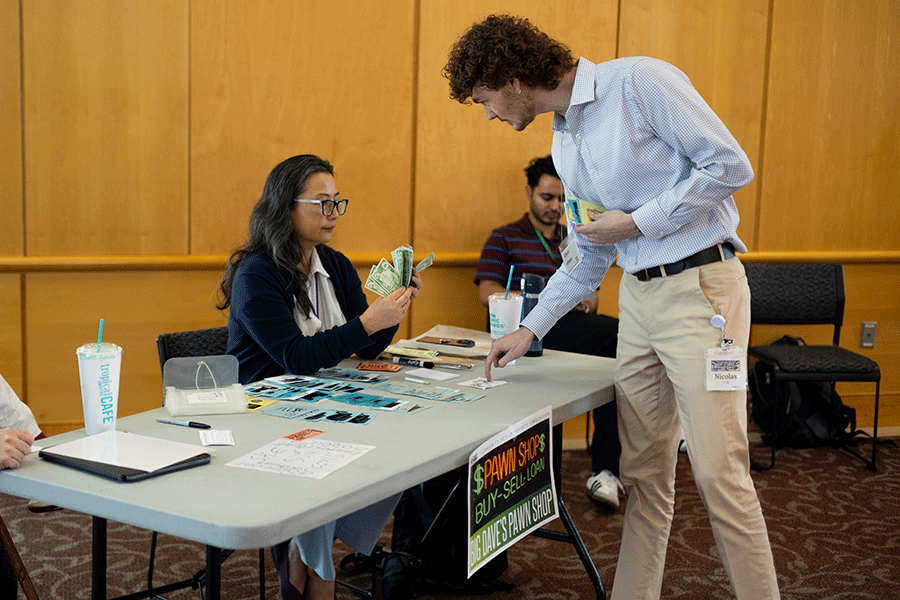
Do I buy groceries or pay the electric bill? Should I pawn some of my belongings to afford my prescription? My child is sick, so I will have to miss work to take care of him. Those are just a few of the difficult choices that OU-Tulsa health professional students confronted during the Community Access to Resources Experience. The role-playing activity challenged students to navigate the financial, family and other pressures that can affect a person’s health and ability to follow medical advice. Held annually during the SCM Institute orientation week, the experience is designed to generate understanding and build empathy.