NEWS


NORMAN, OKLA. – More than 100 attendees gathered on March 28 in the University of Oklahoma College of Law Dick Bell Courtroom to hear from tribal leaders, practitioners and federal magistrate judges about how the McGirt v. Oklahoma decision has reshaped both their substantive and operational legal practices.
“The Supreme Court’s decision in McGirt v. Oklahoma has reshaped jurisdictional boundaries and legal frameworks, requiring courts, governments, and tribal nations to adapt in real-time,” said OU Law Dean Anna Carpenter.
The American Indian Law Review Symposium, titled “As the Dust Settles: Understanding the Post-McGirt Changes to the Practice of Law Five Years Later” featured three panels. The first panel featured legal experts from the Chickasaw Nation, Muscogee (Creek) Nation and Seminole Nation of Oklahoma. When discussing the rise in cases following the McGirt ruling, Gerri Wisner, deputy attorney general for the Muskogee (Creek) Nation, said, “we had 46 cases on our criminal docket in 2019. In the years since, we’ve averaged 6,000.”

The second panel featured current and former U.S. attorneys from the Northern and Eastern Districts of Oklahoma, as well as two federal public defenders. Scott Graham, a federal public defender, told attendees that following the McGirt case, “Congress established a federal defender’s office for the Eastern District of Oklahoma for the first time. It took about 18 months and now we have 42 people working there.” Trent Shores, former United States Attorney for the Northern District of Oklahoma, added, “our office was built to prosecute about 250 cases per year, but now we are facing 1,000.”
The final panel featured U.S. Magistrate Judges Edward Snow and Jason Robertson. Both judges discussed how resourceful Oklahoma’s legal system has been post-McGirt. According to Judge Robertson, “when it comes to criminal proceedings, the Eastern District carries one of the highest caseloads per judge in the country. Despite all of that, the Eastern District was ranked number three in most effective courtrooms.” Judge Snow added that the district judges in the Eastern District started a visiting-judges program from scratch. He also said, “since McGirt, more than 40 visiting judges have come in and tried primarily criminal cases.”
Among the attendees were approximately 50 law students. Judge Robertson addressed them directly, telling them, “Find the area of law that you love and excites you. You’re going to have bad days, but you're going to get through those. Never forget why you came to this law school and why you wanted to be a lawyer, because every single day you get a chance to fight for what's right. And what's a better job than that?”
The American Indian Law Review was founded in 1973 and is one of three legal journals at OU Law. It serves as a scholarly forum for analysis of developments in legal issues pertaining to Native Americans and indigenous peoples worldwide. Each
About the University of Oklahoma
Founded in 1890, the University of Oklahoma is a public research university located in Norman, Oklahoma. As the state’s flagship university, OU serves the educational, cultural, economic and health care needs of the state, region and nation. For more information about the university, visit www.ou.edu.
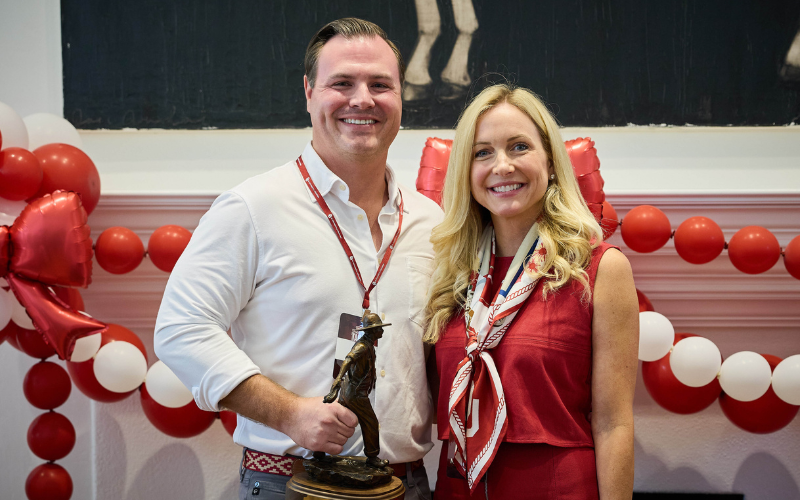
The University of Oklahoma has received a transformative gift from Jon and Shannon McCartney, which will name the McCartney Family Tunnel of Champions, the McCartney Family Gate of the Gaylord Family - Oklahoma Memorial Stadium and the McCartney Family Grand Lecture Hall in the Michael F. Price College of Business. The gift will also support the Inspiring Champions and the Athletic Director’s Discretionary Fund, in addition to establishing the McCartney DFW Career Trek program at Price College.
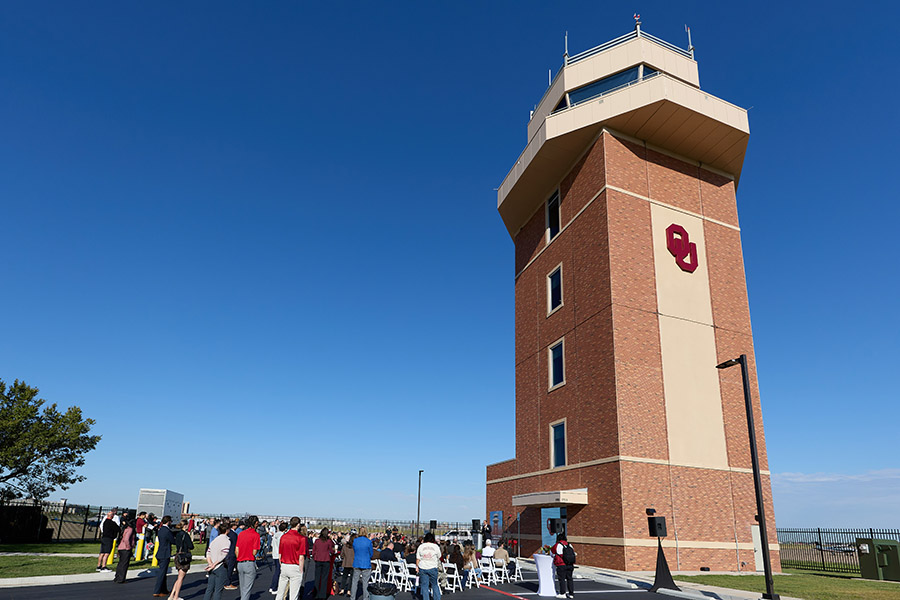
The University of Oklahoma today celebrated the opening of a new air traffic control tower at the OU Max Westheimer Airport. Standing 106 feet tall, more than double the current 52-foot facility, the new tower will modernize air traffic control operations and improve safety for pilots and students operating in the airspace.
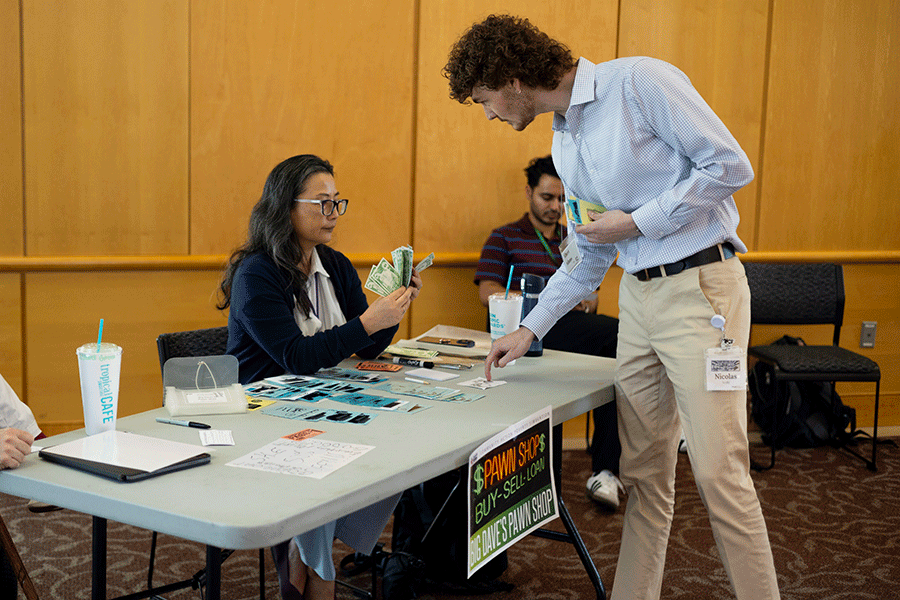
Do I buy groceries or pay the electric bill? Should I pawn some of my belongings to afford my prescription? My child is sick, so I will have to miss work to take care of him. Those are just a few of the difficult choices that OU-Tulsa health professional students confronted during the Community Access to Resources Experience. The role-playing activity challenged students to navigate the financial, family and other pressures that can affect a person’s health and ability to follow medical advice. Held annually during the SCM Institute orientation week, the experience is designed to generate understanding and build empathy.