NEWS

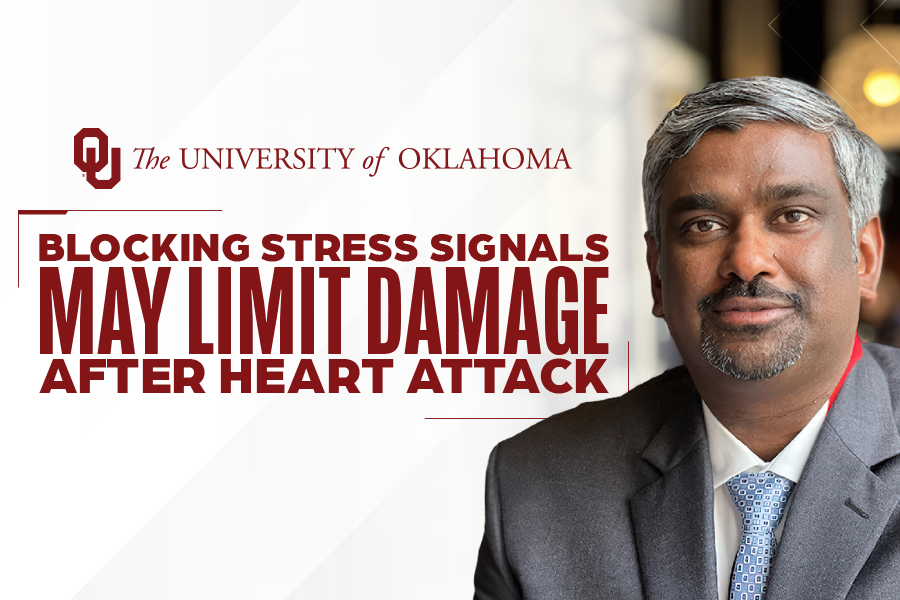
OKLAHOMA CITY – After a heart attack, the body rapidly floods the injured heart with neutrophils — white blood cells that help repair damage but can also make it worse when too many arrive too quickly. New research from the University of Oklahoma shows that these early-arriving cells come not from the bone marrow, as long believed, but from a hidden reserve along blood vessel walls. The discovery also identifies a potential way to limit their harmful surge.
The research, conducted in mice, is published in Nature Communications. Lead author Prabha Nagareddy, Ph.D., a professor of cardiology in the OU College of Medicine, said that neutrophils, while generally good cells that address injury and infection, actually do more harm than good after a heart attack because of the inflammation they create.
“We focus on how we can control those cells so that the heart can heal and remain healthy for a longer period of time,” Nagareddy said. “A small amount of neutrophils is good, but too many are bad. It’s the so-called ‘Goldilocks’ zone – we need to tone down the neutrophil response so the amount is just right.”
In this study, Nagareddy and his team discovered that the trigger for the neutrophils’ mobilization is the body’s stress response system, often called “fight or flight.” Stress hormones released after a heart attack, particularly norepinephrine, signal to the neutrophils to detach from the blood vessel walls and travel to the heart, a process known as demargination. Because the neutrophils are already positioned along blood vessels rather than newly produced in the bone marrow, they can reach the heart much more quickly.
When neutrophils arrive at the heart, they release two proteins, called alarmins, that tell the bone marrow to start making more neutrophils. Nagareddy hypothesized that if he could slow the initial wave of neutrophils from making their way to the heart, that would prevent some of the amplification of the subsequent waves.
To test that idea, researchers gave the mice a beta two blocker, which blocked the signal that tells neutrophils to enter the bloodstream. As a result, fewer neutrophils entered the heart. The mice that received the beta two blocker showed improved heart healing and function.
“Importantly, we gave the beta two blocker for only a short period of time,” Nagareddy said. “We need some neutrophils to stay and do the work of healing the heart.”
Cardiologists already prescribe beta one blockers after a heart attack to keep the heart from having to work too hard. Beta two blockers are only approved for use in animal research, but non-selective beta blockers like propranolol and carvedilol, already approved for human use, target both beta one and beta two receptors.
The team’s next step is to study whether this approach could work in humans. As with mice, Nagareddy hopes he can temporarily dial down the body’s stress-driven immune surge and give the heart a chance to heal more fully.
“By adding a non-selective beta blocker to the standard of care, we aim to reduce the number of neutrophils getting into the heart,” he said, “and prevent the cascade of events that follow.”
About the project
The paper, “β2 adrenergic receptors orchestrate neutrophil demargination and recruitment to the ischemic heart following myocardial infarction,” can be found at https://www.nature.com/articles/s41467-026-71612-8#Abs1. The research is supported by the National Institutes of Health and the American Heart Association.
About the University of Oklahoma
Founded in 1890, the University of Oklahoma is a public research university with campuses in Norman, Oklahoma City and Tulsa. As the state’s flagship university, OU serves the educational, cultural, economic and health care needs of the state, region and nation. In Oklahoma City, the OU Health Campus is one of the nation’s few academic health centers with seven health profession colleges located on the same campus. The OU Health Campus serves approximately 4,000 students in more than 70 undergraduate and graduate degree programs spanning Oklahoma City and Tulsa and is the leading research institution in Oklahoma. For more information about the OU Health Campus, visit www.ouhsc.edu.
The University of Oklahoma has received a transformative gift from Jon and Shannon McCartney, which will name the McCartney Family Tunnel of Champions, the McCartney Family Gate of the Gaylord Family - Oklahoma Memorial Stadium and the McCartney Family Grand Lecture Hall in the Michael F. Price College of Business. The gift will also support the Inspiring Champions and the Athletic Director’s Discretionary Fund, in addition to establishing the McCartney DFW Career Trek program at Price College.
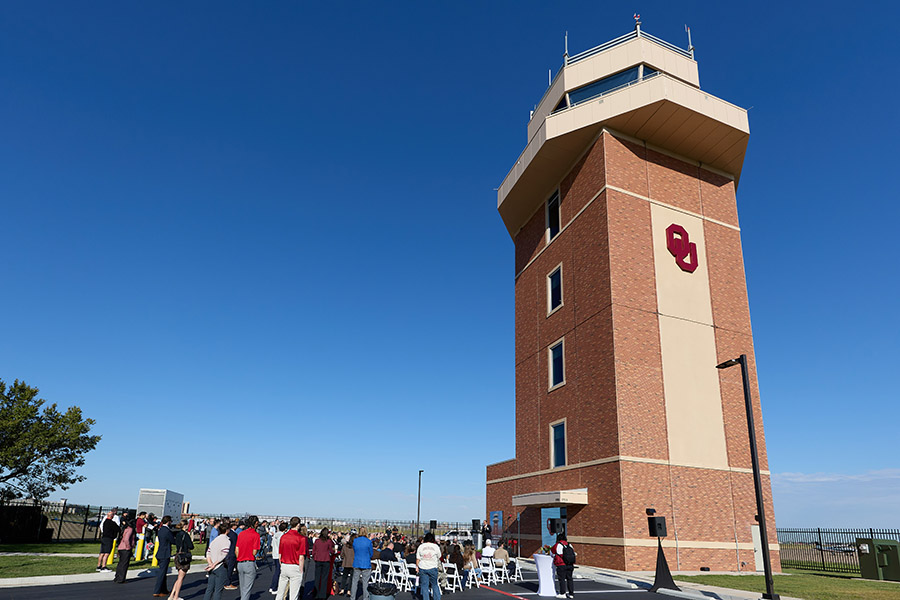
The University of Oklahoma today celebrated the opening of a new air traffic control tower at the OU Max Westheimer Airport. Standing 106 feet tall, more than double the current 52-foot facility, the new tower will modernize air traffic control operations and improve safety for pilots and students operating in the airspace.
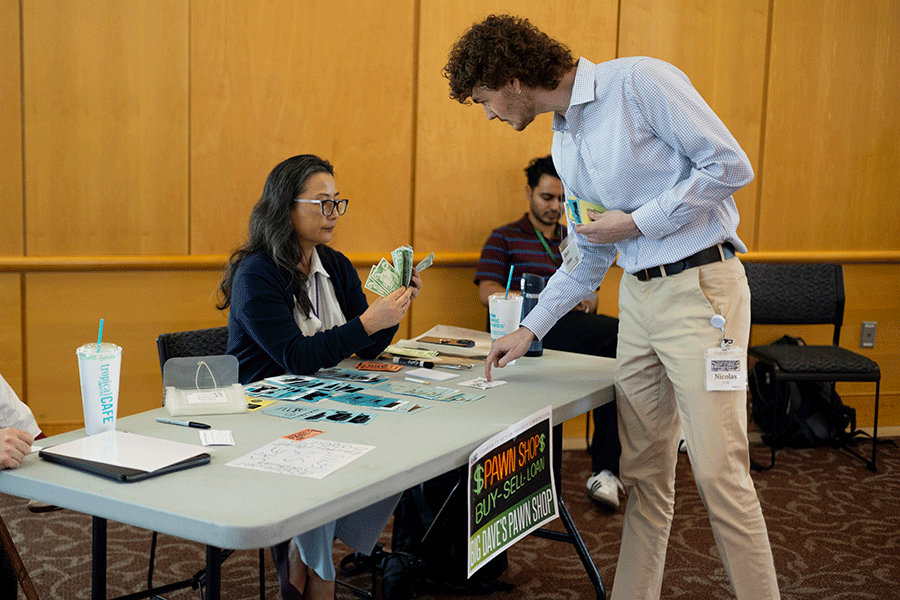
Do I buy groceries or pay the electric bill? Should I pawn some of my belongings to afford my prescription? My child is sick, so I will have to miss work to take care of him. Those are just a few of the difficult choices that OU-Tulsa health professional students confronted during the Community Access to Resources Experience. The role-playing activity challenged students to navigate the financial, family and other pressures that can affect a person’s health and ability to follow medical advice. Held annually during the SCM Institute orientation week, the experience is designed to generate understanding and build empathy.