David Boeck recently exhibited his sketches in an exhibition titled “UKRAINIAN CHURCHES: Standing Tall in the Struggle.” The exhibition was held at the Shevchenko Museum in Toronto from February 9, 2025, to February 28, 2025.
Boeck, who retired from Gibbs College in 2024, is known for his vibrant and dynamic sketches, particularly of international sites. His work emphasizes the significance of freehand sketching as a tool for creative expression and intellectual diversity. The exhibition featured a series of drawings that depicted the architectural beauty and the impact of conflict on a collection of Ukrainian churches.
Boeck expressed his personal connection to the project: “It’s been a sad journey seeing what has been happening.” He continued, “The destruction has been immense. My prayer is that this ends soon, and Ukraine and the rest of the world will begin rebuilding all that has been destroyed.”
Located at the Museum Gallery, 1604 Bloor Street West, Toronto, the exhibition aimed to showcase the historical and current states of Ukrainian churches affected by the ongoing conflict in Ukraine. Initially drawn to the architecture of Kyiv’s churches, Boeck has expanded his focus to include churches damaged or destroyed since the start of the Russia-Ukraine war in February 2022.
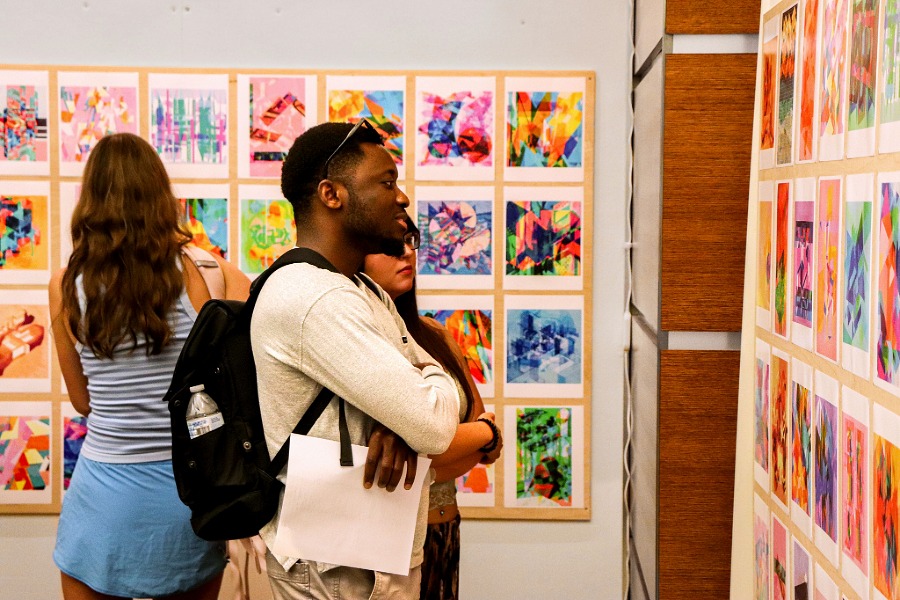
Gibbs College is pleased to present the exhibition 200 Digital Drawings by Professor Tiziana Proietti, currently on display in the Gould Hall Living Room.
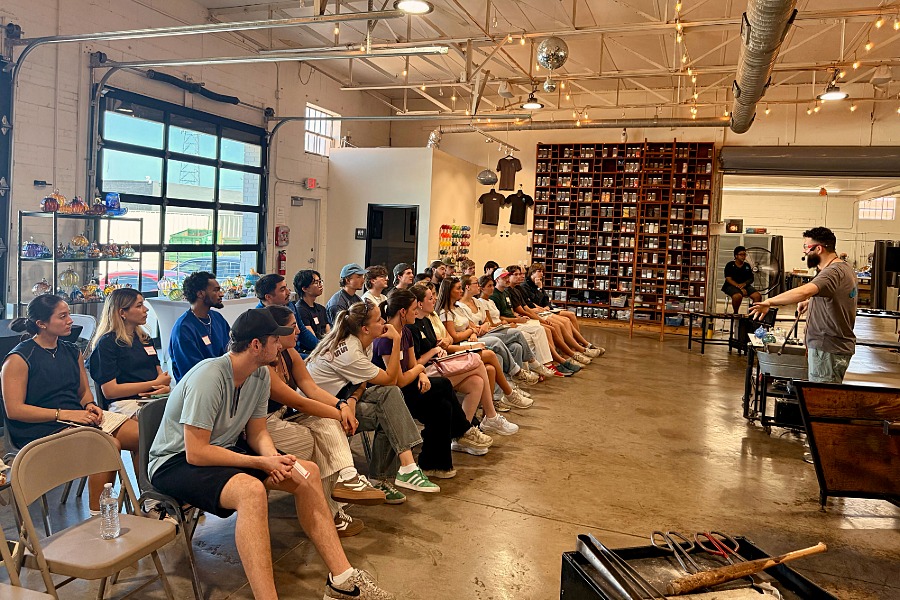
Gibbs College of Architecture Professors Amber Brown and Amy Leveno led 29 students to Dallas, Texas, in September for a learning experience as part of their Design 7 Studio course.
Christopher C. Gibbs College of Architecture professor and Institute for Quality Communities Director Dr. Amber N. Wiley’s book, Model Schools in the Model City: Race, Planning, and Education in the Nation’s Capital, has received two major honors from the Urban History Association.