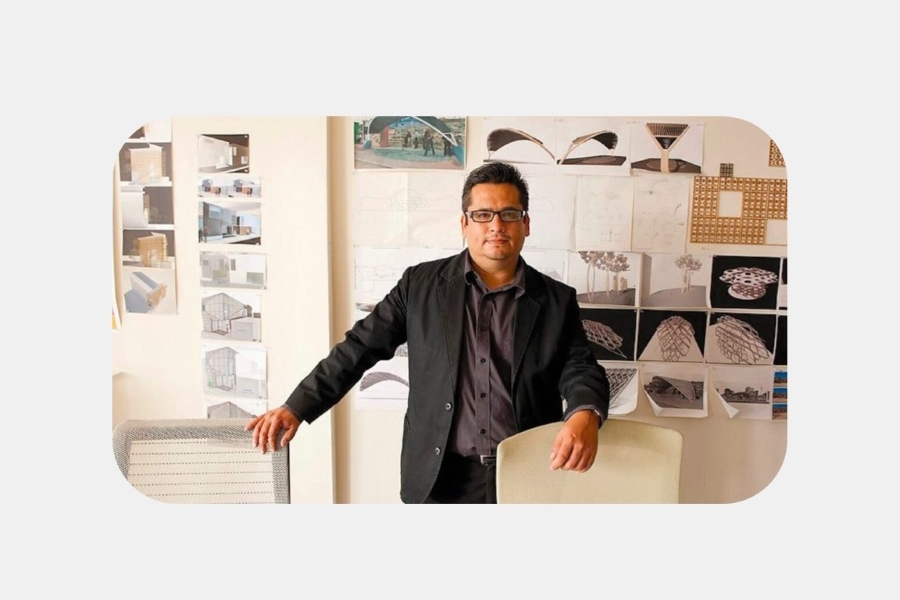
René Peralta, a lecturer with the Division of Architecture, recently participated in a session titled “Informality and the City” at the American Association of Geographers (AAG) 2022 Annual Meeting. René was among four presenters in the session, which focused on how informal urbanization became the dominant mode of city making in the 20th century and what effects this informal urbanization has had on cities and the people living within them.
Today, over one billion people worldwide—or approximately one out of every seven—live in informal settlements. Current projections show that impoverished people will continue moving from rural to urban areas well into the future, and that by 2050, over three billion people will live in informal settlements. Issues surrounding migration such as climate change and ecological decline have become central challenges in the 21st century. Growing socio-economic inequity and political unrest compels geographers, sociologists, planners, architects, and urban designers to not only better understand informal settlements, but to develop expertise to effectively intervene.
Long-standing assumptions surrounding planning, architecture, and urban design—such as the need for conventional financing, professional practitioners, legal frameworks, and precision—are strikingly absent in the informal city. Here, productive intervention requires alternative methods characterized by incrementalism, jurisdictional fluidity, and a collaborative framework of citizens, planners, architects, governmental bodies, and stakeholders working together to achieve transformative change
René presented on the Mexican border cities of Tijuana and Mexicali, where informal communities have evolved into consolidated urban areas while others continue to emerge progressively in the periphery. In some cases, institutional and private efforts have experimented with self-built construction methods, along with community participation programs in informal settlements. The implementation of incremental and hybrid methods of community housing projects have also emerged in other Latin American cities.
He shared the work of Fundacion Esperanza de Mexico, a nonprofit organization in Tijuana, Mexico, that has been working in informal communities adjacent to the peripheral zones of the city. This work entails the production of directed self-built housing in working-class districts through community participation. René examined the efficacy and transformative conditions of the foundations’ program along with two more projects in Latin America that had similar objectives but with relatively different outcomes. These efforts represent the need for a paradigmatic shift in the production of working-class housing, upgrading informal dwellings, and community engagement with experienced professionals from diverse disciplines.
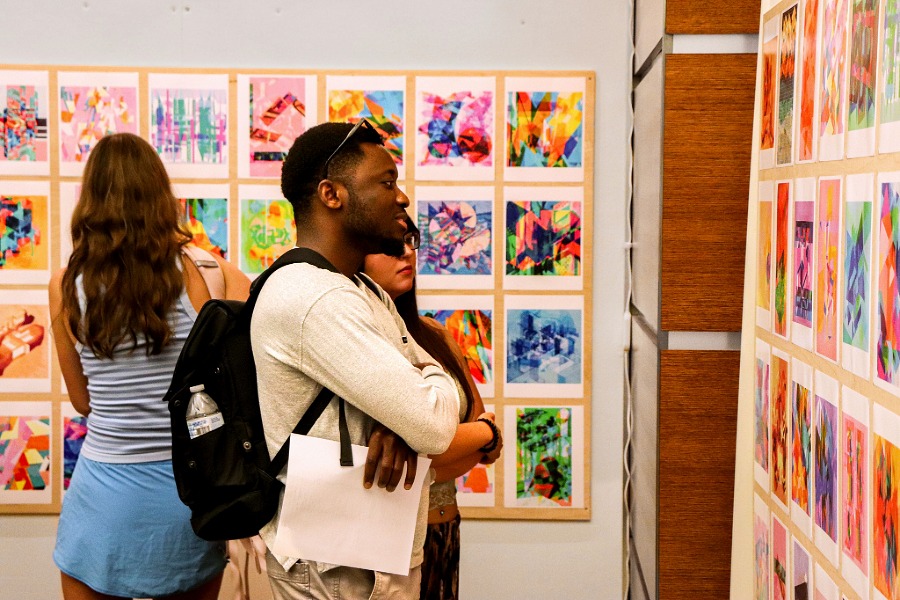
Gibbs College is pleased to present the exhibition 200 Digital Drawings by Professor Tiziana Proietti, currently on display in the Gould Hall Living Room.
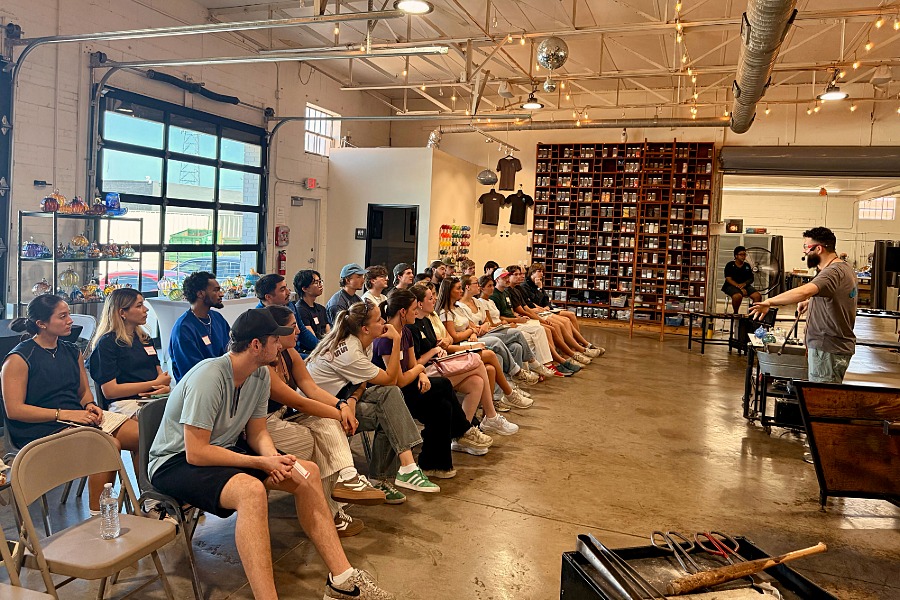
Gibbs College of Architecture Professors Amber Brown and Amy Leveno led 29 students to Dallas, Texas, in September for a learning experience as part of their Design 7 Studio course.
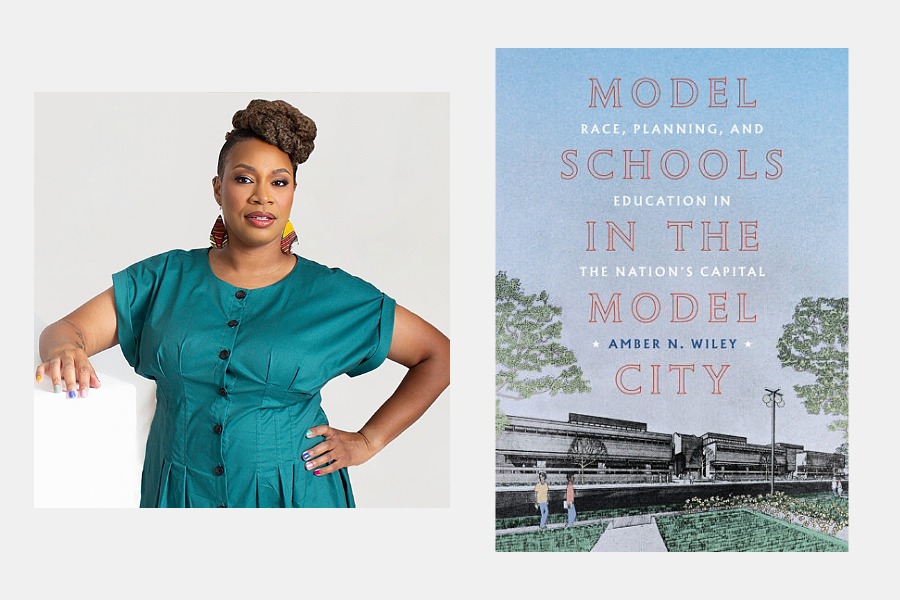
Christopher C. Gibbs College of Architecture professor and Institute for Quality Communities Director Dr. Amber N. Wiley’s book, Model Schools in the Model City: Race, Planning, and Education in the Nation’s Capital, has received two major honors from the Urban History Association.