Editor’s Note: This announcement originally appeared on the University of Arizona Press site. Click here to view the UA Press announcement.
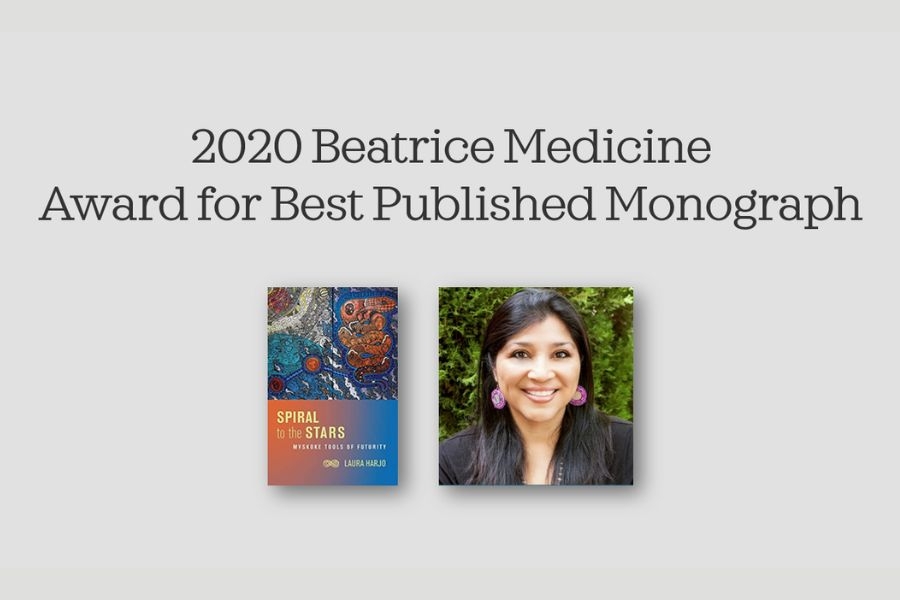
We are thrilled to announce that Spiral to the Stars by Laura Harjo is the winner of the 2020 Beatrice Medicine Award for Best Published Monograph. Chosen by the members of the Native American Literature Symposium and the Association for the Study of American Indian Literatures boards, this award highlights exceptional work published in the field of Indigenous studies in the year 2019.
“This country’s first philosophers, poets, artists, and knowledge keepers were Indigenous peoples. The Mvskoke were a major cultural force in the southeast. Laura Harjo’s Spiral to the Stars: Mvskoke Tools of Futurity marks a continuation of the development of our cultural knowledge. Community defines us, and we do not go forward together without the revisioning of all elements that make a living culture. Each generation makes a concentric circle that leans outward into the deepest star knowledges even as it leans inward toward the roots of earth knowledge. We are still here within the shape of this cultural geography. We keep moving forward with the tools Harjo has illuminated here. Mvto.”—Joy Harjo (Mvskoke), U.S. Poet Laureate
About Laura Harjo
Dr. Laura Harjo is a Mvskoke scholar and an associate professor teaching Indigenous Planning, Community Development, and Indigenous Feminisms. She is a faculty member in Native American Studies and an affiliate faculty member in the Division of Regional and City Planning at the University of Oklahoma.
She earned her Ph.D. at the University of Southern California in geography, while also tracking through the American Studies and Ethnicity doctoral program, and her scholarly inquiry is at the intersection of geography and critical ethnic studies with “community” as an analytic focus. Harjo’s research and teaching centers on three areas: imbuing complexity to Indigenous space, and place; Missing and Murdered Indigenous Women and Relatives and anti-violence; and community-based knowledge production. She is the author of Spiral to the Stars: Mvskoke Tools of Futurity (University of Arizona Press, 2019), which employs Mvskoke epistemologies, and Indigenous feminisms to grapple with a community praxis of futurity.
Prior to joining OU, she taught at the University of New Mexico for eight years in Community and Regional Planning where she participated in foundation building work for the Indigenous Design and Planning Institute and the Indigenous Planning concentration. She has served as a civil rights research fellow with the Advancement Project in Washington, DC. There she worked in an attorney/researcher partnership with civil rights expert Donita Judge, Esq. and researched and spatially analyzed civil rights issues in Florida, Texas, and New Orleans related to voter protection, inclusive community development, and the prison industrial complex-school to prison pipeline. She currently serves on the board of directors for the Indian Land Tenure Foundation.
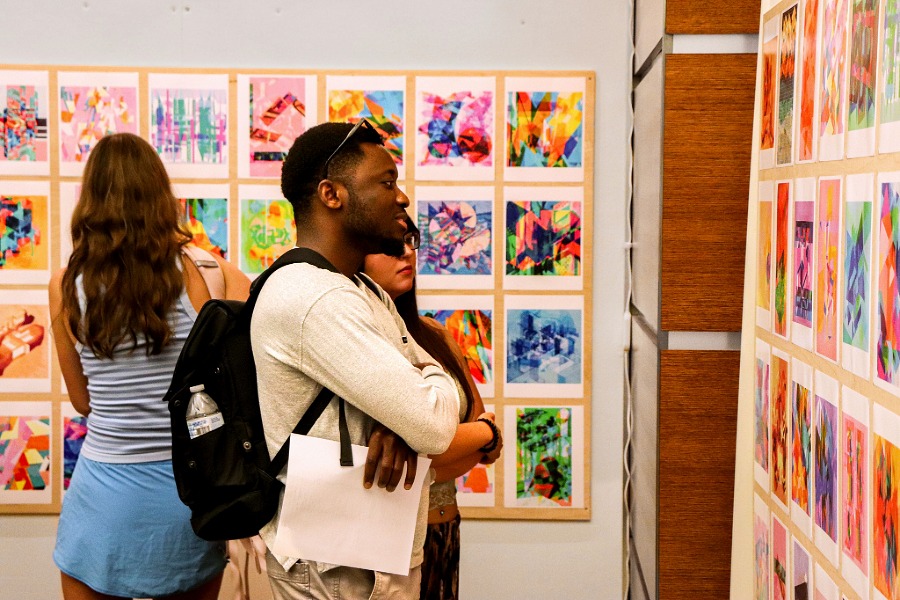
Gibbs College is pleased to present the exhibition 200 Digital Drawings by Professor Tiziana Proietti, currently on display in the Gould Hall Living Room.
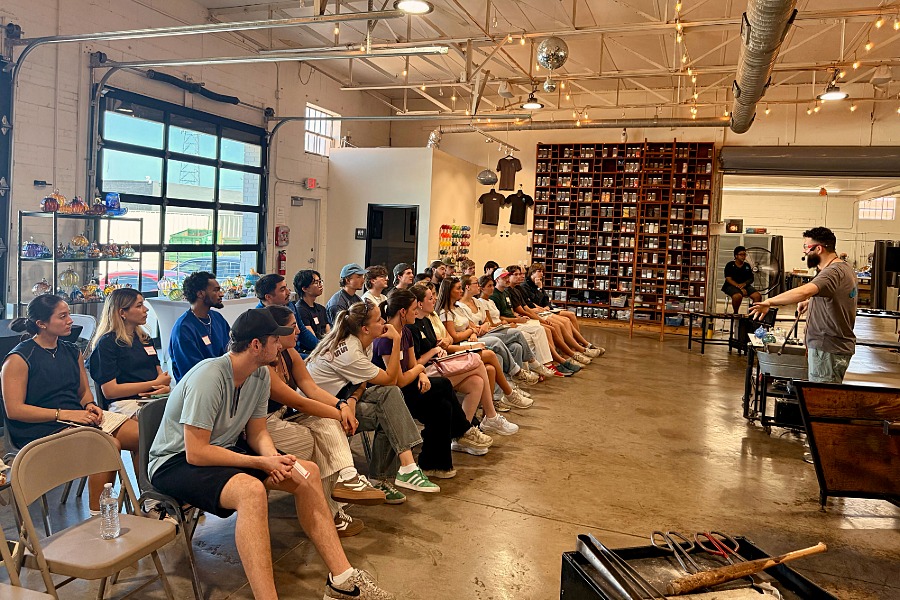
Gibbs College of Architecture Professors Amber Brown and Amy Leveno led 29 students to Dallas, Texas, in September for a learning experience as part of their Design 7 Studio course.
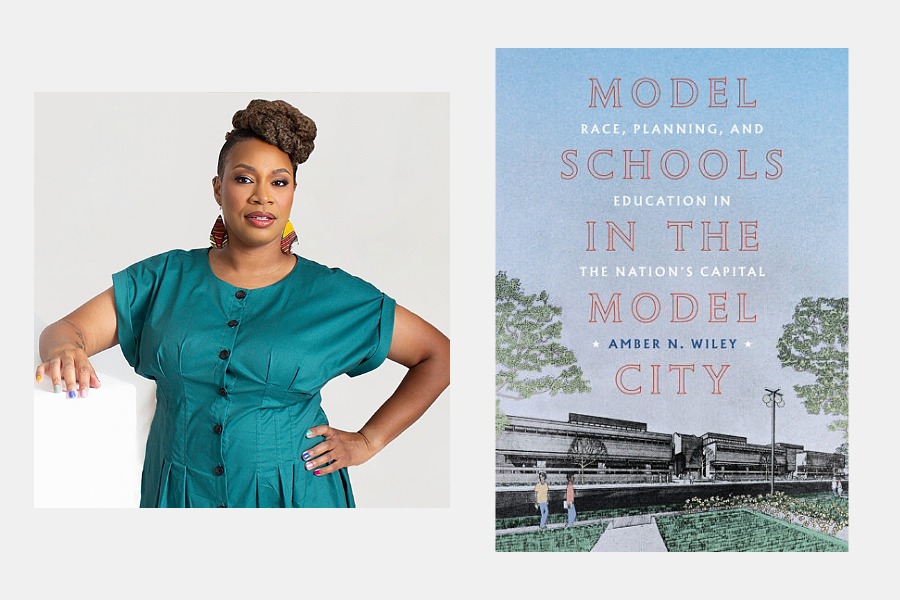
Christopher C. Gibbs College of Architecture professor and Institute for Quality Communities Director Dr. Amber N. Wiley’s book, Model Schools in the Model City: Race, Planning, and Education in the Nation’s Capital, has received two major honors from the Urban History Association.