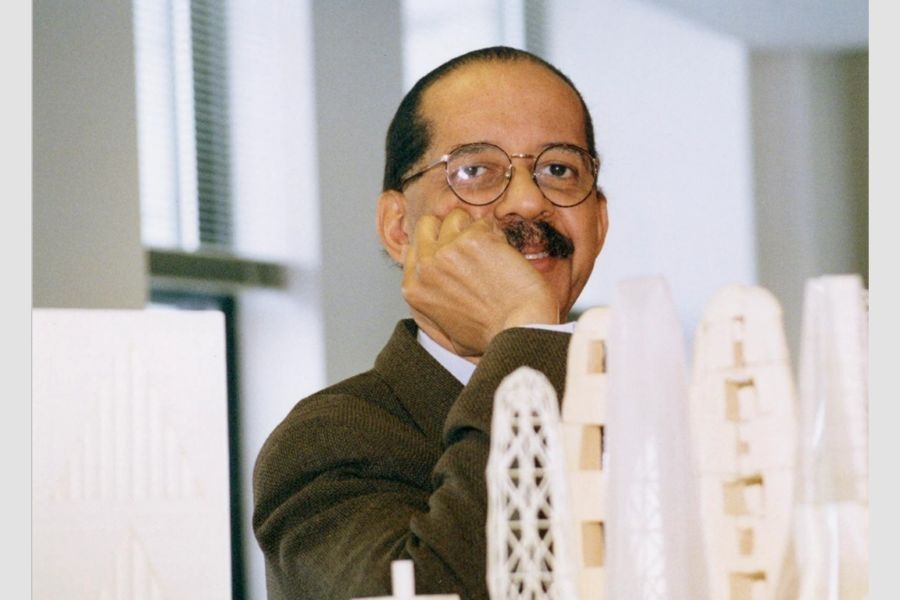
Today, we’re spotlighting Robert L. (Bob) Wesley. A native of Memphis, Tennessee, Wesley received his Bachelor of Architecture (1962) and Master of Architecture (1963) from the University of Oklahoma, where he was the second Black graduate of the OU architecture program. Wesley joined the Chicago office of Skidmore, Owings & Merrill (SOM) in 1964 and became its first Black partner in 1984.
During his nearly four decades with the Chicago office of SOM, he worked on an impressive range of civic, educational, commercial, master planning and infrastructure projects located in the US and internationally, including Algeria, Australia, Canada, Mexico and the UK.
Among his major urban Chicago projects, Wesley worked on included The Art Institute of Chicago, Field Museum of Natural History, Chicago Symphony Hall, Chicago Lyric Opera House, University of Chicago, Northwestern University, Chicago Lakefront Millennium Park, O’Hare International Airport and Collateral Land Planning, Chicago Transit Authority and the Chicago International Entertainment District.
In 2020, the SOM Foundation created an award in his name for undergraduate students enrolled in architecture, landscape architecture, urban design, or structural engineering programs across the US.
We encourage you to learn more about Robert L. Wesley, an incredible individual who has contributed exceptionally to civic and cultural growth and the field of architecture. You can learn more about Wesley on the SOM Foundation website and via this oral history produced by MAS CONTEXT.
Linked below is a video interview with Wesley produced by Gibbs College in 2021. Read on for highlights from the interview transcript.
This transcript has been edited for clarity and length.
Wesley: I was born and raised in Memphis, Tennessee. Both of my parents lived at home with my three older siblings, one brother, and two sisters. We had a good family life, both of my parents worked. My mother was a photographer, and my father worked all types of jobs from being a chauffeur to being a gardener. We were always well taken care of and education was important in our childhood. Our neighborhood was incredibly supportive and helped shape us. I started throwing papers at a young age by following in my cousin’s footsteps, all my cousins and siblings threw papers at some point in our childhood.
When I was in seventh or eighth grade my mother’s company, an African American company called McKissack and McKissack, had just completed building a new office and I just remember being in awe when I saw it for the first time. They had brand new offices and desks for people to work in, and I found out that the architect of the building was one of the only African American architects in the country. I had the opportunity to meet one of his brothers, and I was extremely impressed by him. I went home that night and told my mom I wanted to be an architect when I grew up.
I had the opportunity to take a mechanical drawing or shop mechanical repair in the ninth grade, so I took mechanical drawing. The next year they offered a more advanced course, but I was not sure how I was going to complete the industrial education component of my academic training in my segregated high school. I went to my drafting teacher who had taught me for a couple of years to talk to him about it. I told him that I loved architecture and reading about it, so he asked me if I would be interested in a special architecture drawing course. I told him, yes, so he created this course and taught me all about architectural drawing for 11th and 12th grade. I knew when I graduated that is what I wanted to be trained in at a university.
I went off to college in 1955 while everything was segregated in the south, separate but equal. Tennessee State, a historic black institution, had just started a program for architectural engineering, so I enrolled in their five-year program for a Bachelor of Science degree in architectural engineering. My professor [Leon Quincy Jackson, a graduate of OU and student of Bruce Goff] advised me by introducing me to people from OU, and by telling me to get a master’s after graduation. I was not accepted into the programs that were separate but equal in the South, so that is how I kind of ended up at OU.
Wesley: A couple of things, after I finished my bachelor’s degree, I worked for a year at McKissack and McKissack while I was trying to get enrolled. Most of the schools hadn’t heard of Tennessee State, so they wanted me to start over as a freshman. I was having a hard time dealing with all of that, so my professor suggested that he could call OU and explain everything to them. They told him that I could come out there for a year to finish up some of the classes that would qualify me for the master’s program, so I went out in January of 1962 to start that. I remember passing students who asked: “Who is this guy Robert Wesley with these drawings up on the wall? We don’t know who he is.” I just kept walking because I did not know any of them and they did not know me. After one semester, they let me into the graduate program. That was one of the highlights while attending there.
My last semester in my landscape class, we were all excited because we were traveling down to Dallas to tour gardens and other things down there. I had to talk to my professor because I did not know where I was going to stay while we were down there since the hotels were segregated. He said that the whole class had agreed to stay at a hotel that would accept me. That showed me that the staff and students are extremely nice and very understanding. I had a great time, and the teachers were wonderful there.
Wesley: I think people tend to focus on the nuts and bolts of a profession rather than the whole picture, like being a team player and accepting real challenges. I had to prepare myself for some people at OU, but I had some people who were extremely kind, generous, and supportive. I think it builds character and gives them a good foundation when you’re developing. We had all these influences that were very talented and creative like Bruce Goff and Frank Lloyd Wright. The diversity of backgrounds and skills made for a rich environment of creative individuals. If you applied yourself, you were able to learn a great deal and you take that with you when you start to practice in the real world.
Wesley: I did not have a lot of funds to go to the top schools like Harvard, but Oklahoma had the creative brainpower to be able to offer a good architecture program with really recognizable people. Some people like Bruce Goff were about 50 years ahead of their time when creating the crazy buildings.
I got really lucky that I was able to attend a good school, and the professors who ran the school were supportive. They set themselves apart from the faculty and staff that they had. I remember being down under the stadium drawing for classes and OU would be playing football games. Everybody loved the studio environment and got along very well.
Wesley: It was different, SOM is one of the leading architecture firms in the world. I remember going there for the first time, everyone had on dark pants with a white shirt. There was so much talent and diversification of the staff. Once you get out of college that is where you will want to go because you’ll learn so much. The projects are difficult but unique and have the opportunity to work with the best in the world. Of course, you have to wait three years to get your license, which is hard as well. At SOM I never had anyone treat me differently than anyone else there. I learned a great deal while working all over the world on all kinds of projects. It is hard to obtain a position like that because every partner has to agree to bring you on board, so I was very fortunate.
Wesley: Some of my favorite projects were the most difficult ones to work on. One of my first projects at SOM was helping Walter Netsch design a library for Northwestern University. I helped him with the drawings and adding notes to the sketches. All of that was the learning experience, I wanted to know everything. If you want to design a building, you have to be able to know all of the components that go along with it. Starting with that and then working my way up to being the person in charge of all of the technical issues of the firm, and then being a managing partner.
Wesley: Number one is having good character traits, always maintain that. It doesn’t cost anything to be nice or considerate. The other thing is that you want to find work where you can be trained by the very finest professionals. You want to go somewhere that is very demanding and can be tough and require the very best out of you. Try to work in a multi-disciplinary firm, it will also teach you teamwork. So, I would say character and the diversity of disciplines are the two most important things.
I am appreciative of my experience at OU, you have to give credit to those who help you overcome the different hurdles that you may face. I can only praise OU for the things that they did for me. I cannot imagine where I would be without OU. It all comes back to the foundation and OU is a part of my foundation.
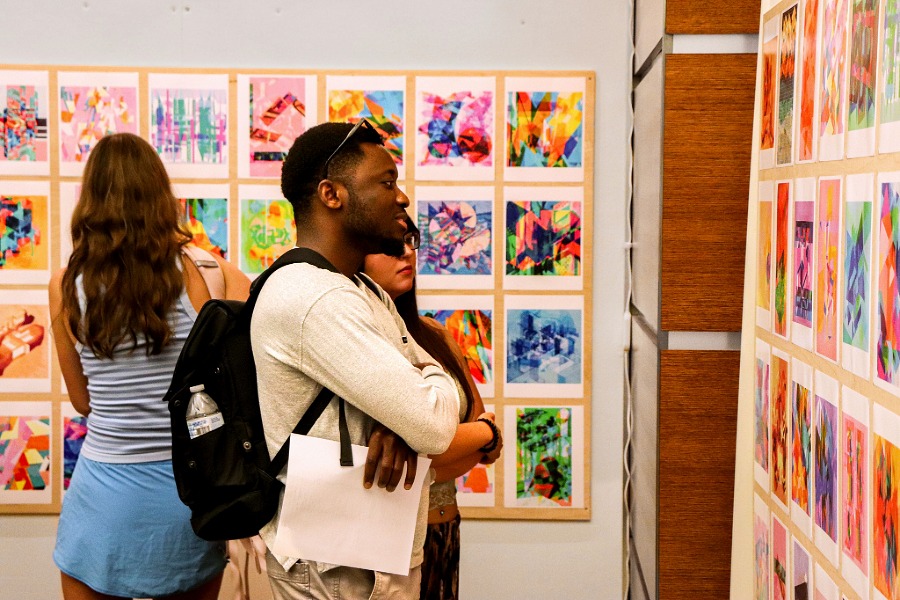
Gibbs College is pleased to present the exhibition 200 Digital Drawings by Professor Tiziana Proietti, currently on display in the Gould Hall Living Room.
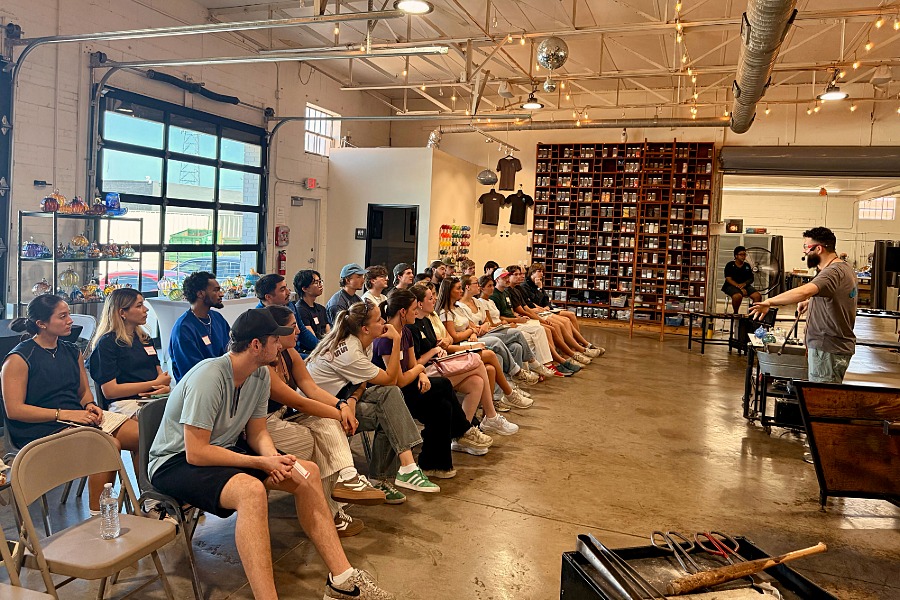
Gibbs College of Architecture Professors Amber Brown and Amy Leveno led 29 students to Dallas, Texas, in September for a learning experience as part of their Design 7 Studio course.
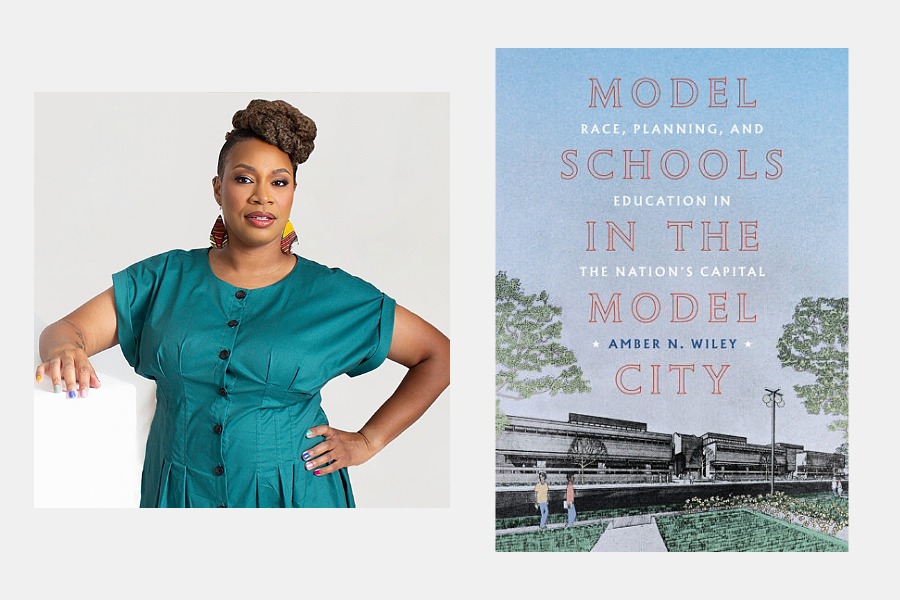
Christopher C. Gibbs College of Architecture professor and Institute for Quality Communities Director Dr. Amber N. Wiley’s book, Model Schools in the Model City: Race, Planning, and Education in the Nation’s Capital, has received two major honors from the Urban History Association.