The American School refers to the school of design and practice that developed under the guidance of Bruce Goff, Herb Greene and others at the University of Oklahoma in the 1950s and ’60s. The architects of the American School have long been characterized as renegades, iconoclasts and apostates.
Outré West: The American School of Architecture from Oklahoma to California considers the works of a group of architects who were educated and mentored in Oklahoma in the 1950s and 1960s, and later developed groundbreaking design practices in California. Projects like the eastern span of the San Francisco-Oakland Bay Bridge and the fantastical Pavilion for Japanese Art on the Miracle Mile in Los Angeles demonstrate their imaginative approach to design. Through archival drawings, photographs, and ephemera, Outré West explores how these architects translated their American School education into practices that continue to enrich California’s built environment to this day. For more information, visit the exhibition homepage at the Oklahoma Contemporary Arts Center.
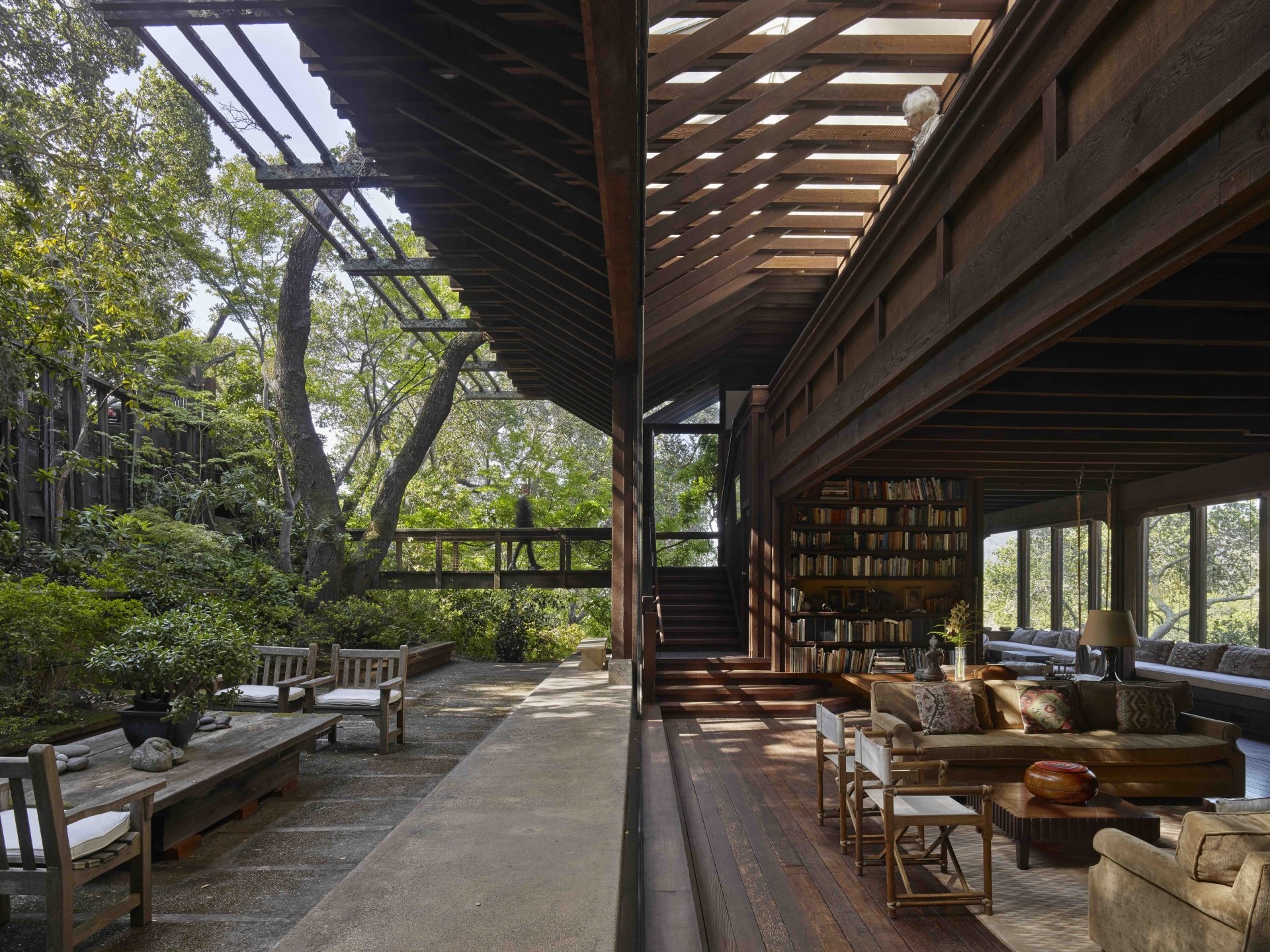
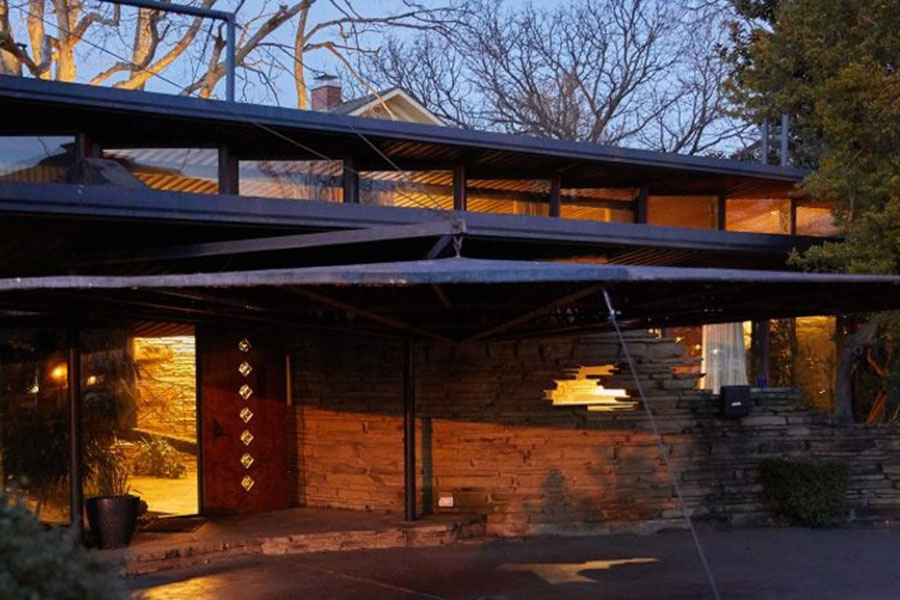
Barbour Residence, Kentfield, Ca., designed by John Marsh Davis, 1965
Bruce Damonte, photographer.

Explore recent American School exhibitions.
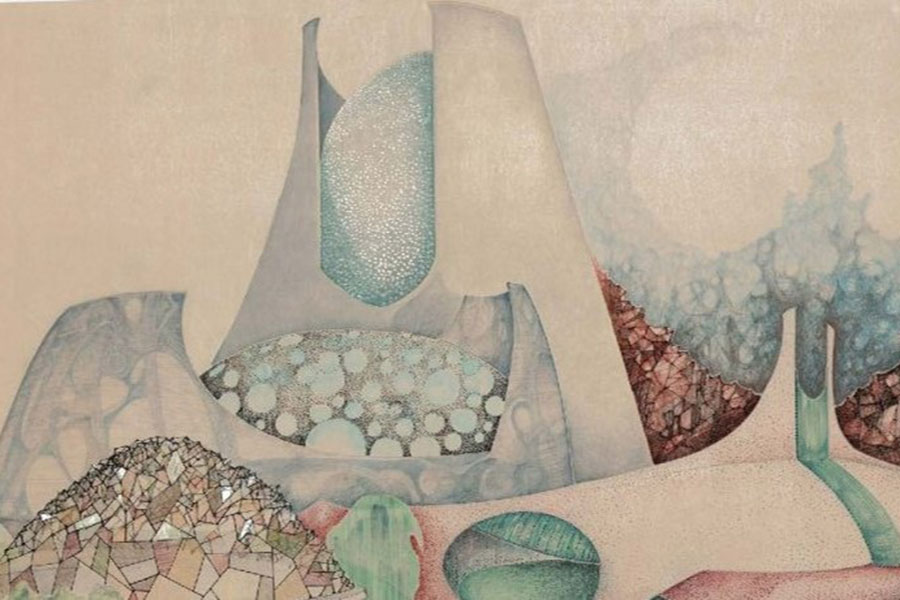
Renegades: Bruce Goff and the American School of Architecture tells a story of dramatic change in three sections: Moving Past the Beaux-Arts and Bauhaus, “Do Not Try to Remember”: The American School Curriculum, and The American School Legacy.
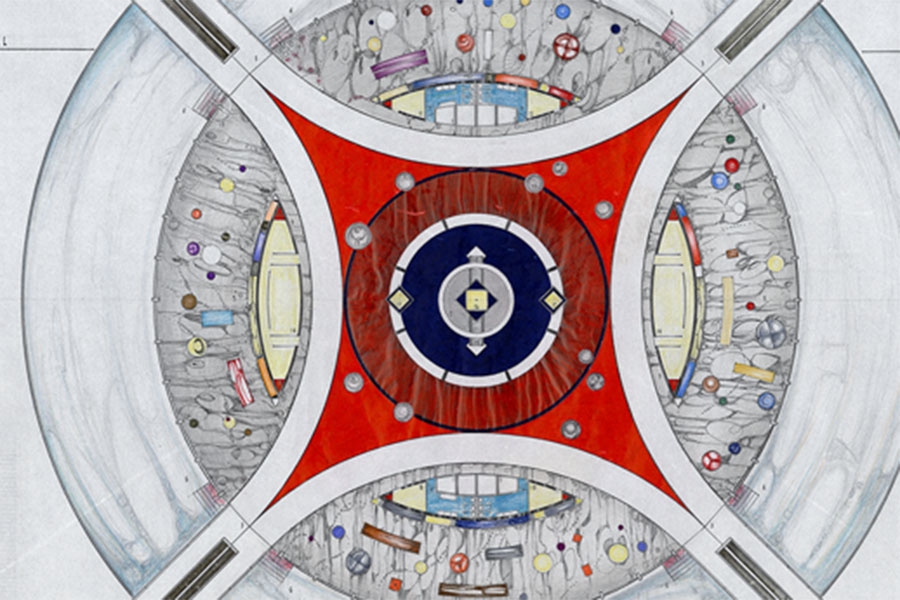
The American School is now captured in a new archive housed within the University Libraries’ Western History Collections. Renegades at Bizzell exhibits works from this new archive for the first time ever, in three sections: “The OU College of Architecture,” “The American School in Practice,” and “Architectural Archives.”
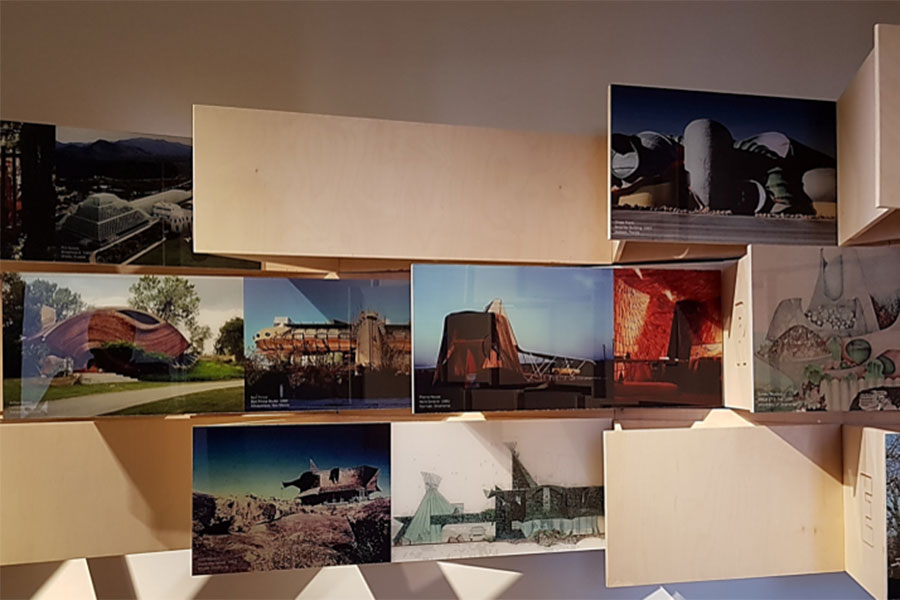
The pioneering efforts of University of Oklahoma architecture professors and students during the 1950s and ’60s, including Bruce Goff, Herb Greene, and others, is known as The American School. Together, they re-imagined the possibilities of the built environment, beginning fresh with each new project. To tell this story, this exhibition centers on the theme “Do Not Try To Remember,” a phrase often used in Goff’s teachings.

Take a behind-the-scenes look at the American School with Q&As, videos, tours, and more.
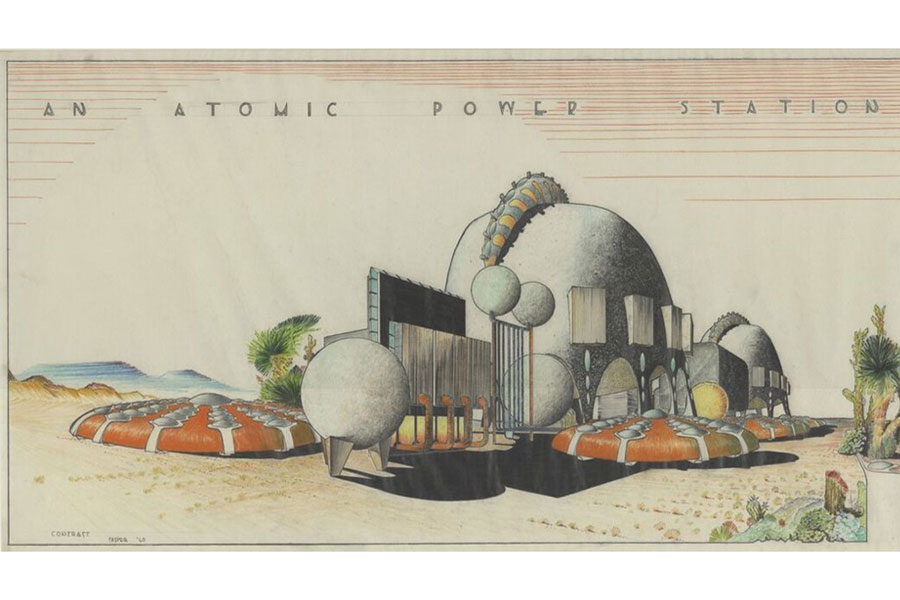
Learn how American School student work is being preserved by OU Libraries in a new archive.
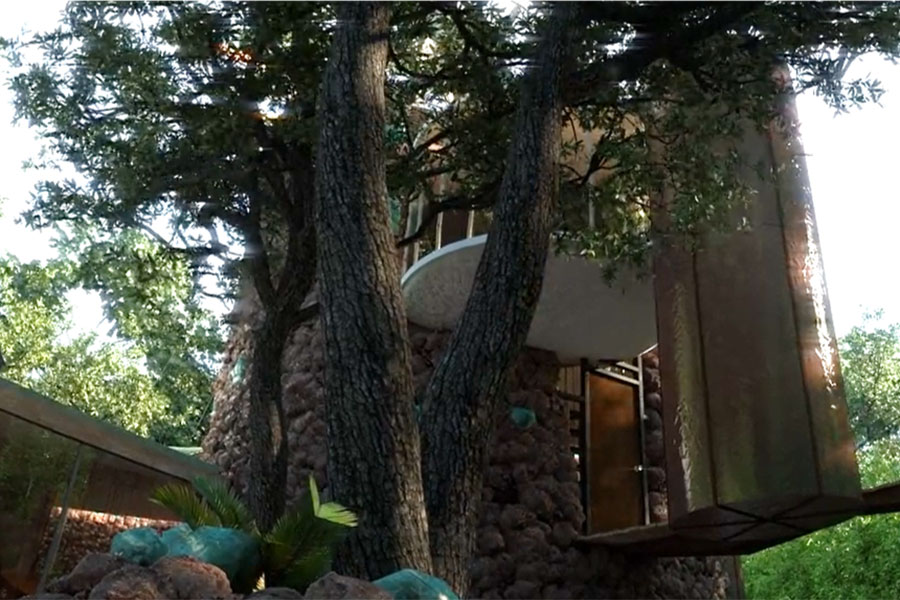
View a stunning digital recreation of Bruce Goff’s Bavinger House (1950) created by Skyline Ink.
Learn why preserving the American School legacy is more important now than ever before.

Architecture student Kimberly Huff shares what it’s like to attend the American School of Architecture.
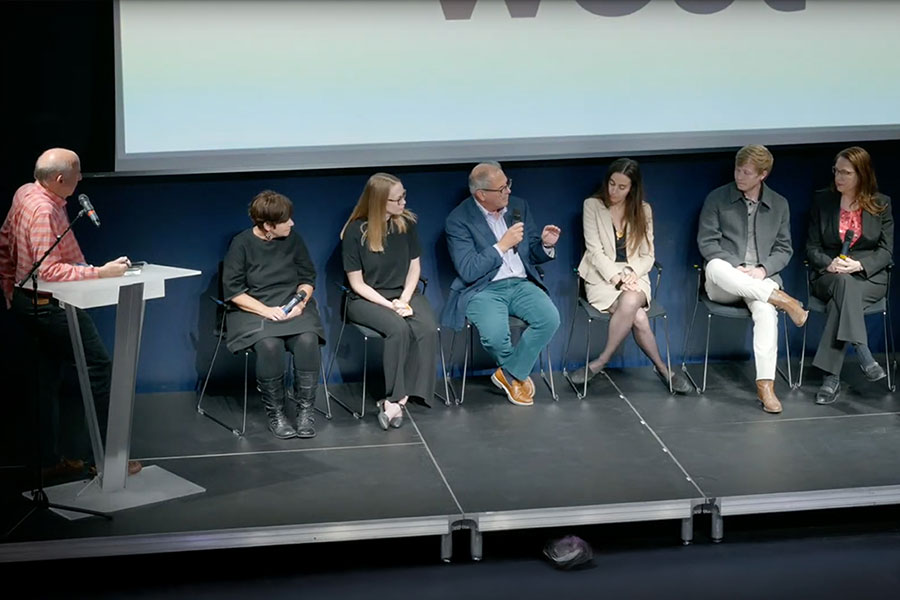
Renowned historian Alan Hess situates the history of the American School of Architecture at the Outré West symposium and then leads a panel discussion with curators.

Watch the opening program of Outré West: The American School of Architecture from Oklahoma To California.

Read the history of this distinctively American movement born on the Oklahoma prairie.
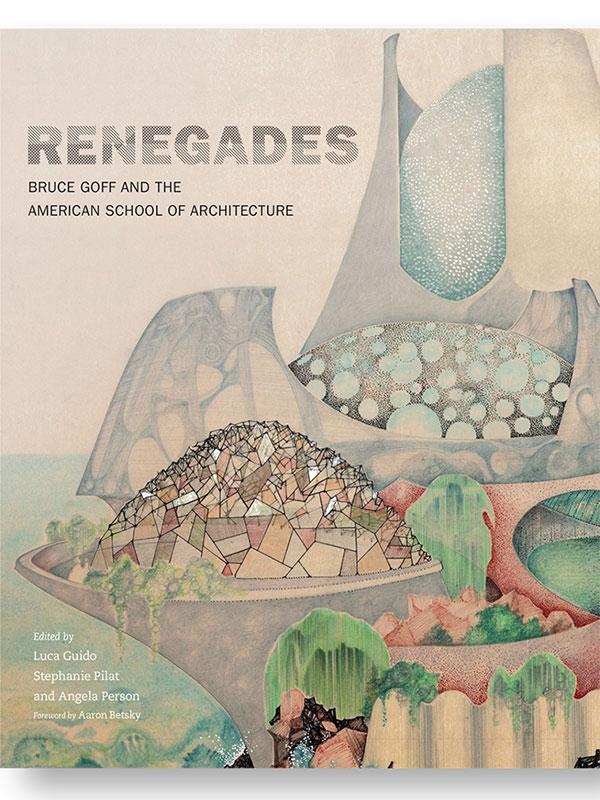
Luca Guido, Stephanie Pilat and Angela Person
OU Press (2020)
Paperback, 272 pages
*Finalist for the College Art Association’s 2021 Alfred H. Barr Jr. Award
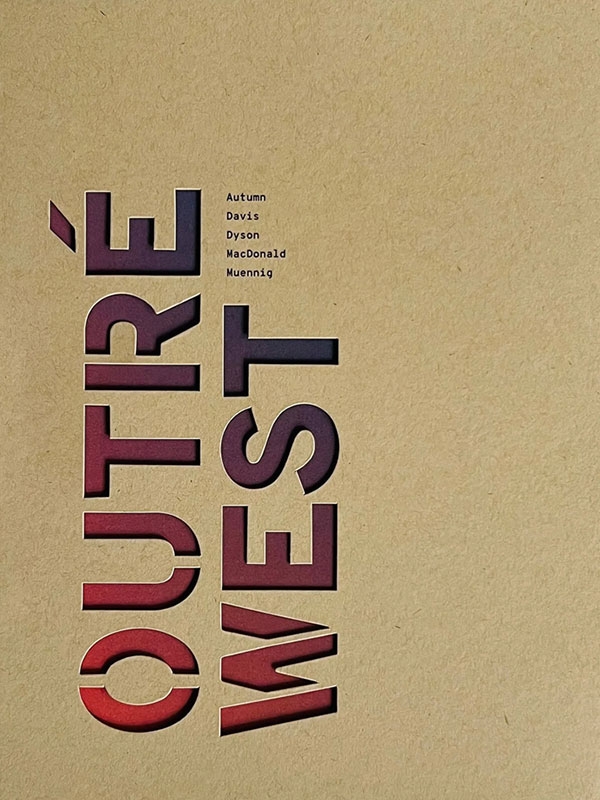
Angela Person, Stephanie Pilat, and Marco Piscitelli
Oklahoma Contemporary Arts Center (2024)
Hardcover, 192 pages

Explore stunning drawings and photographs from the American School Archive.

Featuring hundreds of photographs, drawings and more from the American School Archive
Launched April 2021
*Supported by the National Endowment for the Arts

See coverage of the American School in major media outlets.
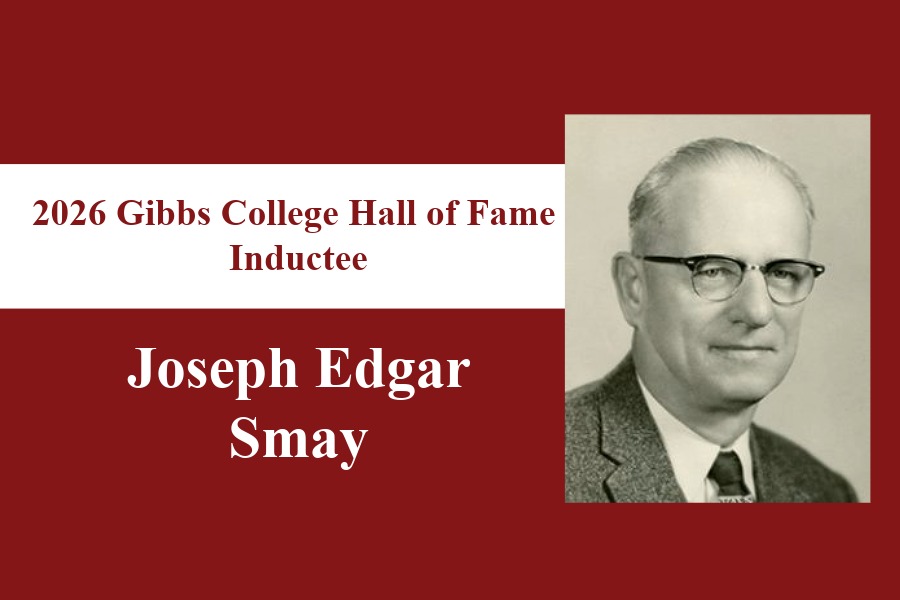
The University of Oklahoma Christopher C. Gibbs College of Architecture Hall of Fame recognizes a select number of high-character individuals who have made a significant and lasting positive impact on Gibbs College, its students, staff, faculty, alumni and/or to communities across the globe. The impact may have been, or continues to be, in the form of service and mentorship, sustained professional excellence, and/or advancement and financial support. Joseph Edgar Smay is part of the 2025 Hall of Fame class.
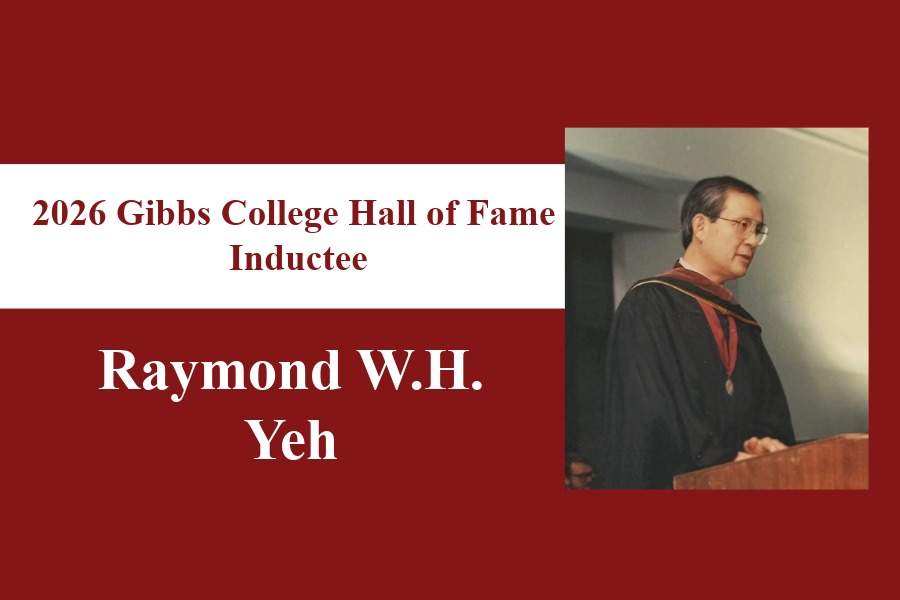
The University of Oklahoma Christopher C. Gibbs College of Architecture Hall of Fame recognizes a select number of high-character individuals who have made a significant and lasting positive impact on Gibbs College, its students, staff, faculty, alumni and/or to communities across the globe. The impact may have been, or continues to be, in the form of service and mentorship, sustained professional excellence, and/or advancement and financial support. Raymond W.H. Yeh is part of the 2025 Hall of Fame class.
The University of Oklahoma Christopher C. Gibbs College of Architecture Hall of Fame recognizes a select number of high-character individuals who have made a significant and lasting positive impact on Gibbs College, its students, staff, faculty, alumni and/or to communities across the globe. The impact may have been, or continues to be, in the form of service and mentorship, sustained professional excellence, and/or advancement and financial support. Joseph Edgar Smay is part of the 2025 Hall of Fame class.

As the University of Oklahoma reconsiders the history of the American School of Architecture with an eye towards its future, and as humanity stands at an inflection point, its legacy project offers a collective opportunity to revisit the previous century, and even earlier before the land was named America, for seeds to nurture and re-ignite the architectural imagination. There isn’t really an alternative.
Jennifer Dunlop Fletcher
Helen Hilton Raiser Curator and Head of Architecture and Design at San Francisco MOMA
Since 2017, Dr. Stephanie Pilat, Dr. Angela Person, and Dean Hans Butzer have led the American School Project to document and preserve this legacy with the support from hundreds of community members, including faculty, students, staff, alumni and others. Central to this effort is the American School Archive, housed in OU Libraries’ Special Collections. The archive contains thousands of rare drawings, photographs, and documents. Its holdings are secured by a generous gift from Sherry Faust, wife of the late architect Robert Faust, a Goff student and key figure in the American School. This gift preserves the school’s legacy and supports new research and educational initiatives that explore its enduring relevance in architecture today.

The American School project would not be possible without the support of the following individuals and organizations and many others who may not yet be listed below:
The Renegades: Bruce Goff and the American School of Architecture Exhibition Curation and Research efforts were led by Luca Guido with: Erik Baker, Bridget Burke, Hans Butzer, Sam Callahan, Anthony Cricchio, Angela Person, Stephanie Pilat, Elizabeth Pober, Lynne Rostochil, Carl Siegel, and Matt Stock. The Exhibition Design and Fabrication team was led by Michael Hoffner with: Paul Bagley, Bryan Bloom, Jordan Brauser, Torrey Butzer, Jacob Cullum, John Grunewald, Kimberly Huff, Ken Marold, Joe McFall, John King, Lorenzo Perez, Evan Sack, Bristol Souders, Allyson Stumpf, and Reilly Tuer. Virtual Reality models were created and generously donated by Skyline Ink of Oklahoma City. Physical models were created by OU architecture students including: Jordan Brauser, Ben Decuyper, Emily Hays, Farzan Mahmoudzadeh, and Evan Sack. The team at OU Printing Services, especially Greg Scott, provided amazing support. Special thanks to Somik Ghosh, Avery Hightower, Angela Person and Haley Sandell for preparing this online interactive version of the exhibition.
Support from the OU Libraries staff was critical to the creation of the American School Archive. Special thanks to Bridget Burke, Carl Grant, Kristina Grimsley, Barb Laufersweiller, Rick Luce, and Rick Schultz. We’re grateful for tremendous support from the OU Press, especially Stephanie Evans, Adam Kane, and Tony Roberts. The project would not have been possible without the tireless support from GCA staff and faculty, especially Camille Germany, Leehu Loon, Ginger Murray, Jerry Puckett, and Garrett Stowe. Countless more students, faculty, staff and volunteers have donated their time to these efforts since 2016. A strong partnership between the Gibbs College of Architecture and the Fred Jones Jr. Museum of Art was critical to bringing this exhibition to fruition.
Thank you to our generous donors: