
Instructional Leadership and
Academic Curriculum
Early Childhood Education
Email: wkjang@ou.edu
Phone: (918) 660-3987
Office: OU-Tulsa Campus 4W116
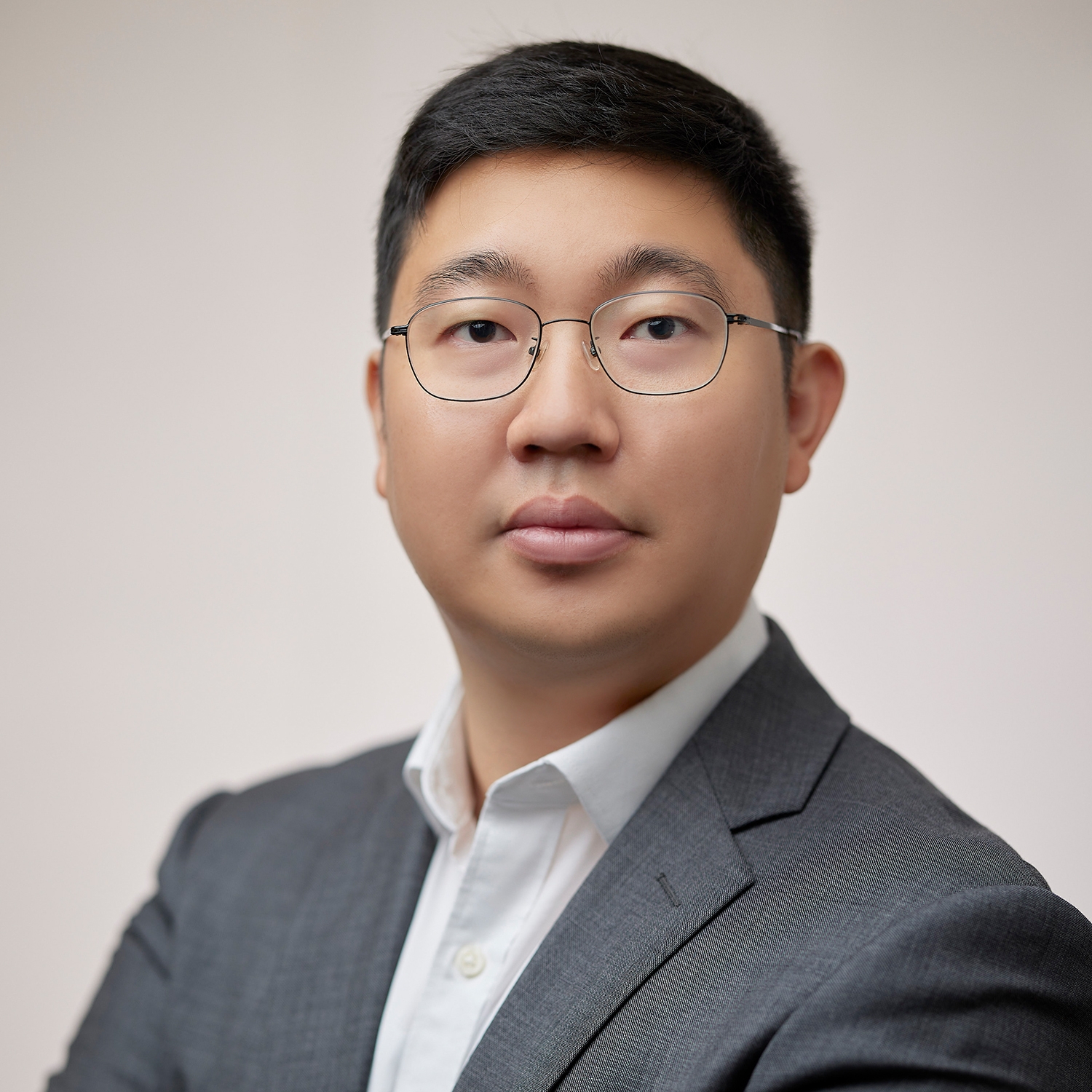
Wonkyung Jang is an Assistant Professor in the Jeannine Rainbolt College of Education at the University of Oklahoma, specializing in early literacies and information and data sciences. His research examines how children and families engage with information in everyday life, and how these interactions support literacy development from Birth through Grade 3. He studies the different kinds of information young children are surrounded by, including picture books, storytime, apps, videos, songs, and poems, as well as the information adults use to support literacy development at home, in schools, libraries, and communities.
As Principal Investigator of the AI Lab for Transforming Literacies Education for Young Children, Jang has secured more than $700,000 in federal, state, and institutional funding as Principal Investigator and Co-Principal Investigator to advance an interdisciplinary agenda connecting early literacies, information and data sciences, and community engagement. Across projects, his goal is not to replace human judgment, but to build human-centered tools grounded in critical Big Data and sociotechnical perspectives that help practitioners notice and respond to children’s diverse literacy practices in ways that expand participation, belonging, and agency. In keeping with this commitment to practice-facing, community-engaged research, Jang collaborates with families, teachers, librarians, and community partners as co-researchers, positioning homes, schools, and libraries as interconnected information hubs for learning, public engagement, and policy-relevant research.
Jang understands early literacies as plural, multimodal practices through which children make meaning using print, images, sound, gesture, movement, talk, play, drawing and mark-making, spatial arrangement, objects and materials, and digital interaction within culturally and socially organized contexts. Drawing on social semiotics theory, he develops AI-enabled multimodal Big Data fusion models to capture and analyze moment-by-moment literacy activity that often goes unseen. His work integrates video, audio, text, interaction logs, eye-tracking, and sensor data to examine how meaning-making unfolds in real time.
Another focus of his work is equity in children’s literature and media. He approaches stories as a powerful source of insight into children’s learning and social worlds, and he examines how bias appears in books, stories, and digital content, and how recurring narrative patterns shape children’s expectations about gender, race and ethnicity, disability, and who is seen as belonging in valued roles. He also studies literacy at both micro and macro levels, linking children’s real-time meaning-making to the broader social and institutional forces that shape what counts as literacy, whose voices are amplified, and which identities and futures are made visible in children’s literature and media.
Jang’s work has received state, national, and international recognition. His research productivity includes 15 peer-reviewed journal publications, with six manuscripts currently under revision and nine additional manuscripts in development, as well as more than 50 conference presentations focused on early childhood, literacies, information environments, family/community engagement, and multimodal AI. In 2025, he received the Pre-Tenure Faculty Award, an honor bestowed by his colleagues in the Jeannine Rainbolt College of Education. Additional honors include the Best Poster Award at the Conference on Artificial Intelligence in Smart Cities, a First Place Poster Award from the Oklahoma Partnership for School Readiness, the Doctoral Scholarship from the National Association of Early Childhood Teacher Educators Foundation, and the Wallace Foundation Scholarship from the International Society of the Learning Sciences. He has also received institutional recognition for transdisciplinary and convergent research and for global engagement through university and college-level awards.
His teaching and mentoring have also been formally recognized. At the University of North Carolina (UNC) at Chapel Hill and the University of Oklahoma, Jang has designed and taught interdisciplinary, innovative courses spanning early childhood, literacies, and information and data sciences. At UNC–Chapel Hill, he received the Provost’s Tanner Award for Excellence in Undergraduate Teaching, the university’s highest teaching honor, and was one of five graduate students selected campuswide. He has also been invited by the National Council on Family Relations to deliver a webinar on machine learning and AI for interdisciplinary audiences, reflecting his commitment to translating multimodal Big Data methods into accessible approaches for researchers, practitioners, and policy stakeholders in early literacies and family and community engagement.
Jang earned his Ph.D. in Education, with an emphasis on early literacies, from the University of North Carolina at Chapel Hill. While pursuing his doctorate, he also earned a Master of Science in Statistics and a Graduate Certificate in Computational Linguistics, with training spanning UNC’s School of Information and Library Science and the Departments of Linguistics, Computer Science, and Statistics and Operations Research. This interdisciplinary preparation grounds his work at the intersection of early literacies, information environments, and multimodal AI, informed by social semiotics and sociotechnical perspectives. Over the past decade, he has worked as a teacher and advanced early literacies research through community-engaged partnerships with families, librarians, museum educators, and community partners to design and study literacy-rich learning experiences across homes, schools, libraries, and community settings.
