NEWS

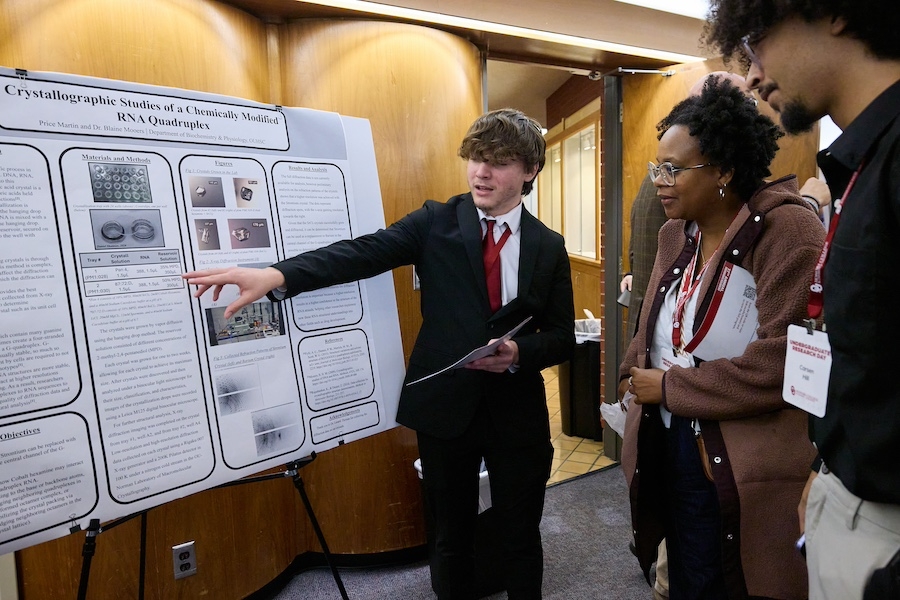
NORMAN, OKLA. – The University of Oklahoma Honors College will host its 38th annual Undergraduate Research Day on April 16, offering the community an opportunity to see the research, creative projects and scholarly work produced by OU students across disciplines.
The event serves as a campuswide showcase of undergraduate scholarship and allows others to learn about research taking place at OU. Visitors are welcome to view student presentations and speak with student researchers from 8 a.m. to 4 p.m. in the Thurman J. White Forum Building, 1704 Asp Ave., Norman.
Organizers expect over 140 students to present projects this year, with participation coming from across OU. While the event has traditionally included many students from science and engineering fields, organizers note that participation is from disciplines across all OU campuses, including the arts, humanities, social sciences and business.
“This event celebrates the time and effort undergraduate students put into their research,” said Paul Gilmore, Ph.D., dean of the OU Honors College. “It also highlights an important part of a research university education, which is helping students understand how knowledge is created and shared in different fields.”
Students will present research posters and projects throughout the day. Presenters will explain their work to visitors, faculty members and judges while also exploring other projects on display.
Undergraduate research has become an increasingly important component of the OU student experience. Programs such as the First-Year Research Experience (FYRE) introduce students to research early in their academic careers and encourage them to explore topics beyond the classroom.
“Research days like this help students share their stories and learn from one another,” said Javeed Kittur, Ph.D., assistant professor in the Gallogly College of Engineering and co-director of research for the Honors College. “When students see what their peers are doing, it can inspire them to pursue their own research ideas and build on them.”
Now in its 38th year, Undergraduate Research Day reflects the growing role of research in undergraduate education at OU, where students increasingly engage with faculty mentors on projects spanning science, technology, creative arts and the humanities. Held prior to OU’s spring Parents Weekend, the event is expected to draw increased attendance from family and friends. Organizers are also planning a reverse career fair in conjunction with Undergraduate Research Day, where employers can view student projects and speak directly with presenters. Career Services is coordinating employer participation.
OU leaders are scheduled to participate, with Provost André-Denis Wright, Ph.D., opening the event and President Joseph Harroz Jr. delivering remarks.
For more information, visit the Undergraduate Research Day website or email universityevents@ou.edu.
About the University of Oklahoma
Founded in 1890, the University of Oklahoma is a public research university located in Norman, Oklahoma. As the state’s flagship university, OU serves the educational, cultural, economic and health care needs of the state, region and nation. For more information about the university, visit www.ou.edu.
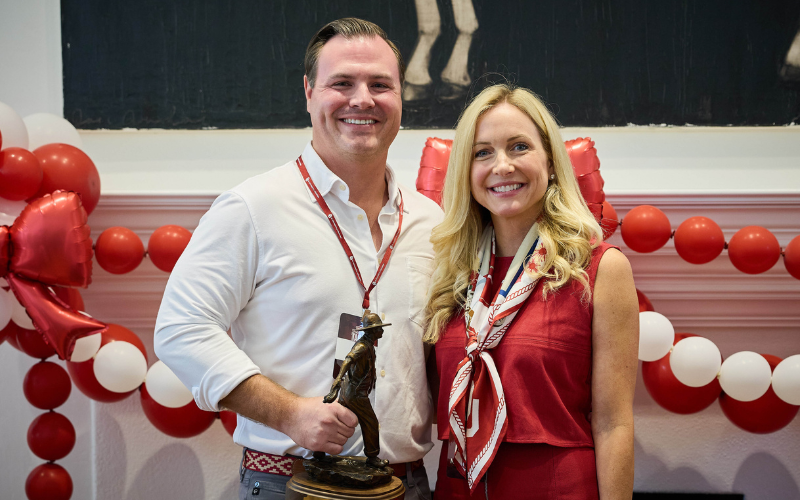
The University of Oklahoma has received a transformative gift from Jon and Shannon McCartney, which will name the McCartney Family Tunnel of Champions, the McCartney Family Gate of the Gaylord Family - Oklahoma Memorial Stadium and the McCartney Family Grand Lecture Hall in the Michael F. Price College of Business. The gift will also support the Inspiring Champions and the Athletic Director’s Discretionary Fund, in addition to establishing the McCartney DFW Career Trek program at Price College.
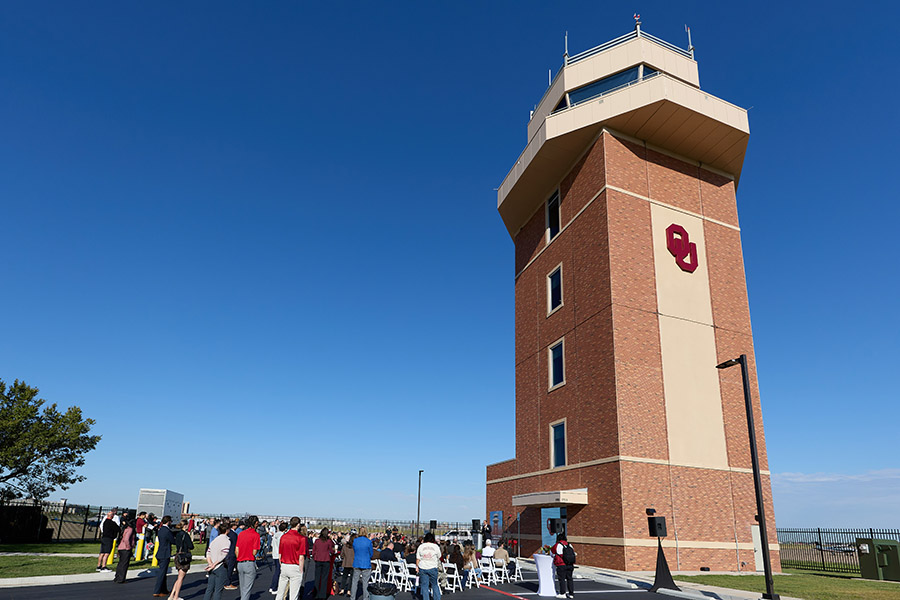
The University of Oklahoma today celebrated the opening of a new air traffic control tower at the OU Max Westheimer Airport. Standing 106 feet tall, more than double the current 52-foot facility, the new tower will modernize air traffic control operations and improve safety for pilots and students operating in the airspace.
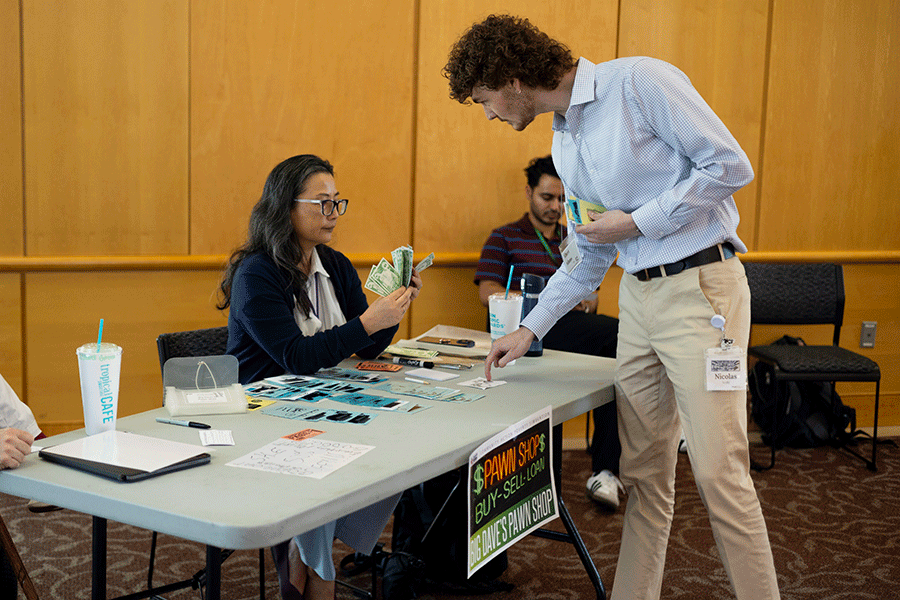
Do I buy groceries or pay the electric bill? Should I pawn some of my belongings to afford my prescription? My child is sick, so I will have to miss work to take care of him. Those are just a few of the difficult choices that OU-Tulsa health professional students confronted during the Community Access to Resources Experience. The role-playing activity challenged students to navigate the financial, family and other pressures that can affect a person’s health and ability to follow medical advice. Held annually during the SCM Institute orientation week, the experience is designed to generate understanding and build empathy.