NEWS

NORMAN, OKLA. – The University of Oklahoma’s Native Nations Center for Tribal Policy Research recently released a new Sovereign Report titled “Purchased/Referred Care and Cancer: Overview and Options for Tribal Consideration.”
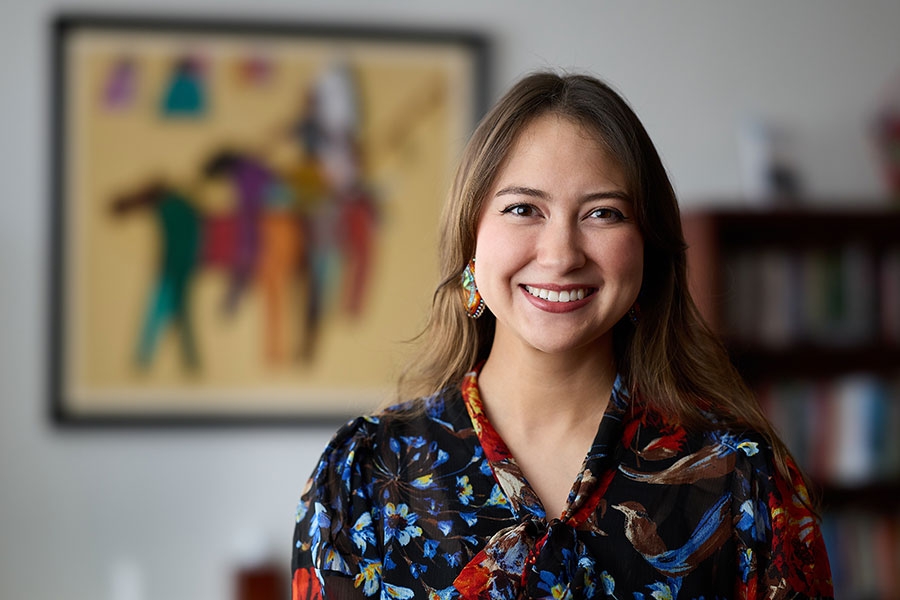
Authored by Grace Fox (Seminole), tribal health care policy analyst at the center, the report examines how the Indian Health Service’s Purchased/Referred Care (PRC) program intersects with cancer screening, diagnosis, treatment and follow-up for eligible tribal citizens.
PRC is the program through which the Indian Health Service (IHS) authorizes and pays for eligible care delivered by non-IHS or non-tribal providers when services are unavailable or inaccessible locally. The report provides an overview of PRC structure, eligibility requirements, notification timelines, medical-priority levels, alternate-resource coordination and funding constraints.
“Our work at the Native Nations Center is first and foremost for tribal leaders and their communities,” Fox said. “This report is designed to provide clear, accessible information about how the Indian Health Service’s Purchased/Referred Care program works in practice and where, particularly in cancer care, delays or gaps are most likely to occur.”
The report emphasizes that cancer is an increasingly urgent public health priority in Indian Country. American Indian and Alaska Native populations experience later-stage diagnoses, lower screening participation and higher mortality than the U.S. population overall.
“When someone is facing a cancer diagnosis, timing matters,” Fox said. “The Purchased/Referred Care program often serves as the bridge to specialty oncology services that aren’t available locally. Understanding that process – from referral to authorization to payment – can make a meaningful difference for patients and for tribal health systems.”
While the report draws on national data and federal regulations, it also includes Oklahoma-specific information. Oklahoma is home to 39 Tribal Nations, 38 of which are federally recognized tribes. All 77 counties in the state are designated purchased and referred care delivery areas under federal Indian Health Service guidelines. Even with a statewide purchased and referred care delivery area status, individuals must still meet all eligibility, documentation and funding requirements for program authorization.
Fox said the report’s final section outlines policy options tribes may consider under the current system, including self-determination and self-governance authorities, regional collaborations and service-delivery models such as mobile screening and teleoncology. Teleoncology uses telemedicine technology to deliver cancer care services. The section also addresses care coordination and navigation, as well as avenues for sovereignty-driven federal engagement.
Fox’s position as tribal health care policy analyst at the Native Nations Center for Tribal Policy Research was created as a collaborative effort between the center and the Native American Center for Cancer Health Equity at the Stephenson Cancer Center. It was funded by the Improving Cancer Outcomes in Native American Communities (ICON) grant as part of a larger effort to transform health-related research and policy for tribal communities. The report was developed in consideration of the grant’s initiatives and reflects ongoing discussions among researchers, clinicians and community partners working to address cancer disparities in tribal communities. The rigorous review process by the Native Nations Center for Tribal Policy Research sought to incorporate the multidisciplinary expertise of several members of the cancer health equity team.
Fox said the report has already reached beyond its initial audience of tribal leaders, drawing interest from clinicians, researchers and health partners across Oklahoma and nationally. She said the ICON grant, supported in Congress by U.S. Rep. Tom Cole, helped make the work possible and has opened conversations with health leaders and policymakers in Washington, D.C., about how PRC policies affect access to cancer care in tribal communities.
While the work is nonpartisan research and policy analysis to support tribal decision-making, it is also shaped by personal experience.
“I think of my mom, who had cancer this time last year,” Fox said. “Seeing her lived experience and her struggles, and knowing that time was of the essence, she didn’t have time to go through Indian Health Service because of how long it would have taken.
“That, on its own, shines a light upon the challenges that exist,” Fox said. “It shows why tribes and tribal citizens could benefit from having more information and improved pathways to care.”
Fox noted the report is not prescriptive, however. “We are not telling tribes what to do. We are providing research-driven analysis and options for consideration that tribes can evaluate within their own governance structures and priorities.”
In addition to Fox, the Native Nations Center is comprised of Evelyn Cox (CHamoru), research project manager, Tana Fitzpatrick, J.D. (Lakota/Crow/Ponca/Chickasaw), associate vice president of Tribal Relations, and Quanah Yazzie (Navajo), office manager. They continuously work to provide research products to tribal leaders, citizens and partners through reports and briefings. To learn more about the Office of Tribal Relations in the Office of the President, visit here.
About the University of Oklahoma
Founded in 1890, the University of Oklahoma is a public research university located in Norman, Oklahoma. As the state’s flagship university, OU serves the educational, cultural, economic and health care needs of the state, region and nation. For more information about the university, visit www.ou.edu.
The University of Oklahoma has received a transformative gift from Jon and Shannon McCartney, which will name the McCartney Family Tunnel of Champions, the McCartney Family Gate of the Gaylord Family - Oklahoma Memorial Stadium and the McCartney Family Grand Lecture Hall in the Michael F. Price College of Business. The gift will also support the Inspiring Champions and the Athletic Director’s Discretionary Fund, in addition to establishing the McCartney DFW Career Trek program at Price College.
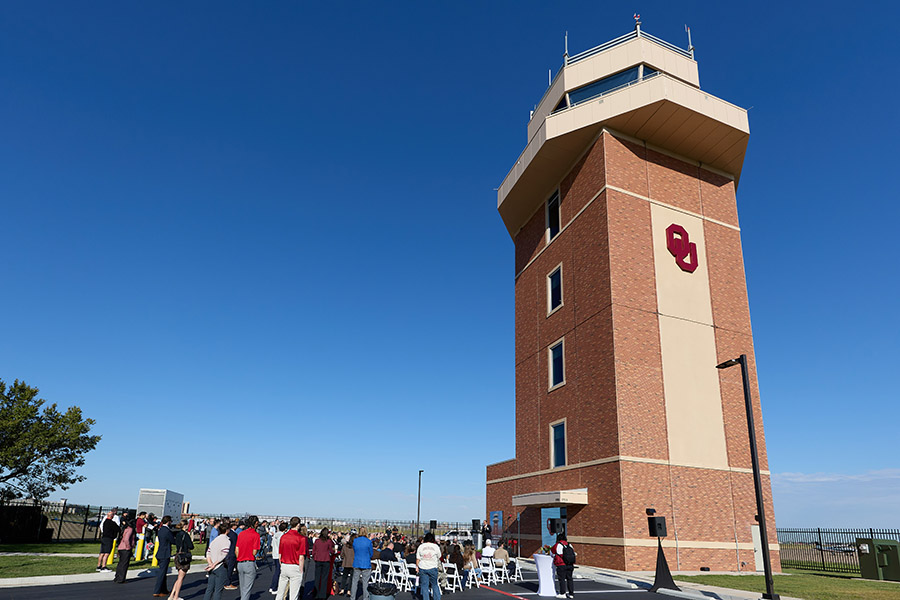
The University of Oklahoma today celebrated the opening of a new air traffic control tower at the OU Max Westheimer Airport. Standing 106 feet tall, more than double the current 52-foot facility, the new tower will modernize air traffic control operations and improve safety for pilots and students operating in the airspace.
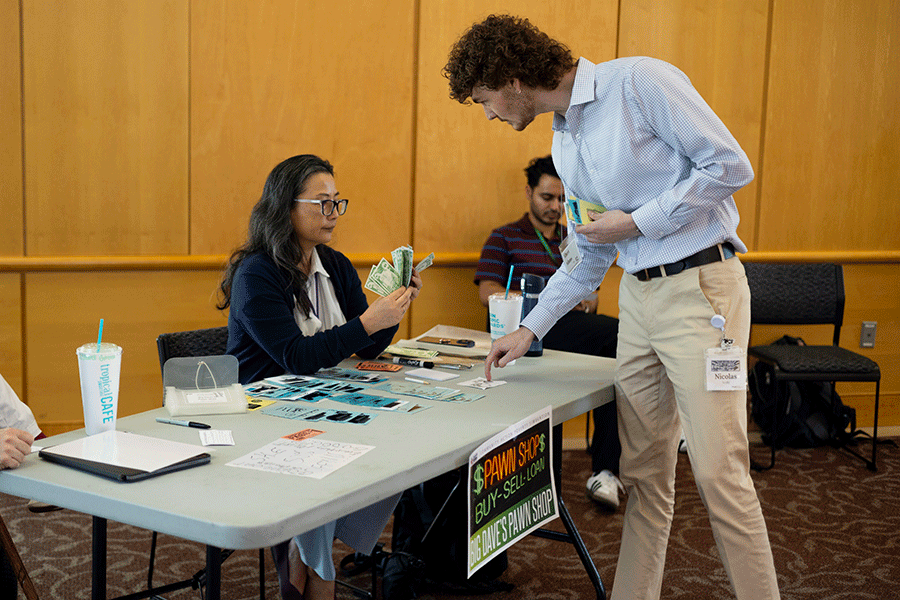
Do I buy groceries or pay the electric bill? Should I pawn some of my belongings to afford my prescription? My child is sick, so I will have to miss work to take care of him. Those are just a few of the difficult choices that OU-Tulsa health professional students confronted during the Community Access to Resources Experience. The role-playing activity challenged students to navigate the financial, family and other pressures that can affect a person’s health and ability to follow medical advice. Held annually during the SCM Institute orientation week, the experience is designed to generate understanding and build empathy.