NEWS

NORMAN, OKLA. – Confident, visionary founders on “Shark Tank” attract investors, unless their confidence becomes combative, according to a recent study published by researchers with the Vlerick Business School, University of Oklahoma, Iowa State University, Texas Tech University and Baylor University.
The study analysed 789 pitches from 12 seasons of “Shark Tank” to investigate how founder behavior influences investor decisions. Their findings show that not all displays of confidence are equally effective, and some may even be detrimental.
The researchers focused on two distinct forms of narcissism. The first, narcissistic admiration, is associated with charm, confidence and persuasive storytelling. The second, narcissistic rivalry, is marked by defensiveness, aggression and a tendency to dominate conversations.
They discovered that entrepreneurs who displayed admiration-based behaviors were significantly more likely to secure funding. In contrast, those who exhibited rivalry-based traits were often unsuccessful, even when the fundamentals of their businesses were strong.
“Founders who radiate vision and charm tend to gain investor trust and interest,” says Veroniek Collewaert, co-author and professor of entrepreneurship at Vlerick Business School. “But those who react aggressively or appear overly status-driven tend to trigger scepticism – even if the venture itself is sound.”
To conduct the study, the researchers used validated psychological frameworks to code founder behaviours during televised pitches. They then analysed how these behaviors influenced investor sentiment, measured both through language and final investment decisions.
The findings challenge the widespread assumption that boldness and assertiveness are always advantages in the pitch room. Instead, they suggest that investors are highly attuned to interpersonal dynamics and may be swayed as much by how a founder presents themselves as by what they present.
Study co-author, professor at the University of Oklahoma and a leading expert in executive psychology, Oleg Petrenko, said, “Most of us assume narcissism is unequivocally harmful in business: arrogant founders repel investors and undermine venture success. Yet, our research uncovers a surprising twist – narcissism is actually a double-edged sword. Paradoxically, investors aren’t necessarily wary of narcissism itself, but rather of its specific form. Narcissistic founders don’t necessarily fail because they are narcissists; they fail when they become combative narcissists.”
The study offers practical insights for both entrepreneurs and investors. For founders, it reinforces the importance of handling feedback with grace and maintaining a collaborative tone. For investors, it provides a framework for understanding how subtle behavioral cues can influence decisions, sometimes more than they realize.
Entrepreneurial success doesn’t just come down to boldness, the researchers conclude. It often hinges on whether a founder invites admiration or provokes conflict.
“It’s not about being less narcissistic, but about channelling narcissism toward admiration rather than rivalry,” Petrenko said. “Investors reward confidence but punish combativeness—two faces of the same trait that lead to very different outcomes.”
Co-authors of the paper include Veroniek Collewaert (Vlerick Business School), Andrew Blake (Texas Tech University), Oleg Petrenko (University of Oklahoma), Ileana Maldonado-Bautista (Iowa State University), Paul Sanchez-Ruiz (Iowa State) and Kendall W. Artz (Baylor University).
This research was published in the journal Organization Science.
About the University of Oklahoma
Founded in 1890, the University of Oklahoma is a public research university located in Norman, Oklahoma. As the state’s flagship university, OU serves the educational, cultural, economic and health care needs of the state, region and nation. For more information about the university, visit www.ou.edu.
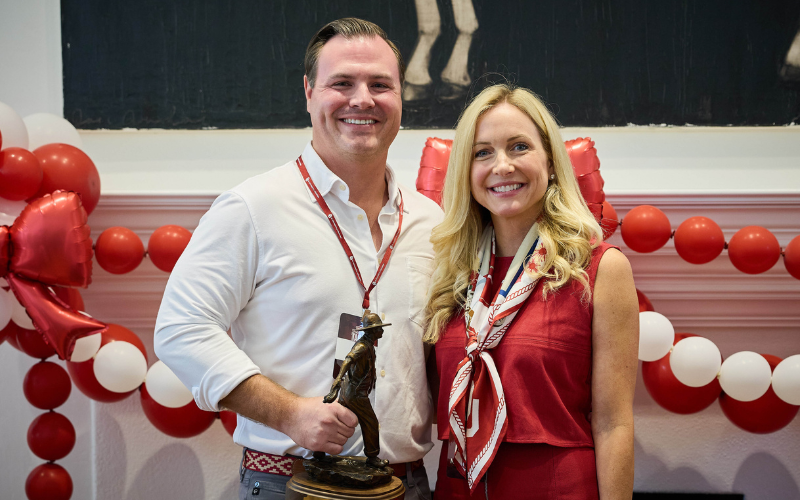
The University of Oklahoma has received a transformative gift from Jon and Shannon McCartney, which will name the McCartney Family Tunnel of Champions, the McCartney Family Gate of the Gaylord Family - Oklahoma Memorial Stadium and the McCartney Family Grand Lecture Hall in the Michael F. Price College of Business. The gift will also support the Inspiring Champions and the Athletic Director’s Discretionary Fund, in addition to establishing the McCartney DFW Career Trek program at Price College.
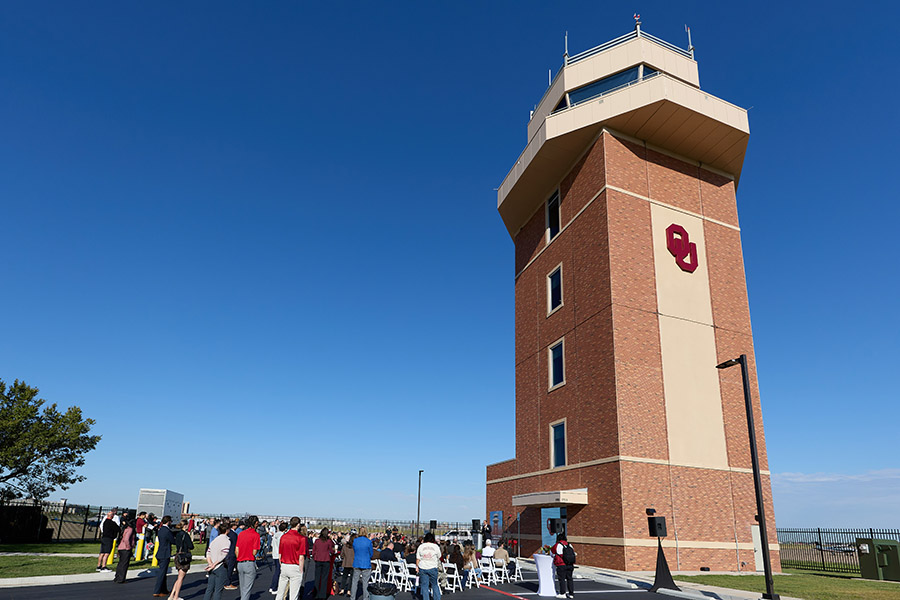
The University of Oklahoma today celebrated the opening of a new air traffic control tower at the OU Max Westheimer Airport. Standing 106 feet tall, more than double the current 52-foot facility, the new tower will modernize air traffic control operations and improve safety for pilots and students operating in the airspace.
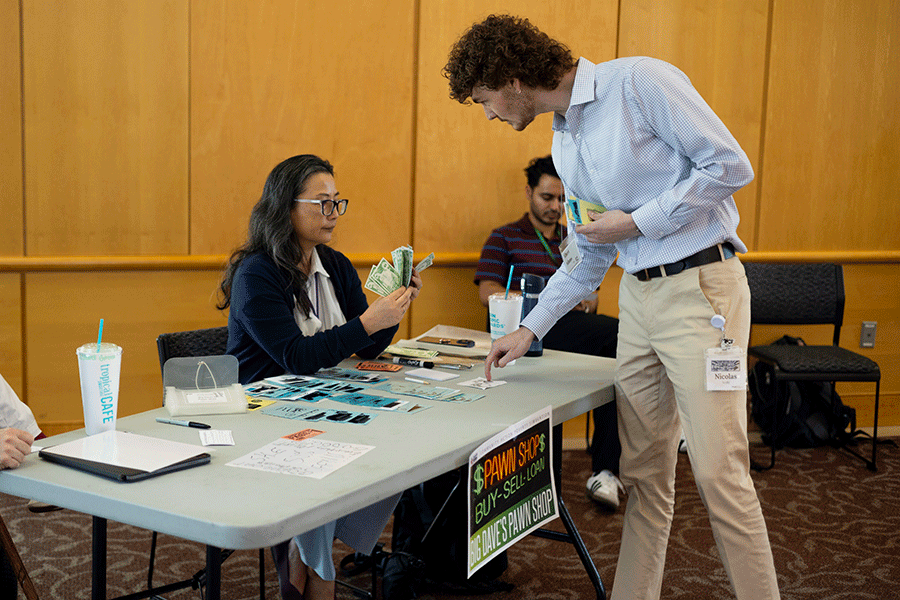
Do I buy groceries or pay the electric bill? Should I pawn some of my belongings to afford my prescription? My child is sick, so I will have to miss work to take care of him. Those are just a few of the difficult choices that OU-Tulsa health professional students confronted during the Community Access to Resources Experience. The role-playing activity challenged students to navigate the financial, family and other pressures that can affect a person’s health and ability to follow medical advice. Held annually during the SCM Institute orientation week, the experience is designed to generate understanding and build empathy.