NEWS

NORMAN, OKLA. – Understanding how life recovers in the aftermath of a mass extinction is critical to unraveling the broad patterns of evolutionary development that have shaped Earth’s history.
To further this understanding of Earth’s turbulent history, David Wright, Ph.D., assistant curator of invertebrate paleontology at the Sam Noble Oklahoma Museum of Natural History and assistant professor in University of Oklahoma Mewbourne College of Earth and Energy, recently received a Junior Faculty Fellowship to further his research on crinoids – ancient and living relatives of starfish and sea urchins – and discover how this group diversified following the end-Permian mass extinction.
Mass extinctions, which eliminate vast portions of Earth’s biodiversity in geologically brief periods, have reshaped life on Earth multiple times. The end-Permian mass extinction, the most severe extinction event in history, wiped out nearly all crinoid species, leaving only a single lineage to repopulate the oceans. Wright’s research focuses on how surviving species diversified after this catastrophic event and how these evolutionary patterns can inform our understanding of how life changes over time.
“The fossil record effectively provides a set of natural experiments on the consequences of environmental change,” Wright said. “By studying these historical events, we gain insights into how ecosystems respond when pushed past their breaking points, which has direct implications for understanding biodiversity loss today.”
By comparing molecular phylogenetics, which maps evolutionary relationships through DNA with fossil evidence, Wright seeks to bridge the gap between ancient and modern species. His research reveals how environmental crises drive evolutionary adaptation and how species that survive mass extinctions shape the ecosystems that follow.
“Broadly speaking, the environmental drivers of global change during the end-Permian event are worryingly similar to a number of modern environmental challenges facing today’s marine ecosystems, including climate change, ocean acidification and habitat destruction,” Wright said.
“Perhaps more so today than previously in Earth history, the best strategy to mitigate the potential loss of crinoids and other marine animals is to protect and conserve critical habitats for biodiversity, such as coral reefs. By researching how life survives and diversifies, we can more efficiently direct conservation efforts and help prevent a new mass extinction.”
The Sam Noble Museum is the officially designated natural history museum for the state of Oklahoma and is located on the University of Oklahoma Norman campus at 2401 Chautauqua Ave.
About the University of Oklahoma
Founded in 1890, the University of Oklahoma is a public research university located in Norman, Oklahoma. As the state’s flagship university, OU serves the educational, cultural, economic and health care needs of the state, region and nation. For more information about the university, visit www.ou.edu.
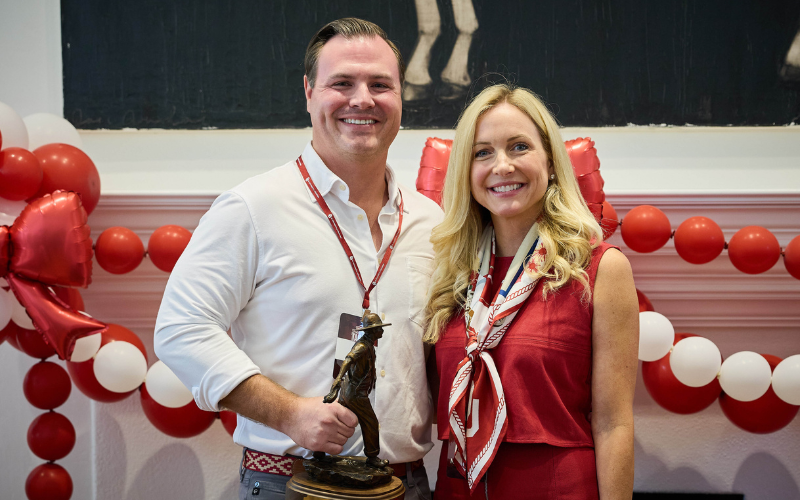
The University of Oklahoma has received a transformative gift from Jon and Shannon McCartney, which will name the McCartney Family Tunnel of Champions, the McCartney Family Gate of the Gaylord Family - Oklahoma Memorial Stadium and the McCartney Family Grand Lecture Hall in the Michael F. Price College of Business. The gift will also support the Inspiring Champions and the Athletic Director’s Discretionary Fund, in addition to establishing the McCartney DFW Career Trek program at Price College.
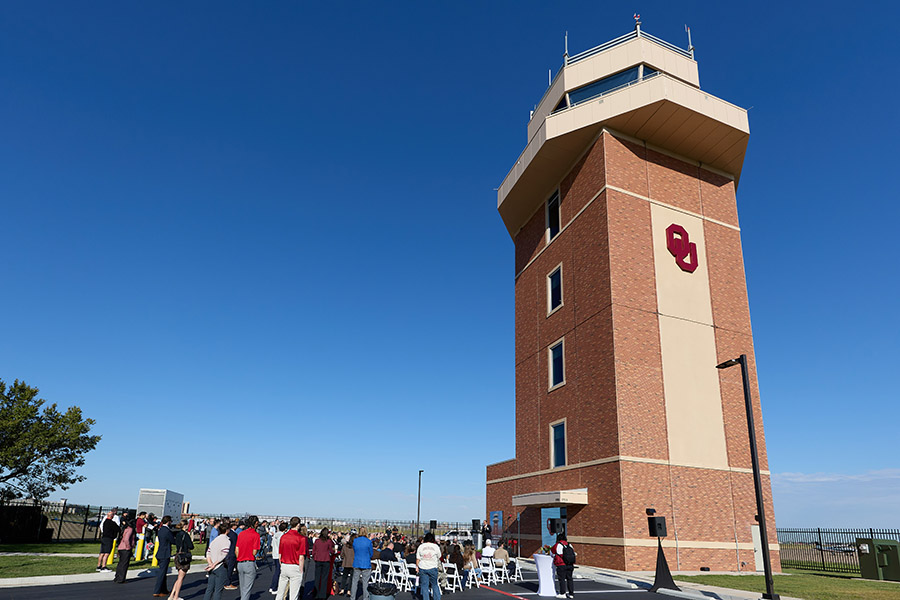
The University of Oklahoma today celebrated the opening of a new air traffic control tower at the OU Max Westheimer Airport. Standing 106 feet tall, more than double the current 52-foot facility, the new tower will modernize air traffic control operations and improve safety for pilots and students operating in the airspace.
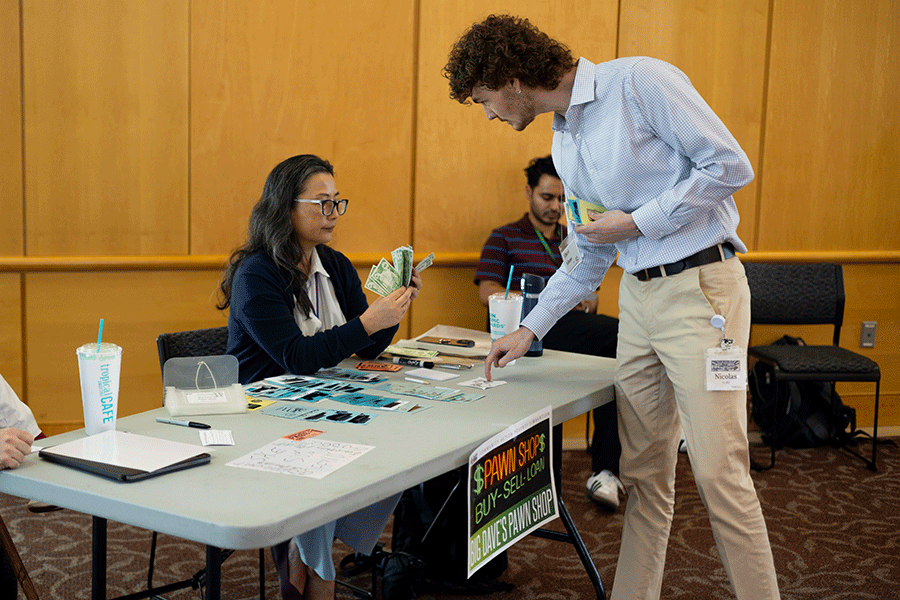
Do I buy groceries or pay the electric bill? Should I pawn some of my belongings to afford my prescription? My child is sick, so I will have to miss work to take care of him. Those are just a few of the difficult choices that OU-Tulsa health professional students confronted during the Community Access to Resources Experience. The role-playing activity challenged students to navigate the financial, family and other pressures that can affect a person’s health and ability to follow medical advice. Held annually during the SCM Institute orientation week, the experience is designed to generate understanding and build empathy.