NEWS


NORMAN, OKLA. – The Australian Strategic Policy Institute and the Knudsen Institute recently named the Oklahoma Chair for Strategic Policy and International Engagement. The University of Oklahoma, through its Oklahoma Aerospace and Defense Innovation Institute, celebrates this addition to its strategic partnerships, which will help shape global defense strategy. The Oklahoma Chair represents a significant milestone in Oklahoma’s expanding partnerships with U.S. allies and its leadership in defense policy, research and industrial innovation.
Housed in ASPI USA’s Washington, D.C. office, the Oklahoma Chair is designed to connect Oklahoma’s industrial capabilities and academic expertise with key decision-makers shaping the trilateral security cooperation and Indo-Pacific strategy between Australia, the United Kingdom and the United States, or AUKUS.
“The creation of the Oklahoma Chair for Strategic Policy and International Engagement at ASPI USA is a recognition of the strong friendship and enduring alliance between the United States and Australia, as well as of the potential for Oklahomans to make essential contributions to defense and security in the Indo-Pacific region,” said OU’s Oklahoma Aerospace and Defense Innovation Institute (OADII) Executive Director Gen. (Ret.) Robin Rand.
The announcement builds on a series of strategic collaborations between OU and ASPI, including summer internships sponsored by OADII and the College of International Studies, and an upcoming fall event designed to convene U.S. and Australian experts around international policy security.
“Formalizing this Chair elevates Oklahoma’s role in advancing global security priorities,” said Adam Leslie, executive director of ASPI USA. “By partnering with the Knudsen Institute—and deepening our ties with OU, OADII and the Oklahoma Defense Industry Association—we’re forging a robust industrial-policymaking pipeline that ensures Oklahoma plays a decisive role in shaping allied deterrence.”
ASPI USA’s convening power, research capabilities, and international networks position Oklahoma not just as a supplier to AUKUS, but as a strategic contributor, bringing the state’s industrial strengths into alignment with key allied technology and security objectives.
“This initiative builds on OU’s efforts to link research, workforce training and policy impact,” said Mark Raymond, OADII associate director for international security policy and the Wick Cary Associate Professor in OU’s College of International Studies. “It reflects the value of OU’s academic leadership in bridging local capabilities with global strategy.”
The Oklahoma Chair will produce biannual reports, host policy workshops and support industrial matchmaking efforts, particularly for small and medium-sized manufacturers across the state. It is funded through a tiered contribution model and managed by the Knudsen Institute with ASPI USA providing institutional hosting and integration into defense policy networks. It is expected to become a major node of influence for Indo-Pacific strategy, particularly as AUKUS Pillar II and DPA Title III authorities expand.
About the University of Oklahoma
Founded in 1890, the University of Oklahoma is a public research university located in Norman, Oklahoma. As the state’s flagship university, OU serves the educational, cultural, economic and health care needs of the state, region and nation. For more information about the university, visit www.ou.edu.
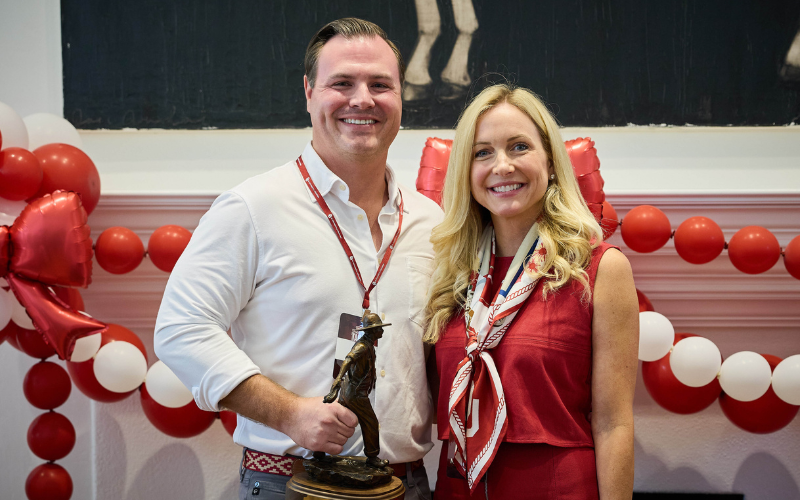
The University of Oklahoma has received a transformative gift from Jon and Shannon McCartney, which will name the McCartney Family Tunnel of Champions, the McCartney Family Gate of the Gaylord Family - Oklahoma Memorial Stadium and the McCartney Family Grand Lecture Hall in the Michael F. Price College of Business. The gift will also support the Inspiring Champions and the Athletic Director’s Discretionary Fund, in addition to establishing the McCartney DFW Career Trek program at Price College.
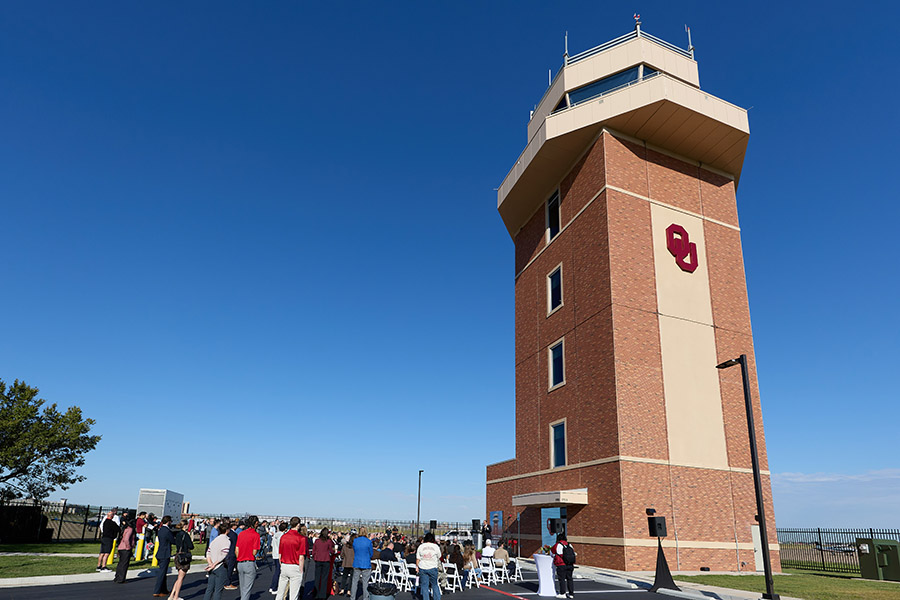
The University of Oklahoma today celebrated the opening of a new air traffic control tower at the OU Max Westheimer Airport. Standing 106 feet tall, more than double the current 52-foot facility, the new tower will modernize air traffic control operations and improve safety for pilots and students operating in the airspace.
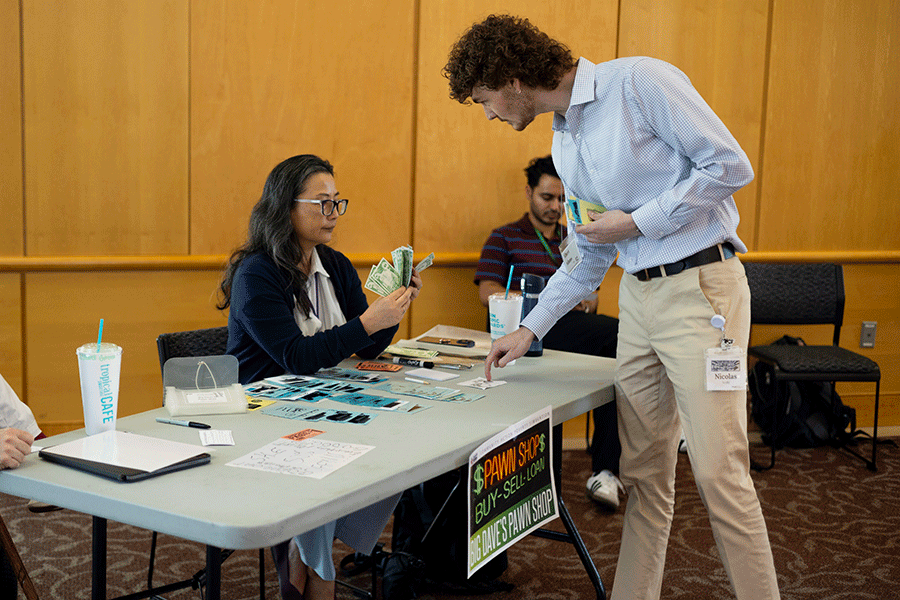
Do I buy groceries or pay the electric bill? Should I pawn some of my belongings to afford my prescription? My child is sick, so I will have to miss work to take care of him. Those are just a few of the difficult choices that OU-Tulsa health professional students confronted during the Community Access to Resources Experience. The role-playing activity challenged students to navigate the financial, family and other pressures that can affect a person’s health and ability to follow medical advice. Held annually during the SCM Institute orientation week, the experience is designed to generate understanding and build empathy.