NEWS


OKLAHOMA CITY, OKLA. – According to the National Centers for Disease Control and Prevention, in the United States, Indigenous mothers, or those who self-identify as American Indian, Alaskan Native, or Native American, are three times more likely to die during or following pregnancy as non-Hispanic White mothers, and more than 90% of those deaths are preventable. The Fran and Earl Ziegler College of Nursing at the University of Oklahoma is organizing data to attempt to change these trends.
“We discussed the scale of maternal morbidity and mortality, how many people it truly affects, and how much room we have for improvement if we can better define the problem and how to address it. That's absolutely the type of thing that I want to do,” said Leremy Colf, Ph.D., an associate professor in the college and the project lead.
This research will link existing national data sources to allow for further investigation of pregnancy-related health care. There is a critical need to better understand social and structural factors related to maternal morbidity and mortality, particularly among those from underserved, understudied and underrepresented populations.
Colf explains that it's vital to better understand the reasons behind maternal morbidity and mortality to improve outcomes. Questions must be answered about what prevents pregnant people from receiving care. Many have multiple risk factors, such as being low-income, a member of a minority group or living in a rural area. But it's important to identify which factors have the most significant impact and why, says Colf.
“We're taking large data sets that look at the entire population to figure out exactly the contributing factors. If you look at data from ten people or one hundred people, you might identify something, but you are still only looking at one factor at a time,” says Colf. “If you look at the entire population of the United States over multiple years, you can see the interplay and where all of these different risk factors connect, and figure out what's really driving the outcomes.”
The project began in August 2024 using anonymized publicly available information. Colf reports that the resulting data is being compiled into easy-to-use software packages to support future and ongoing research efforts. Colf emphasizes the need for this information, especially in Oklahoma, which has a high representation of these vulnerable populations.
“There is no reason that we should have as many mothers and babies suffering and dying as we do; it is an absolutely critical problem,” says Colf. “There's no reason that it should be as bad as it is, and there are ways that we can make it better if we identify those ways specifically. Not only is it helpful for the U.S. at large, but it also has an outsized impact here at home in Oklahoma. We have so many nurses interested in this area of research if we can figure out how to help them do their jobs better and avoid the heartbreak that comes with losing a mother or a child.”
About the project
Building Data Capacity for Maternal Health Equity. National Institute for Child Health and Human Development. U54HD113173-02S1. Principal Investigator: K.M. Shreffler; Project Lead: L. Colf.
Funded: $200,680. Duration: 08/01/24—07/31/25.
Center for Indigenous Resilience, Culture, and Maternal Health Equity. National Institute for Child Health and Human Development. U54HD113173. Multiple Principal Investigators: K.M. Shreffler, J. Friedman, P. Spicer, & T. VanWagoner.
Funded: $10,448,621. Duration: 08/16/2023 – 76/31/2030.
About the University of Oklahoma
Founded in 1890, the University of Oklahoma is a public research university located in Norman, Oklahoma. As the state’s flagship university, OU serves the educational, cultural, economic and health care needs of the state, region and nation. For more information about the university, visit www.ou.edu.
The University of Oklahoma College of Medicine has honored two residents with the Lloyd Rader Award, which recognizes outstanding clinical and research achievements in residency.
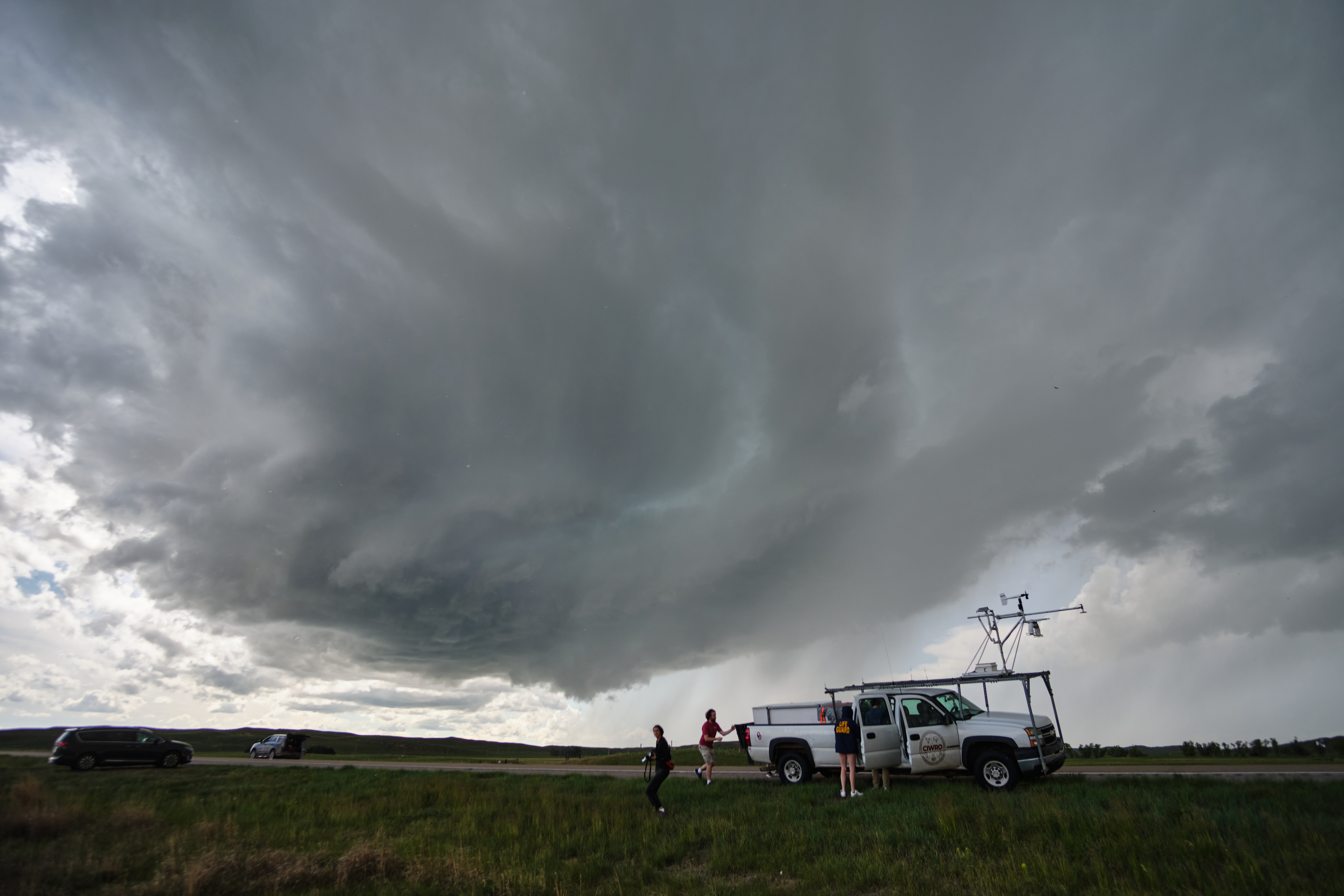
The University of Oklahoma will receive up to $220 million over five years from the U.S. Department of Commerce and the National Oceanic and Atmospheric Administration to continue the life-saving weather research led by the OU-NOAA Cooperative Institute for Severe and High-Impact Weather Research and Operations, extending a nearly 50-year partnership that has helped give Americans earlier, more accurate weather warnings
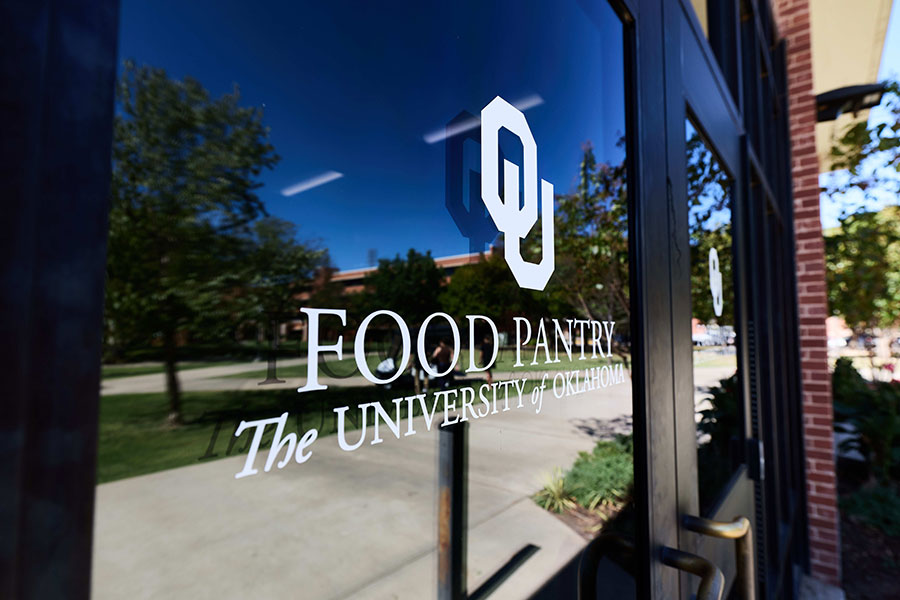
The OU Food Pantry won the annual Red River Food Fight, collecting 31,815.9 pounds of shelf-stable food and drinks to top UT Outpost’s 22,567 pounds. OU has won the competition four years in a row.