NEWS


OKLAHOMA CITY – University of Oklahoma researchers are conducting a first-of-its-kind study to determine whether cannabis use affects recovery from the wounds associated with head and neck cancer surgery. The outcomes may have implications for other types of surgery and conditions.
Lurdes Queimado, M.D., Ph.D., and Mark Mims, M.D., have been funded by the Presbyterian Health Foundation in Oklahoma City to lead the research, which will include 220 adult patients undergoing surgery for head and neck cancer and reconstruction after the tumor removal. Many such surgeries compromise both appearance and physiological functions such as swallowing and breathing.
The research is unique in that it is prospective – patients will be followed for six months from the time of their treatment – rather than retrospectively looking at patient data. In addition, patients’ self-reporting of cannabis use will be biochemically verified through blood tests, which adds strength to the study.
“Research has shown that there is a high rate of cannabis use among cancer patients – more than 50% in some studies, and up to 80% among those who also use tobacco. But there is very little in the medical literature about how cannabis use affects the healing of wounds. Importantly, there are no prospective studies on this topic. We believe the data that we gather will advance our understanding of how the diverse modes of cannabis use affect wound healing and establish a framework for related studies,” said lead principal investigator and Professor of Otolaryngology Lurdes Queimado, M.D., Ph.D. Queimado also directs the Tobacco Regulatory Science Lab at the TSET Health Promotion Research Center, a program of OU Health Stephenson Cancer Center.
Based on her preliminary research, Queimado hypothesizes that cannabis smoking negatively affects wound healing. Her initial studies, though limited, show that non-cancer patients who smoke cannabis have more inflammation and a decrease in immune system function, both of which could reduce wound healing and increase complications.
However, there are many factors to take into consideration, such as the mode in which patients consume cannabis and how often they use it. Queimado’s trial is designed with four groups of patients – those who use cannabis, those who use cannabis and tobacco, those who use tobacco only, and those who use neither.
“We will monitor each group of patients for infections, bleeding, medical complications and scar healing,” she said, “and we will assess how they are using cannabis, whether it’s smoking, vaping or edibles, because they are very different in the effects they have. The ultimate goal is to have information to guide the patient.”
Facial plastic and reconstructive surgeon Mark Mims, M.D., an assistant professor of otolaryngology and surgery, said this study is both relevant and timely.
“Patients come to my office and ask if using cannabis will affect their reconstructive surgery outcome, and we just don’t have enough data to counsel them with confidence,” Mims said.
While the main purpose of the study is to understand the effects of cannabis on wound healing in head and neck cancer patients, Queimado and her team will also gather information about patients’ responses to any treatment in addition to surgery, such as chemotherapy and radiation.
“I think this study has the potential to have major implications for other types of cancer and surgeries, but also for chronic diseases because inflammation and immunity play a significant role in many conditions, such as autoimmune diseases,” Queimado said. “I think there will be many opportunities for growth into other areas once we have established the framework of this study.”
About the project
Queimado and Mims received a $100,000 Clinical Translational Grant Award from the Presbyterian Health Foundation for the research. Queimado is the lead principal investigator for the grant, and Mims is co-principal investigator. Queimado also holds the Presbyterian Health Foundation Chair in Otolaryngology – Head and Neck Surgery.
About the University of Oklahoma
Founded in 1890, the University of Oklahoma is a public research university with campuses in Norman, Oklahoma City and Tulsa. As the state’s flagship university, OU serves the educational, cultural, economic and health care needs of the state, region and nation. In Oklahoma City, OU Health Sciences is one of the nation’s few academic health centers with seven health profession colleges located on the same campus. OU Health Sciences serves approximately 4,000 students in more than 70 undergraduate and graduate degree programs spanning Oklahoma City and Tulsa and is the leading research institution in Oklahoma. For more information about OU Health Sciences, visit www.ouhsc.edu.
The University of Oklahoma has received a transformative gift from Jon and Shannon McCartney, which will name the McCartney Family Tunnel of Champions, the McCartney Family Gate of the Gaylord Family - Oklahoma Memorial Stadium and the McCartney Family Grand Lecture Hall in the Michael F. Price College of Business. The gift will also support the Inspiring Champions and the Athletic Director’s Discretionary Fund, in addition to establishing the McCartney DFW Career Trek program at Price College.
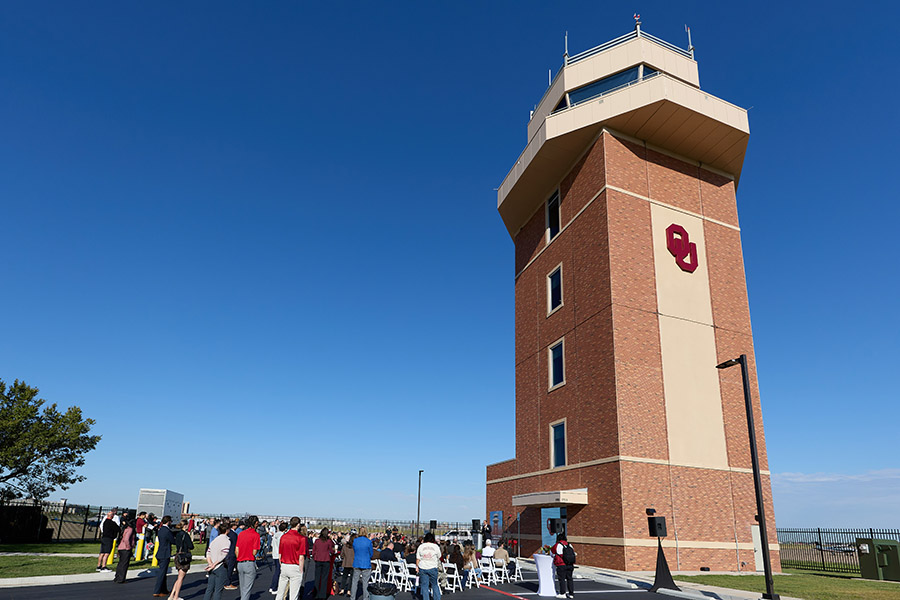
The University of Oklahoma today celebrated the opening of a new air traffic control tower at the OU Max Westheimer Airport. Standing 106 feet tall, more than double the current 52-foot facility, the new tower will modernize air traffic control operations and improve safety for pilots and students operating in the airspace.
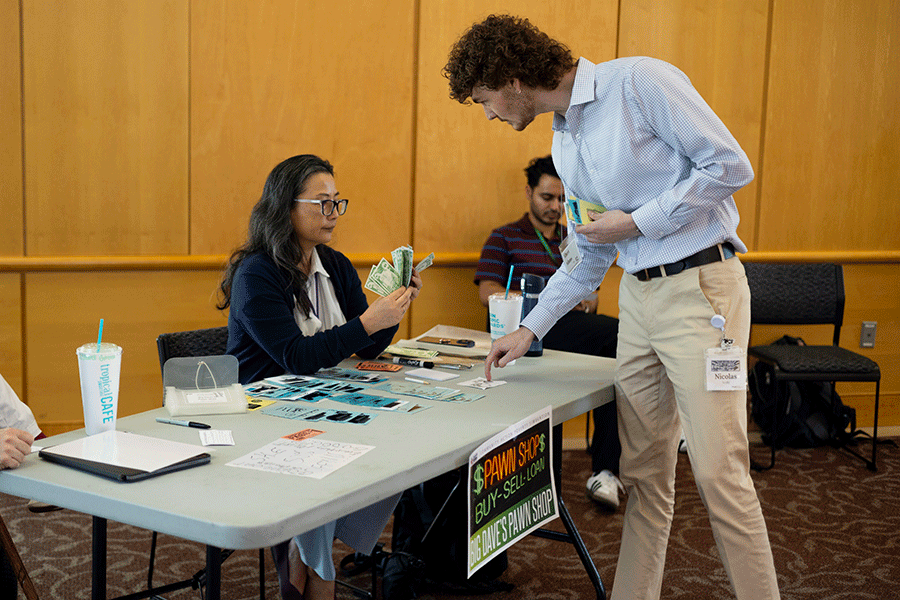
Do I buy groceries or pay the electric bill? Should I pawn some of my belongings to afford my prescription? My child is sick, so I will have to miss work to take care of him. Those are just a few of the difficult choices that OU-Tulsa health professional students confronted during the Community Access to Resources Experience. The role-playing activity challenged students to navigate the financial, family and other pressures that can affect a person’s health and ability to follow medical advice. Held annually during the SCM Institute orientation week, the experience is designed to generate understanding and build empathy.