The Gibbs College of Architecture and OU Libraries invite you to celebrate exhibitions on the American School in California. These exhibitions showcase the works of John Marsh Davis and Mickey Muennig, two architects who studied at OU under Bruce Goff and went on to have distinguished careers in California.
The event will take place on Friday, August 25, 2023 from 3:30 – 6:30 p.m. The first part of the reception will take place from 3:30 – 4:30 p.m. in the Buskuhl Gallery in Gould Hall to display the exhibition Rust on a Razor Blade: Mickey Muennig in Big Sur. The reception will continue from 4:30 – 6:30 p.m. in the Bizzell Memorial Library to display the exhibitions The Design Legacy of John Marsh Davis and Rust on a Razor Blade: Mickey Muennig in Big Sur (Post Ranch Inn Project).
You are welcome to attend one or both of these exhibitions as per your convenience. Please note this is a come-and-go event, providing you with the flexibility to drop by anytime between 3:30 p.m. – 6:30 p.m. The dress code is business casual. You can register for this event here.
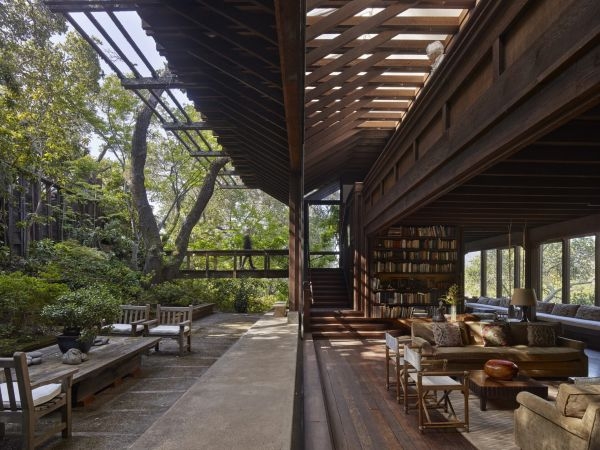
The Barbour Residence in Kentfield, California. Photo by Bruce Damonte Photography.
The Design Legacy of John Marsh Davis is curated by Hans Baldauf and BCV Architecture + Interiors. The installation explores the wood expressionism developed by Marsh Davis through wineries and residential designs in the San Francisco bay area from 1961-1979.
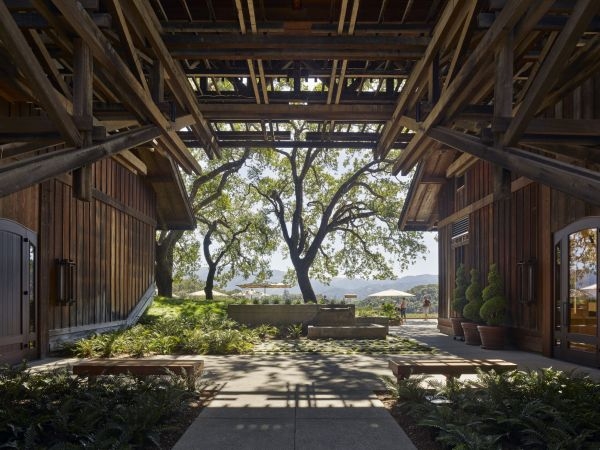
Joseph Phelps Vineyards in St. Helena, California. Photo by Bruce Damonte Photography.
Marsh Davis studied architecture with Bruce Goff at the University of Oklahoma and went on to develop his architectural practice in the bay area. His work is known for a strong connection to the natural landscape and creative use of local materials, especially wood.
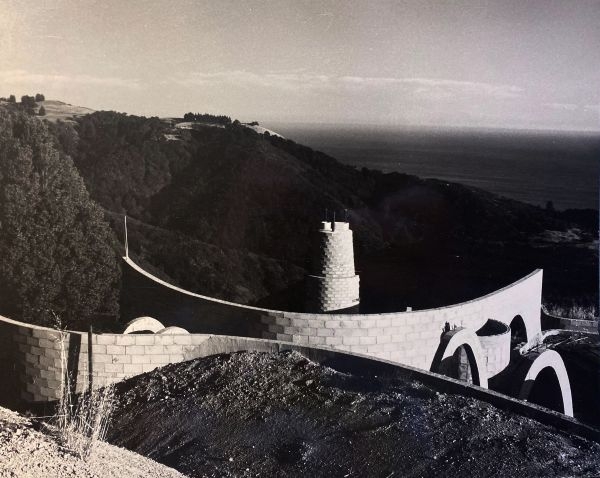
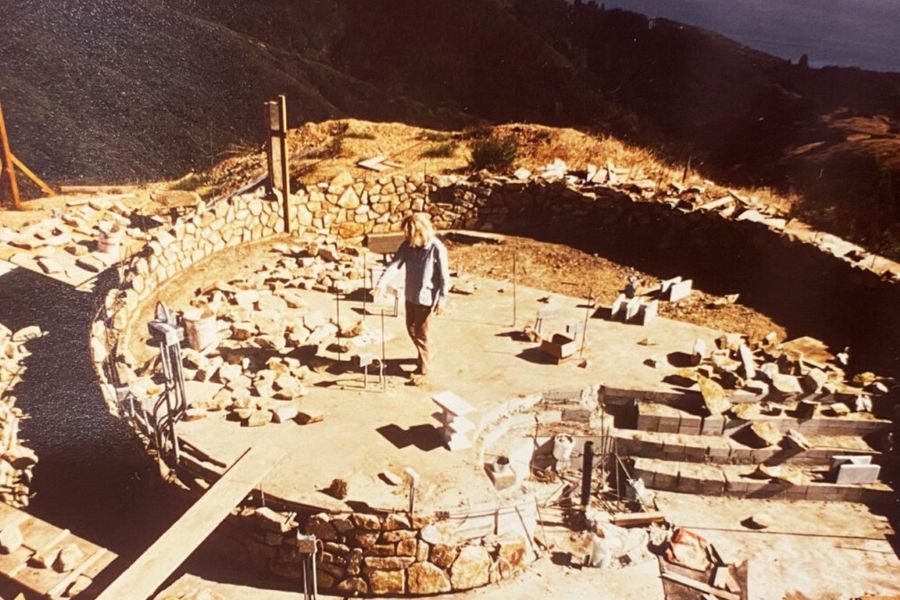
Muennig’s “Chimney of Psyllos House,” 1978.
Rust on a Razor Blade: Mickey Muennig in Big Sur (1970-2000) is a two-part exhibition curated by Marco Piscitelli, a Herb Greene Teaching Fellow. The exhibition explores the newly-acquired archive of architect Mickey Muennig to interrogate the possibility for “organic architecture” within an unstable landscape.
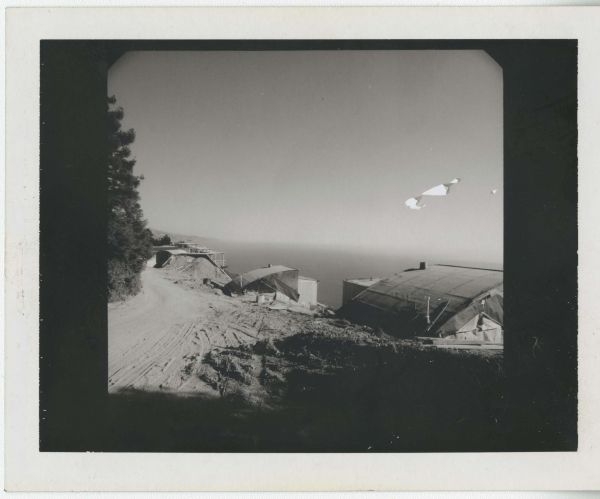
Muennig’s “Post Ranch Inn” in California, 1990.
The idiosyncratic architecture of Muennig, “the man who built Big Sur,” contributed much to the built and cultural landscape of this this storied coast. Its natural and social climate acted as a testing ground for the architect to develop organic architecture as a new and unstable hybrid.
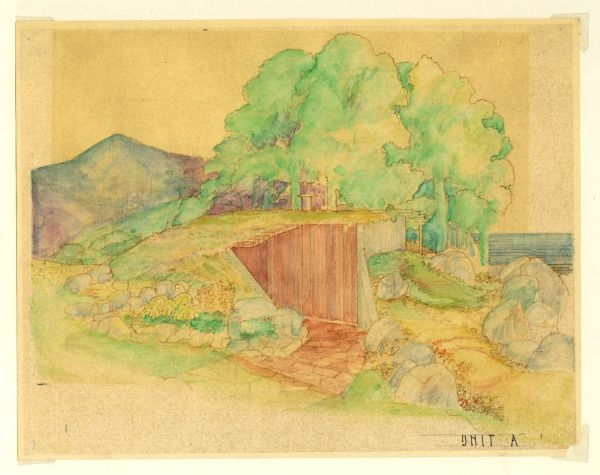
Muennig’s rendering of “Post Ranch Inn,” 1987.
His recently acquired archive reveals the vast media deposits of an architecture practice shaped by the geological and cultural constraints of a pristine yet scientifically managed landscape and the rigorous tectonics of these quietly radical buildings. These works trace the history of Big Sur’s contested wilderness and its fading counterculture; a close reading on the technical expands existing discourse on organic architecture’s indistinct interface with the living world and suggests the potential for a “good Anthropocene.” This exhibition probes these archives to reveal tensions between the utopian and the prosaic.
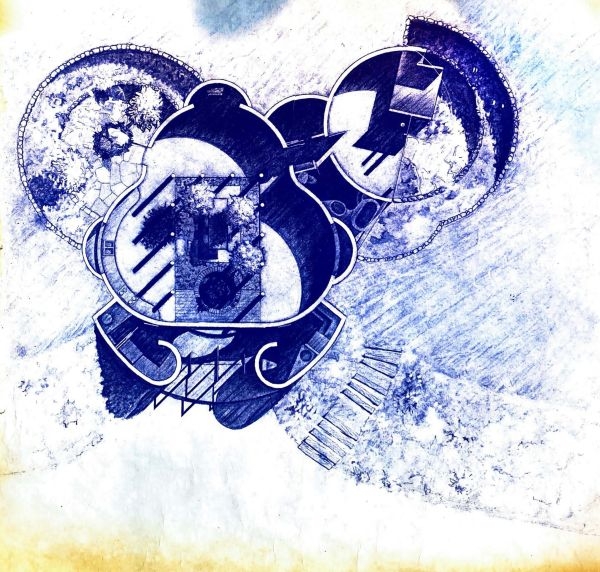
Muennig’s rendering of “Muennig House,” after 1980.
The story of Muennig’s work is told in two parts. The Bizzell Library installation showcases Muennig’s Post Ranch Inn project (1992). The Gould Hall exhibition showcases a wider collection of buildings and works by Muennig.
Feature Image: Muennig’s “Psyllos House,” 1977.
Gibbs College is pleased to present the exhibition 200 Digital Drawings by Professor Tiziana Proietti, currently on display in the Gould Hall Living Room.
Gibbs College of Architecture Professors Amber Brown and Amy Leveno led 29 students to Dallas, Texas, in September for a learning experience as part of their Design 7 Studio course.
Christopher C. Gibbs College of Architecture professor and Institute for Quality Communities Director Dr. Amber N. Wiley’s book, Model Schools in the Model City: Race, Planning, and Education in the Nation’s Capital, has received two major honors from the Urban History Association.