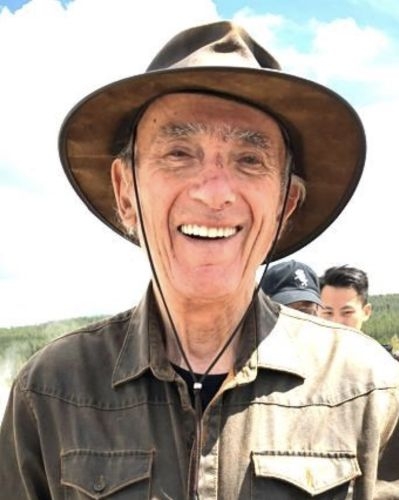
Howard Alan.
July 7, 1931 – May 19, 2023
Howard passed away peacefully surrounded by love on May 19, 2023. Born in Chicago, Howard graduated from Hyde Park High School before studying architecture at University of Southern California, Los Angeles. He completed his architecture degree at the University of Oklahoma, Norman, where he studied under his mentor, Bruce Alonzo Goff. During this time he was drafted by the U.S. Army to serve as an artillery surveyor during the Korean War. Howard specialized in alternative energy architecture and was part of a school of organic architects known as the “Friends of Kebyar”. He lived his life according to the shared values of the best part of his generation, that of social justice and civil rights. Devoted father of Jessica Alan, Ruth Eve Alan, and Alexander Blakeney (Bonnie Thornton) Alan; loving grandfather (“Jumpah”) of Max Connor Marcus. Former spouse of the late Linda Goffen and Jean Ruth Alan, former partner of Patricia Ann Blakeney. Preceded in death by parents Murray Spiegel and Elizabeth “Betty” (Harry) Feldman (nee Banks), cousin and ersatz brother Jerry Garten, and by his best friend in the whole world, Bumper the red & rust Doberman Pinscher. Private burial at Waldheim Cemetery.
A celebration of Howard’s life is being planned for the Summer Solstice, 2024.
In lieu of flowers, donations may be made in his name to the Alzheimer’s Association here.
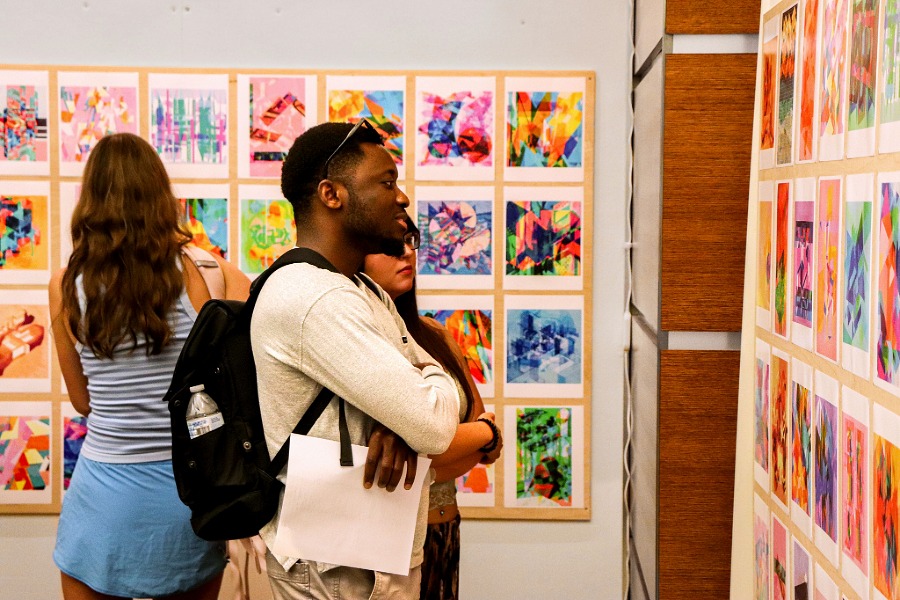
Gibbs College is pleased to present the exhibition 200 Digital Drawings by Professor Tiziana Proietti, currently on display in the Gould Hall Living Room.
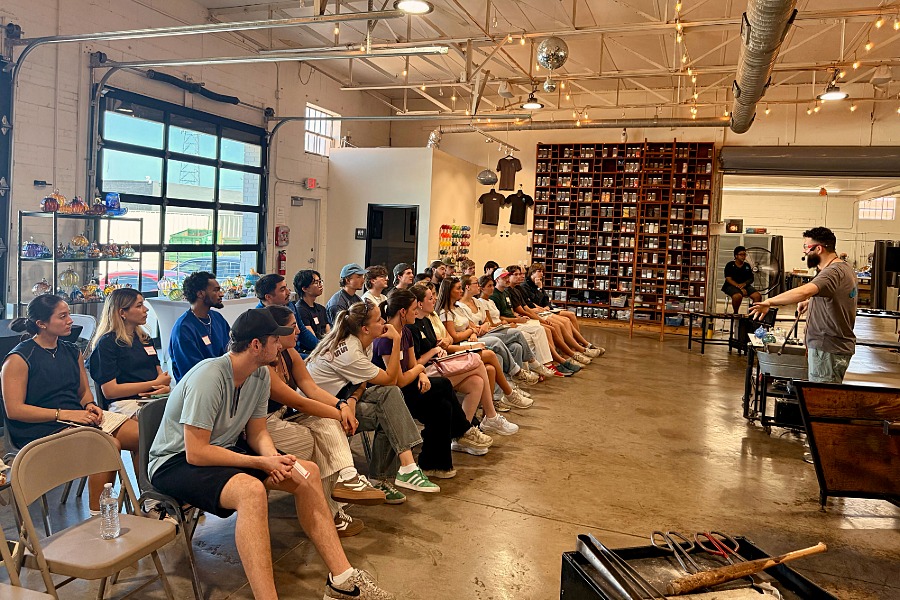
Gibbs College of Architecture Professors Amber Brown and Amy Leveno led 29 students to Dallas, Texas, in September for a learning experience as part of their Design 7 Studio course.
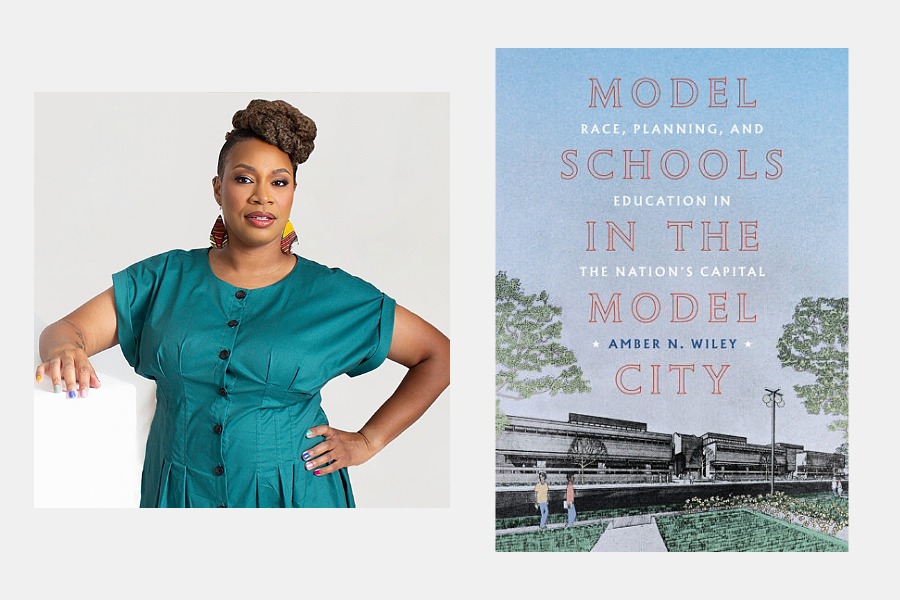
Christopher C. Gibbs College of Architecture professor and Institute for Quality Communities Director Dr. Amber N. Wiley’s book, Model Schools in the Model City: Race, Planning, and Education in the Nation’s Capital, has received two major honors from the Urban History Association.