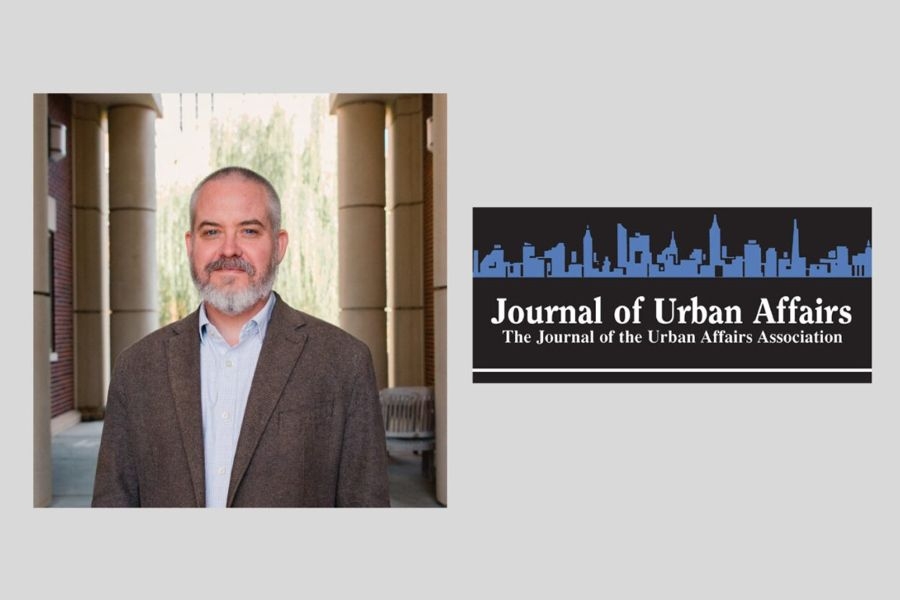
John Harris, Director of the Regional + City Planning program, recently published an article in a special issue of the Journal of Urban Affairs titled “The gendered postconflict city: Possibilities for more livable urban transformations in Gulu, northern Uganda.” Harris – along with co-authors Daniel Komakech, David Monk, and Maria del Guadalupe Davidson – attempt to develop theory and urban management concepts around the notion of the gendered postconflict city as a unique urban identity. The article also works to re-center the analysis on the everyday experiences, agency, and city building practices of women.
The article presents three realities for understanding the gendered postconflict city: (1) the postconflict gendered city is a liminal space beyond the notions of contingency and fluidity often assigned to African cities, (2) it is a place of deep and abiding trauma, and (3) it is a place of invisibility and precarity for women who self-organize to reduce precarity.
The authors create a series of recommendations for postconflict urban management based on these realities that include recognizing liminality in postconflict planning and setting aside the impulse to prioritize the global competitiveness of postconflict cities above all else. These recommendations have important implications for non-governmental organizations and national development practices.
Gibbs College is pleased to present the exhibition 200 Digital Drawings by Professor Tiziana Proietti, currently on display in the Gould Hall Living Room.
Gibbs College of Architecture Professors Amber Brown and Amy Leveno led 29 students to Dallas, Texas, in September for a learning experience as part of their Design 7 Studio course.
Christopher C. Gibbs College of Architecture professor and Institute for Quality Communities Director Dr. Amber N. Wiley’s book, Model Schools in the Model City: Race, Planning, and Education in the Nation’s Capital, has received two major honors from the Urban History Association.