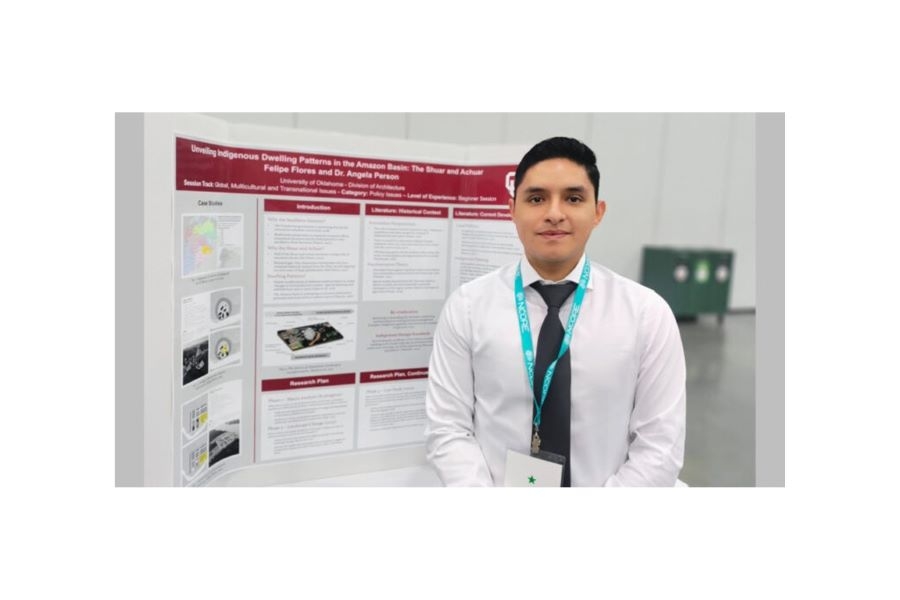
Felipe Flores, a PhD Student in Planning, Design, and Construction under the advisement of Dr. Angela Person, recently presented the early stages of his research at the 34th Annual National Conference on Race & Ethnicity in American Higher Education, NCORE 2022, held in Portland, Oregon.
Formed in 1961, the Southwest Center for Human Relations Studies (SWCHRS) is based at the University of Oklahoma Outreach / College of Continuing Education. SWCHRS is devoted to the study, understanding, and resolution of human conflict and to promoting understanding and cooperation among people of different racial, ethnic, religious, and economic backgrounds. One of the major programs SWCHRS produces is the National Conference on Race and Ethnicity in Higher Education (NCORE®). Held annually, NCORE® serves as the leading and most comprehensive national forum of its kind and attracts national and international attendees representing more than 1,200 institutions of higher education, nonprofits and other educational organizations.
NCORE® provides a significant forum for discussion and critical dialogue about race, ethnicity, and its intersections in higher education. This forum allows people and institutions to find effective strategies promoting access, social development, education, positive communication, and cross-cultural understanding in diverse settings. The conference focuses on the complex task of creating and sustaining comprehensive institutional change. This change work is designed to improve racial and ethnic relations and their intersections with other issues and groups on campus. The conference speakers and sessions offer strategies for expanding educational access and success for diverse, traditionally underrepresented populations.
Felipe wrote about the value of NCORE®, “This workshop offered me the opportunity, as an international student, faculty and people of color, to create a sense of community to do our healing work of any previous experience of racism in educational settings. As the conference moved forward, the words of keynote speakers like Deborah Santiago, helped me to understand systemic racism and how we as educators are a force to combat and promote and space for equity and inclusion. It was crucial to hear the voices of underrepresented faculty and students and how powerful can be the creation of a safe space for dialogue, compassion and healing.”
He continued, “This conference not only provided a space to learn more about Diversity, Equity and Inclusion (DEI) but also it pushed me to have a deeper connection to myself and how to project the richness of my personal background, as a Hispanic faculty in the classroom, to my students and colleagues.”
Felipe’s research titled, “Transformations of Indigenous Dwelling Patterns in the Amazon Basin: The Shuar and Achuar,” is still in its early stages, but he was able to present a poster with the early stages of the research with Indigenous groups in the Amazon Rainforest of Ecuador. Felipe used the conference to determine receptiveness of the audience towards the topic and gather important feedback. Conference attendees were excited by Felipe’s research, understanding that it is crucial for the preservation of local cultures and the environment itself.
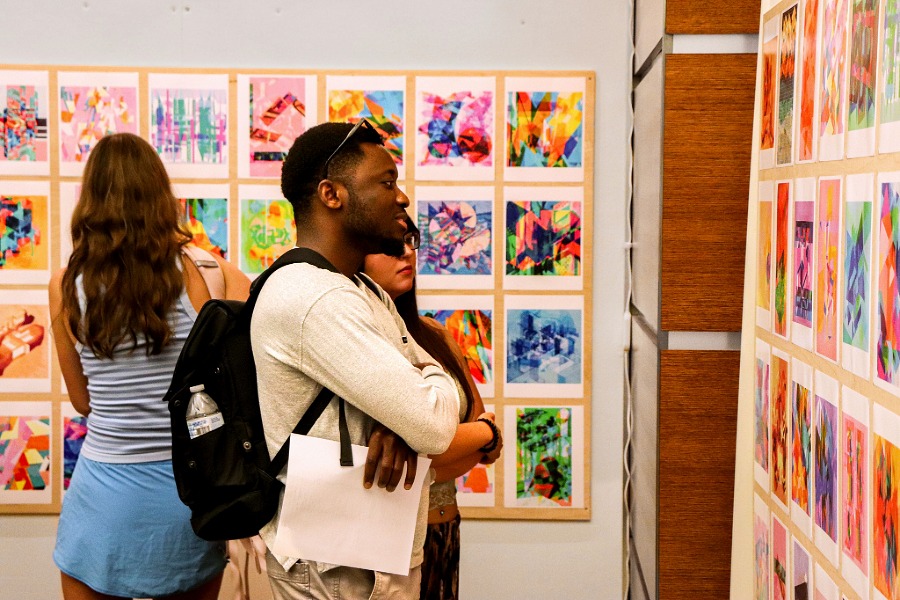
Gibbs College is pleased to present the exhibition 200 Digital Drawings by Professor Tiziana Proietti, currently on display in the Gould Hall Living Room.
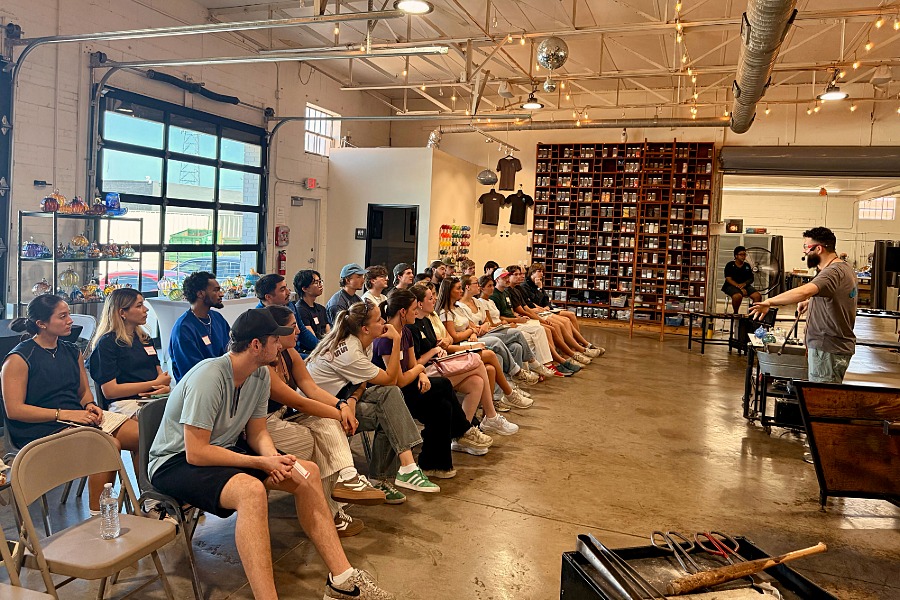
Gibbs College of Architecture Professors Amber Brown and Amy Leveno led 29 students to Dallas, Texas, in September for a learning experience as part of their Design 7 Studio course.
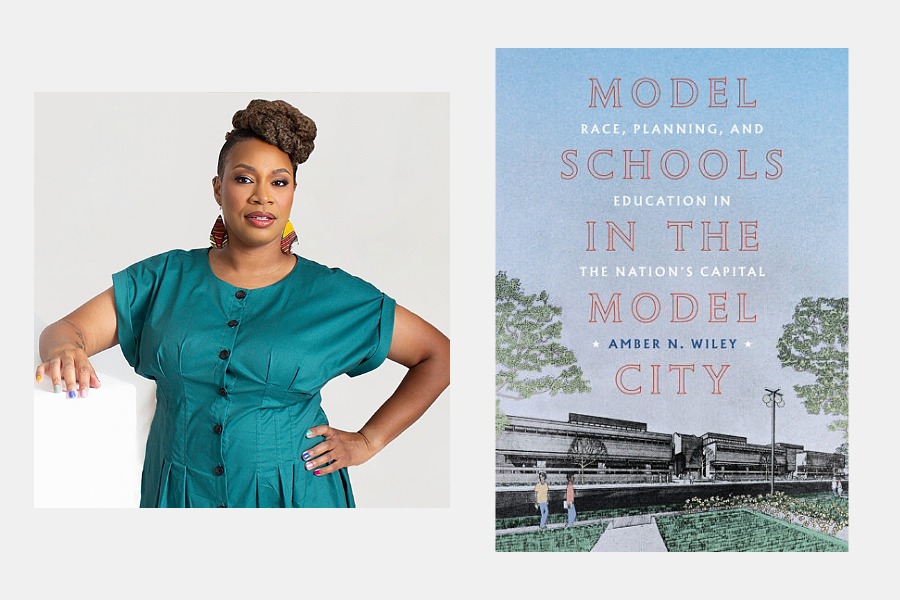
Christopher C. Gibbs College of Architecture professor and Institute for Quality Communities Director Dr. Amber N. Wiley’s book, Model Schools in the Model City: Race, Planning, and Education in the Nation’s Capital, has received two major honors from the Urban History Association.