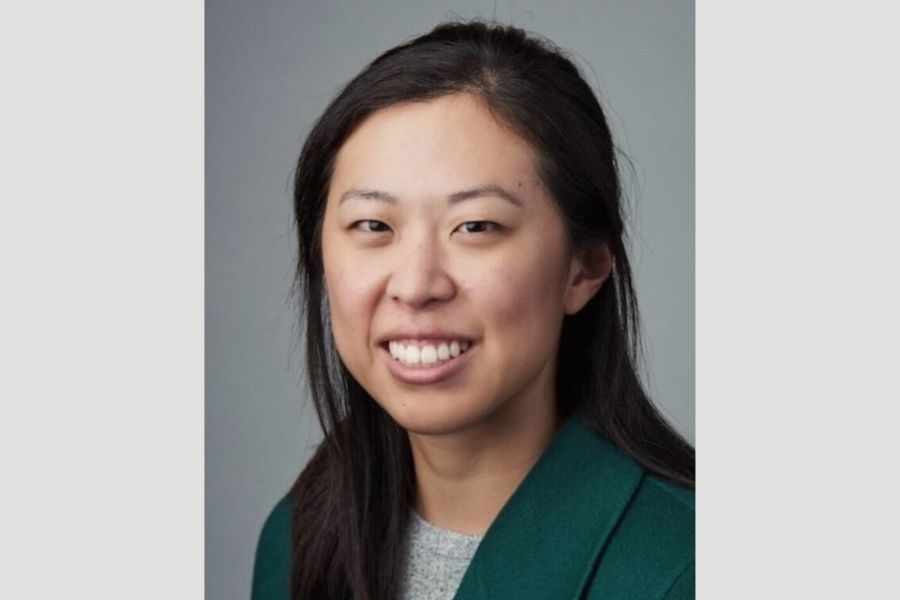
GCA assistant to the directors, Camille Germany (C), met with Dr. Aujean Lee (A), assistant professor of Regional + City Planning. Dr. Lee received her Ph.D. in urban planning from UCLA in 2018 and has been with the Gibbs College of Architecture for a little over two years. Read on for highlights, or click the link below to access the full podcast episode.
C: Welcome to the podcast, Aujean.
A: Thanks for having me.
C: So I’d like to start with your origin story. Could you talk a little bit about what led you to the planning discipline, your area of research, and OU?
A: Yeah, sure. So in undergrad, I was majoring in Psychology and Asian American Studies, in part because I was interested in the role of race and individual outcomes. That was my major at the time, but I worked with a professor who eventually became my doctoral chair in my Ph.D. program. And he was doing a lot of really interesting projects about housing and disparities across cities. That’s the first time I really thought about anything for kind of different outcomes across space, like beyond one person. And so we did a lot of projects on also looking at the role of ethnic banks and lending and kind of these like group-specific institutions. That eventually led to me working for some nonprofits in Los Angeles who were focusing on Asian Americans and Pacific Islanders and social services. But we also did some research to help them with getting grants. So we were researching at the time about the impacts of the recession, around 2008-10: understanding their differences based on neighborhoods.
Eventually, I decided to go back to school to get my master’s and Ph.D., and those contribute to my research interests, which are residential segregation and disparities based on housing, wealth, and community institutions. What led me to OU is–if you’re not familiar with Ph.D. programs–one of the biggest points of advice they give us is that geography is not in your hands. If you want to stay in academia, it’s basically where jobs are open. And so I was very fortunate to get two job offers, but ended up coming to OU because it seemed like a really supportive environment. I remember meeting the RCPL faculty, and everyone just seemed really welcoming, so much so that I chose OU. There is also a mix of research and teaching, which I like. So that’s what led me here.
C: That’s great. Is there anything, in particular, you enjoy most about being in the Gibbs College of Architecture?
A: Yeah, so it’s been great to learn about the different disciplines in the college. I didn’t know anything about construction science or interior design, but I teach research methods, which is a required class for most graduate programs; they have to do some kind of research class. So that’s been really cool to go through the students’ work to better grasp what interior design and landscape architecture are. So I really enjoy learning about the different programs and divisions in the college, and with OU overall, I think learning about the context here. I know tribal issues are really different than what they are in Los Angeles, where I did some work, as I mentioned, with Pacific Islanders, who are Indigenous groups. Their history is really different and has to do with US colonial policies, which is the same thing with the tribes here, but they don’t necessarily have reservations or rights to land in the same way. And so partly, I’m just learning a lot about the context here, of Norman and Oklahoma City, and it’s great being in a smaller city that’s growing. So getting exposure to how things work has been a great experience.
C: Can you tell me about a couple of your current projects?
A: Yeah, so one project that we’re very fortunate to get funding from the Gibbs College Program Research Enhancement Grant program to support is looking at comprehensive plans, which are the cities and counties and states. They create these plans to basically project what they want for their jurisdiction over the next 15 to 20 years. And so, with a colleague at UCLA, Silvia Gonzalez, we’re looking at whether comprehensive plans in areas that are gentrifying in California, New York, and Portland have any language around anti-displacement. And that would help us signal–or the city or jurisdiction would signal–that they understand that there are gentrification pressures in some of their neighborhoods and show that they are planning for residents who may experience displacement. So we’re kind of looking at the rhetoric of if these plans are really taking into account some of their lower-income residents or racially minoritized groups who may be more vulnerable.
Along the lines of rhetoric, I’ve submitted a couple of articles to journals that look at the start of the COVID pandemic in terms of how governments were taking into account the increased rates of hate crimes, particularly targeting Asian Americans or people who seem to look like they’re Asian because of this false belief that China came up with a virus or that people who look a certain way are more likely to carry the disease or spread the virus. We’re trying to see if planners and different government offices are willing to take a stand for their residents, and that’s important for planners because it helps us. A lot of these groups may be hesitant to talk to their different government officials get engaged with their city neighborhood. And so, if these governments do take a stand for their residents, it might help increase some of the public engagement works that they’re doing, particularly in COVID when there’s a lot of changes going on. They need feedback from their residents on what their needs are.
C: So, where did you submit that article? Is there a publication date we should keep an eye out for?
A: This is a project with John Arroyo from the University of Oregon, and we submitted it to the Journal of Planning Education and Research. There’s also an Asian American policy journal called AAPI Nexus Journal. So, I’m not sure about a publication date for those, but I do have a publication that got conditionally accepted. It was about activism in 2016. What were immigrant nonprofits doing to support their constituents when, at the time, the administration was pushing a lot of really rapidly enacted policies that were targeting immigrants or refugees, and what was happening to the organization? Hopefully, early next year, that will come out in a journal called Amerasia Journal, a publication that focuses on Asian Americans and Pacific Islanders.
C: Okay, that’s cool. We’ll keep an eye out for that. What opportunities to collaborate across disciplines at OU have you had?
A: Yeah, that’s a great question. There’s a professor named Sunny Lee in communications. I just met her casually, and we were just chit-chatting, and we were able to come up with a research project. She was telling me about her dissertation: looking at social networks in specifically a Korean church. Because it’s, you know, communication, the way she was analyzing it was very micro level. Who was getting information from who, and who are the key people that people turn to you for information? Bringing in the urban planning part, I was thinking about how that could be extended to looking at where do they live, and if people that tend to live closer to the church versus those that are farther or if they live in certain types of neighborhoods, maybe that are higher income, if those would be the people that are more central to giving information. We found that people that live further from the church, which tends to be more integrated, or wider areas, are the people that others got information from. The study’s key takeaway is understanding that there are connections between individual-level and neighborhood-level factors in terms of how people are developing their networks, which also extend to perhaps where they’re getting information about things like schools, good restaurants, or different levels of information. So, that’s in the works.
I also had several opportunities to work with Gabi Rios, who used to be in the OU English department. She’s now at another university. But we did a lot of cool teaching projects where she had come up with this idea to look at oral histories of immigrants and Indigenous folks in the state to get a sense of how they do placemaking in different ways. That’s a project she did with her students; then, I followed up with my class on planning with diverse communities. They did interviews with restaurant owners–people who came from another country–and asked how they have connections still across a place. Not “place” in the sense of their immediate neighborhood in Norman or Oklahoma City, but how do they make connections across different countries. So that was a really cool project.
We also did a collaboration around the 2020 census, where we were working with Dream Action Oklahoma. They did a couple of presentations for students, particularly about how certain populations are undercounted, and they focused on immigrants given their target audience. We were interrupted with the pandemic, but before the pandemic really hit, the students had already started to get pledge cards–early information about what the census was. If some people didn’t know about it at all, then we were priming them to think about, “Hey, you’re going to get something in the mail to fill out this survey online, and that’s used for federal data collection efforts that then fuel money back into your neighborhoods or cities.” That was really cool, and I think the students ended up getting more than 800 pledges. They had to do a combination of in-person and online pledges, but I think some of them switched to online pledges once it was not safe to be out. But that’s been really cool, so I’m looking forward to finding more ways to collaborate. Those are some of the initial projects that I’ve been really fortunate to be part of.
C: That’s awesome. I remember that census push in the project you gave your students, and that seems like ages ago. So, given the pandemic, what has been bringing you joy and giving you life in this time that we’re living in when so many of our day to day routines have changed?
A: I think, like many people, I went through a lot of different phases in this pandemic. So there’s a lot of Tiger King watching in the beginning. I was doing a lot of baking, as a lot of the great bakeries had to shut down. I’ve been doing some online Zumba classes. The OU gym has been really great about offering hybrid options. So if you want to do Zoom classes, you can still keep in shape with those classes. As the pandemic’s been going on, I’ve also been less interested in Netflix and have been trying to get into more fiction reading. So I’ve been catching up on a lot of different books.
C: What’s your favorite book that you’ve read?
A: So I’ve been keeping a list; I’ve read 40 books this year (2020). That’s definitely increased significantly. I was reading maybe a book a month, but it’s gone a lot faster since the pandemic. I can name a few of my favorites. Miracle Creek by Angie Kim was a really great mystery; Winter Counts by David Heska. And then some historical fiction books have been fascinating. There’s one called the Library of Legends by Jamie Chang about a group of scholars who have to flee, so they bring a bunch of books with them, which is the library and the importance of preserving history and culture through the books.
C: Thank you for joining me for this episode, Dr. Lee. We’re looking forward to seeing all of your ongoing projects published, and we’re so glad you are here.
Editor’s note: This interview was edited and condensed for clarity.
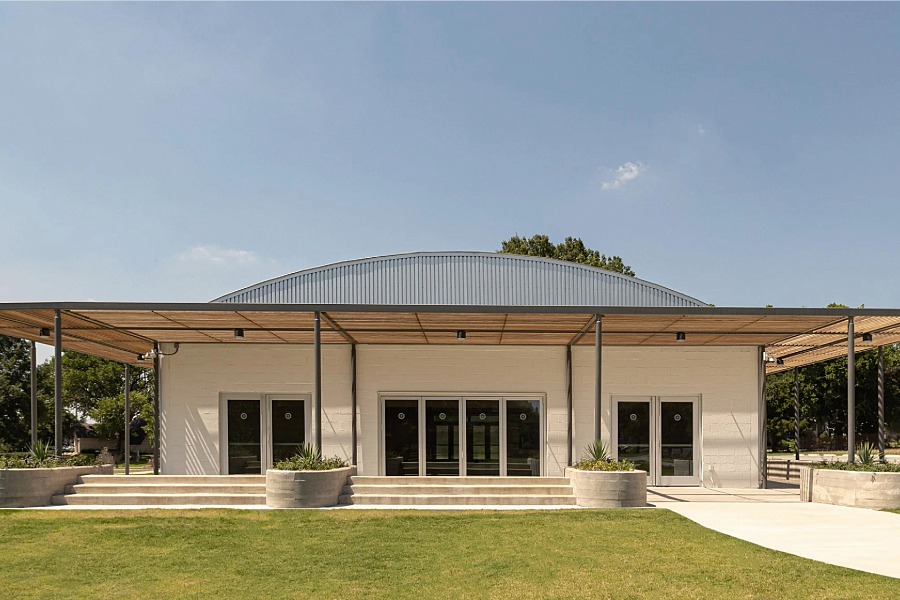
Christopher C. Gibbs College of Architecture assistant professor Amy Leveno and Mark Leveno, co-founders of OFFICIAL Design, have received a 2026 AIA Central States Region Design Award for the firm’s Granger Annex Community Center project in Garland, Texas.
Construction Industry Speaker Series welcomed Stephen Evans from the Oklahoma City National Memorial & Museum to give a lecture on better conversations and relationship building.
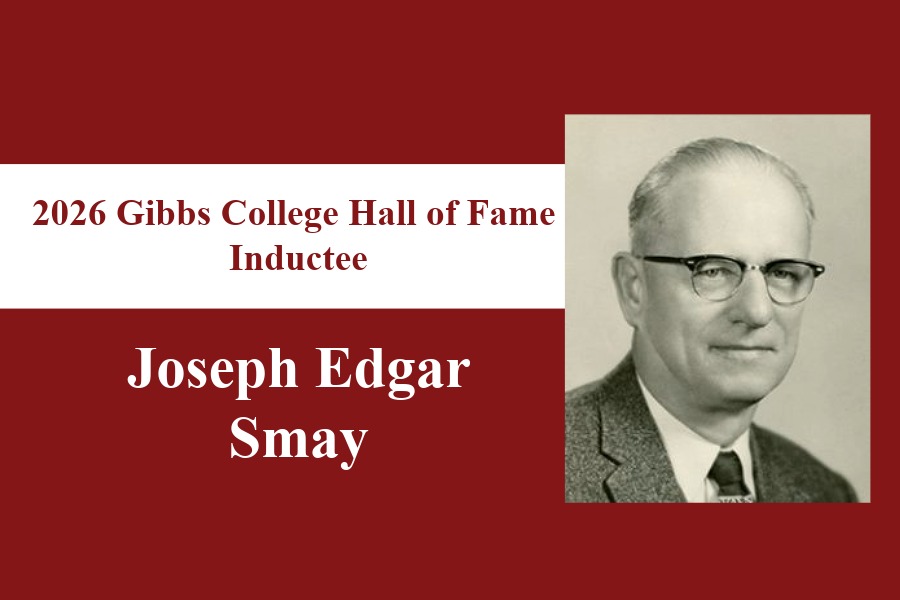
The University of Oklahoma Christopher C. Gibbs College of Architecture Hall of Fame recognizes a select number of high-character individuals who have made a significant and lasting positive impact on Gibbs College, its students, staff, faculty, alumni and/or to communities across the globe. The impact may have been, or continues to be, in the form of service and mentorship, sustained professional excellence, and/or advancement and financial support. Joseph Edgar Smay is part of the 2025 Hall of Fame class.