Date
Five research teams at the University of Oklahoma will receive internal funding to support innovative research projects. The awards are for the OU Big Idea Challenge, an initiative launched by the Office of the Vice President for Research and Partnerships to support the development of transdisciplinary research projects with significant potential for future extramural funding and that address global grand challenges.
Gibbs College of Architecture faculty are represented on two of the five research teams. Dr. Bryce Lowery and Dr. John Harris are on the “Well-Being Across the Lifespan” team, while Dr. Lee Fithian, Dr. Wenwen Cheng, and Dr. Meghan Wieters are on the “X-GEM: Enhancing Future Community Sustainability via Greenhouse Gas Emission Monitoring” team.
The projects and research teams awarded are:
OU Vice President for Research and Partnerships Tomás Díaz de la Rubia said, “As a flagship public institution that is keenly focused on societal impact through research and creative activity, the University of Oklahoma is uniquely positioned to bring disparate academic disciplines together to foster innovative, comprehensive solutions to global challenges.
“These projects will position the university as a leader in generating new insights and game-changing contributions to solving regional, national and global challenges in energy, sustainability, health and communities,” he added.
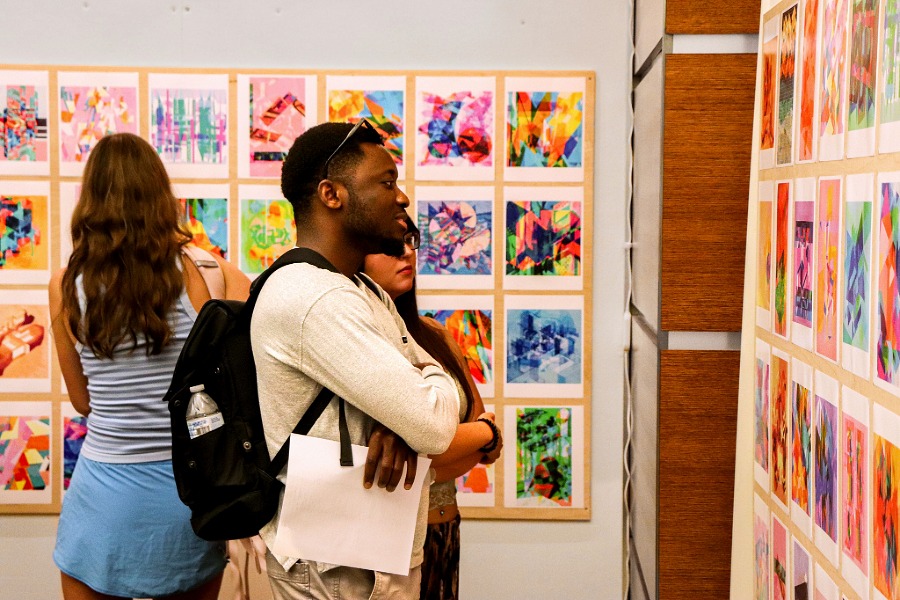
Gibbs College is pleased to present the exhibition 200 Digital Drawings by Professor Tiziana Proietti, currently on display in the Gould Hall Living Room.
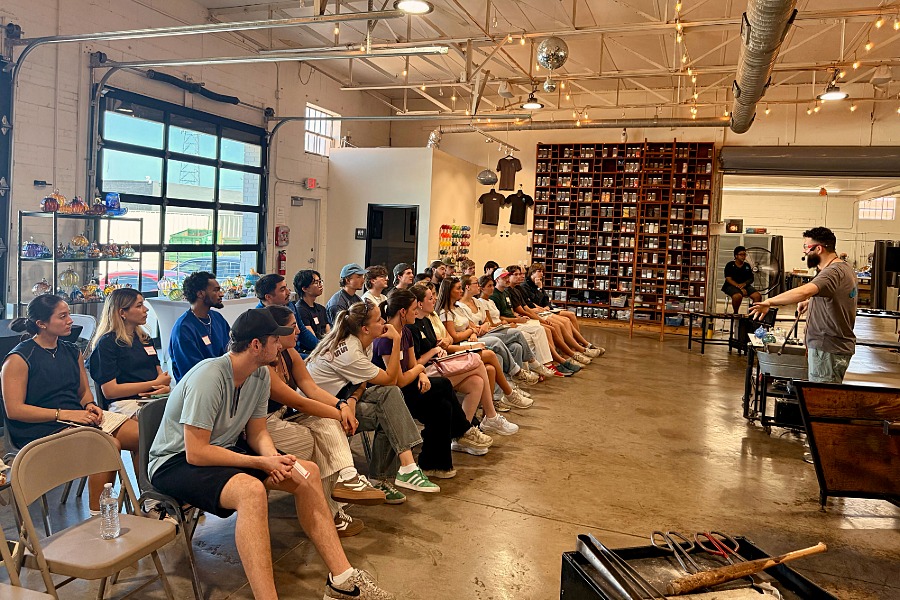
Gibbs College of Architecture Professors Amber Brown and Amy Leveno led 29 students to Dallas, Texas, in September for a learning experience as part of their Design 7 Studio course.
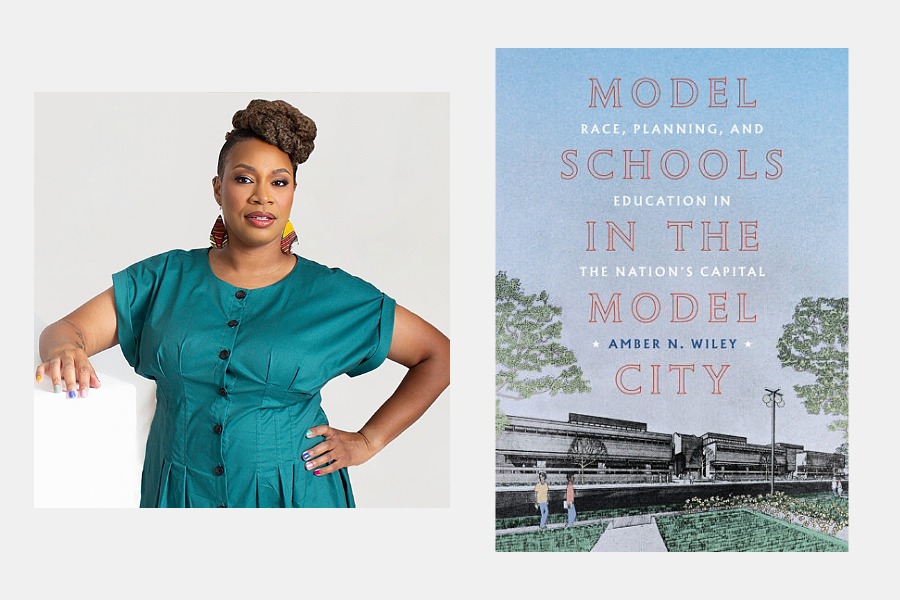
Christopher C. Gibbs College of Architecture professor and Institute for Quality Communities Director Dr. Amber N. Wiley’s book, Model Schools in the Model City: Race, Planning, and Education in the Nation’s Capital, has received two major honors from the Urban History Association.