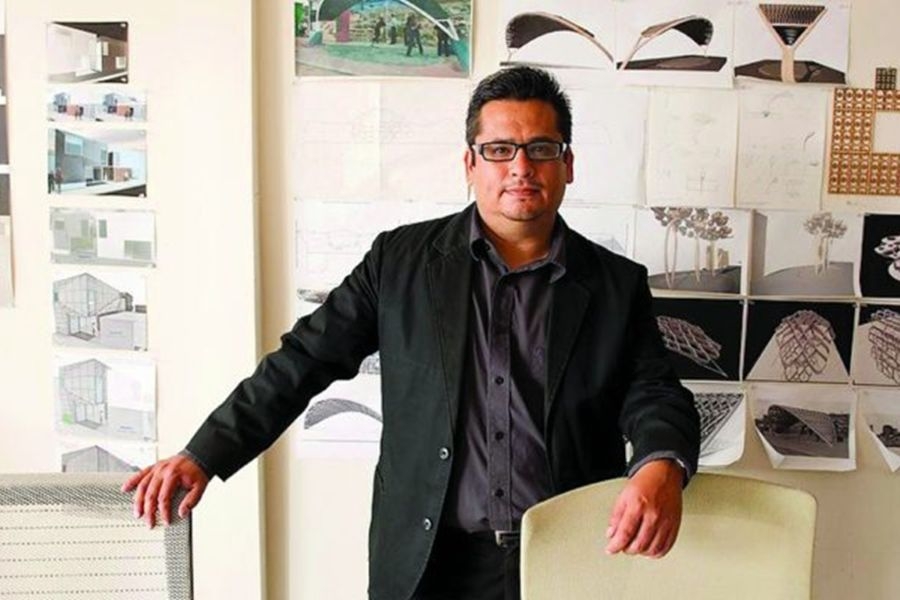
Architect Rene Peralta has spent more than two decades studying the architecture and culture of transnational border regions of the United States and Mexico.
Recently, he was able to share his expertise with colleagues and peers at the Association of Collegiate Schools of Architecture’s (ASCA) 108th Annual Meeting, where he participated in two panel discussions exploring issues along the U.S.-Mexico border.
In the first panel, “Border Consortium Workshop: Borderlines,” led by Denise Luna and Alejandro Santander, Peralta participated in a conversation on xeno-entities and other new forms of research and theory coming from the border. This discussion specifically considered the work of Denise Luna and Temporary Infrastructure of Commitments (TIOC) Think Tank member Alejandro Santander.
Luna and Santander’s work focuses on the idea that there are many unseen and unconsidered issues in the realm of border studies. Essentially, humans are typically only interested in the world which is relevant to us in sensory terms. They ask, since our perceived world overlaps with these unconsidered worlds, why are they not within the design scope of architecture?
“My response [as a panelist] narrates a very brief history of how projects and thinkers like Denise and Alexandro have surged from the borderlands,” Peralta said. “I discussed the need for a re-evaluation and reproduction of identity as an impetus for design and survival. How border agents have produced new forms of literary and cultural techniques that have made architects rethink their role in such a volatile environment.”
Peralta also participated in the session “Emerging Urbanisms in Latin America and the Global South,” moderated by Pablo Meninato of Temple University and Gregory Marnic from the University of Cincinnati.
This session explored transnational concerns surrounding migration, globalization, economic stability, ecology and more. The panel discussion focused critical spatial practices that can respond to these transnational concerns.
Peralta discussed how national Mexican programs promoted modernization of the U.S.-Mexico border in the 1960s, which set the stage for an open and bi-national economy, creating a different economic scenario in then border region than that of the rest of Mexico.
One phenomenon that emerged from this period is the “Maquilapolis,” cities that are dependent on maquiladoras to drive their economic development. Maquiladoras are manufacturing plants that take advantage of cheap labor and relaxed environmental regulations.
As maquiladoras promoted jobs and security, the incoming population settled rapidly, and informally, in the eastern part of Tijuana, as well as other border cities.
While these communities do tend to improve despite limited infrastructure, their ability to build dignified, permanent and structurally sound homes is still out of reach.
Peralta also spoke about the works of nonprofit Fundación Esperanza and their efforts within these communities. Peralta works with the foundation to support families as they build their own homes.
Peralta also participated in the Digital Futures panel “Agency, Borders and Immigration,” moderated by Gabriel Esquivel of Texas A&M.
This session addressed the crisis at the U.S.-Mexico border in the context of explored the global economic situation. Topics of discussion included how the loss of cultural identity, immigration, climate change and, now, COVID-19, have turned architecture upside down in the region.
During the discussion, Peralta highlighted that the border region is its own place, and while it may be paradoxical in nature, it is not inherently good or bad.
Peralta said his experience thinking through complex issues through these discussions with peers was amazing.
“I was excited that in these two events I was able to speak at a pedagogical level, and at a more conceptual one. For someone in academia this is a great opportunity.”
Photo credit: Stefan Falke.
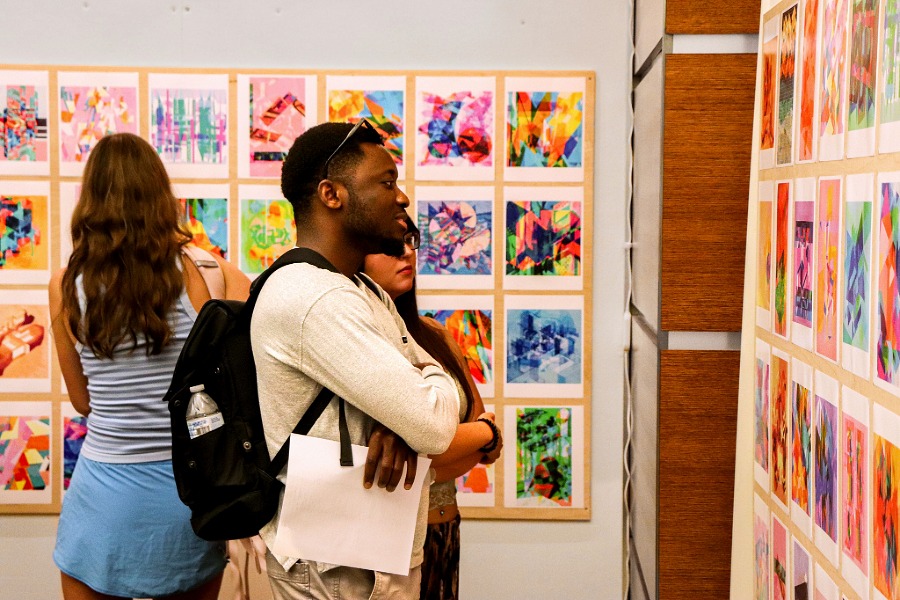
Gibbs College is pleased to present the exhibition 200 Digital Drawings by Professor Tiziana Proietti, currently on display in the Gould Hall Living Room.
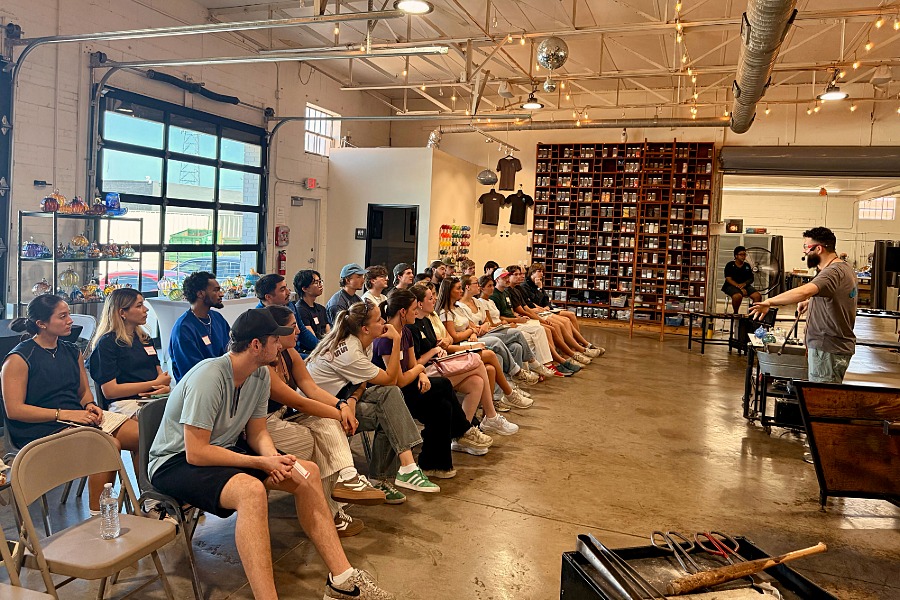
Gibbs College of Architecture Professors Amber Brown and Amy Leveno led 29 students to Dallas, Texas, in September for a learning experience as part of their Design 7 Studio course.
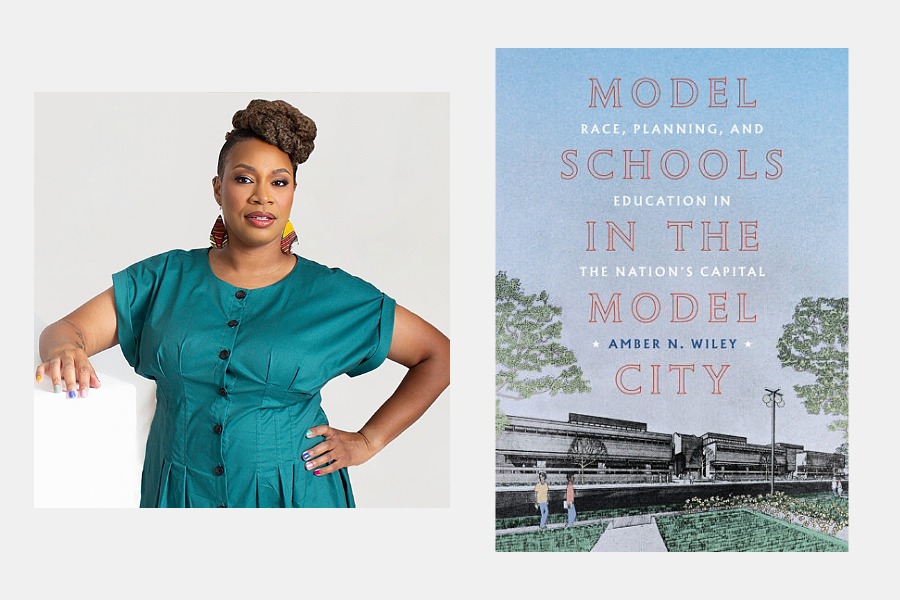
Christopher C. Gibbs College of Architecture professor and Institute for Quality Communities Director Dr. Amber N. Wiley’s book, Model Schools in the Model City: Race, Planning, and Education in the Nation’s Capital, has received two major honors from the Urban History Association.