The University of Oklahoma Office of Diversity, Equity and Inclusion (ODEI) is offering their “Native 101” training session to Gibbs College of Architecture faculty and staff during the College’s Fall 2020 Back to School Meeting.
About the Session
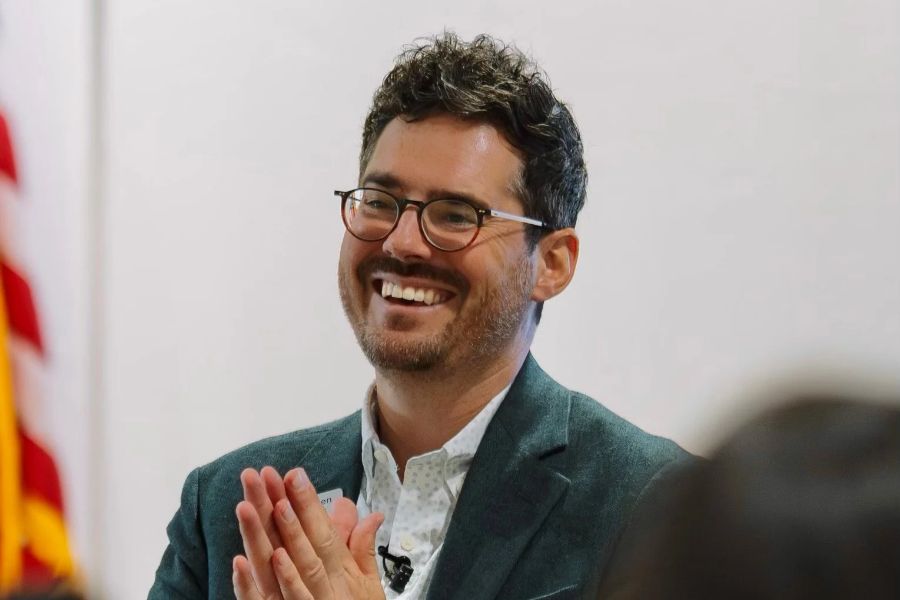
The session will be led by OU Tribal Liaison Warren Queton and ODEI graduate assistant Antonio Guardado, and is structured in the format of a Jeopardy-style quiz game, with accompanying explanations and a closing Q&A session.
Please read on for more information about this training which will be held via Zoom from 9:00 – 10:30 a.m. on Thursday, August 20.
Preparing for the Training
- Registration. In order for the Office of Diversity, Equity and Inclusion to assign teams for the training, Gibbs College faculty and staff must register by Tuesday, August 18.
- Pre-Assessment. Before the session starts, please complete the pre-assessment.
- Pre-Reading. After you have completed the pre-assessment, please review the below “Pre-Reading” to prepare
- Questions. Make a list of questions you want to ask Tribal Liaision Warren Queton during the Q&A session
- Get Ready to Play.
Pre-Reading
We will be playing a quiz show game during our training session; to get ready for the session, please read over the below facts.
American Indian Identities, Selected
American Indian Religion, Selected
- The Sun Dance is a popular Plains Indian religious ceremony that focuses on pledges or sacrifice oneself through skewering the body (Learn more on the Wikipedia page, Sun Dance)
- The Ghost Dance was introduced by Prophet Wovoka of the Northern Paiute (Learn more on the Wikipedia page, Ghost Dance)
- The Native American Church was developed in the late 1800s, coming from Northern Mexico/South Texas and making sacramental use of the entheogen peyote (Learn more on the Wikipedia page, Native American Church)
- The Stomp Dance is a religious performance centered on a sacred fire that was brought from tribal homelands in Southeast United States during removal (Learn more on the Wikipedia page, Stomp dance)
- Tribal Hymns comprise a religious musical genre that incorporates translations of the bible into songs (Learn more on the Oklahoma Historical Society website, American Indians and Christianity | The Encyclopedia of Oklahoma History and Culture)
American Indian Foods, Selected
- Southwestern tribes are not allowed to eat corn until after the harvest ceremony (Learn more on the Wikipedia page, Green Corn Ceremony)
- Fry bread was developed during the reservation period using flour, lard, sugar, and baking soda provided in government rations (Learn more in the Smithsonian Magazine article, Frybread)
- Bison (also sometimes called buffalo, according to the Mental Floss article, What’s the Difference Between Bison and Buffalo?) offered a key source of supplies for food, housing and tools for many Plains Indian tribes (Learn more on the National Humanities Center website, Buffalo Tales: The Near-Extermination of the American Bison)
- Wild onion is a wild vegetable that is harvested from late Winter to early Spring and is a great component to the sense of community within Southeastern tribes
- Salmon is a common element of many Northwestern coastal tribes’ diets; dam projects in the region have affected seasonal salmon migrations and tribes’ access to these fish (Learn more on the Bureau of Reclamation website, Grand Coulee Dam Construction History)
Famous American Indian Leaders, Selected
- Chief Wilma Mankiller was the first woman Chief for the Cherokee Nation (Learn more on the Wikipedia page, Wilma Mankiller)
- Chief Sitting Bull is often credited with the defeat of General Custer at the Battle of the Little Bighorn (Learn more on the Wikipedia page, Sitting Bull)
- Geronimo, from the Chiricahua Apache Tribe, is among the most common symbols of Native American resistance (Learn more on the Wikipedia page, Geronimo)
- Chief Black Kettle was a Cheyenne Chief who flew an American flag over his tipi during the Battle of Washita because he thought it would keep his village safe (Learn more on the Wikipedia page, Black Kettle)
- Chief Standing Bear was a Ponca Chief and Native American Civil Rights leader who proved in 1879’s U.S. District court that Native Americans also have right to Habeas Corpus (Learn more on the Wikipedia page, Standing Bear)
American Indian Art, Just to Name a Few
- Five Native American ballerinas and choreographers from Oklahoma became known as “The Five Moons” (Learn more on the Wikipedia page, Five Moons)
- The 2D Native American artists highlighted by Oscar Jacobson became known as “The Kiowa 6” (Learn more on the Wikipedia page, Kiowa Six)
- The book There, There by Tommy Orange looks at ambivalence toward and complexity of Natives’ struggles; it was a finalist for the 2019 Pulitzer Prize (Learn more on the Penguin Random House website, There There by Tommy Orange)
- The Native American rock band Redbone popularized the 1970s tune “Come and Get Your Love” (Learn more on the Wikipedia page, Redbone (band))
- Note: The sculpture “End of the Trail” (1928) by James Earle Fraser is often falsely classified as Native American Art (Learn more on the Metropolitan Museum of Art website, End of the Trail, Then and Now)
Tribes of Oklahoma, Selected
- Oklahoma means “Red People” in the Choctaw language (Learn more on the Wikipedia page, Oklahoma)
- 39 tribes reside in Oklahoma (Learn more on the Oklahoma Historical Society website, Tribal Nations in Oklahoma), and all but the Yuchi Tribe are recognized by the federal government as sovereign nations (Learn more on the Wikipedia page, Yuchi)
- The Cherokee, Chickasaw, Choctaw, Creek (Muscogee), and Seminole tribes came to be referred to as the “Five Civilized Tribes” during the mid-nineteenth century. Today they are known as the “Five Tribes” (Learn more on the Oklahoma Historical Society website, Five Civilized Tribes | The Encyclopedia of Oklahoma History and Culture)
- The Sac and Fox Nation was the first tribal nation to produce their own car tags as a sign of their tribal sovereignty (Learn more on the Wikipedia page, Sac and Fox Nation)
Tribal Festivals in Oklahoma, Selected
- The Tuskahoma Choctaw Festival coincides with the “Labor Day” federal holiday weekend (Learn more on the Travel OK website, Choctaw Nation Labor Day Festival)
- The Standing Bear Powwow is held the last Friday and Saturday of September and hosted by the six North-Central tribes of Oklahoma (Learn more on the Travel OK website, Standing Bear Powwow)
- The Oklahoma Indian Summer Festival is an early Fall festival that highlights the fine art and talents of American Indian artists (Learn more on the Travel OK website, Oklahoma Indian Summer Festival)
- The Chickasaw National Annual Meeting & Festival is an annual celebration hosted by the Chickasaw Nation that lasts for a whole week and takes place in different cities (Learn more on the Chickasaw Nation website, Chickasaw Annual Meeting & Festival)
- The Ottawa Powwow & Celebration allows families the opportunity to relax and enjoy no-contest dancing with space for camping (Learn more on the Travel OK website, Ottawa Powwow & Celebration)
Homes of the Eastern Tribes, Selected
- The Aroostook Band of the Micmac tribe reside in Maine (Learn more on the Wikipedia page, Mi'kmaq Nation)
- The Ojibwa or Chippewa tribe has lived for hundreds of years in the Great Lakes region (Learn more on the Wikipedia page, Ojibwe)
- The Chickahominy tribe resides between Richmond and Williamsburg in Virginia (Learn more on the Wikipedia page, Chickahominy people)
- The Mdewakanton and Wahpekute bands of the Lower Sioux reside in Minnesota (Learn more on the Wikipedia page, Mdewakanton)
- The Mashantucket Pequot Tribal Nation resides in Connecticut (Learn more on the Wikipedia page, Mashantucket Pequot Tribe)
American Indian Federal Policy
- The Indian Removal Act of 1830 was a federal policy that forced all tribes East of the Mississippi river to leave their homelands for lands on the West
- The General Allotment Act of 1887, also known as the Dawes Act, was a federal policy that broke reservation communities up into 160 acre parcels of land for individual families (Learn more on the Wikipedia page, Dawes Act)
- The Federal Boarding School program, which was in place from 1860 to 1978, required thousands of Native American children to be pulled from their communities and families to assimilate into white society by cutting their hair, wearing uniforms, and learning English (Learn more)
- The Native American Graves Protection and Reparation Act (1990) supported the return of Native American artifacts and burial remains to their tribal communities (Learn more in The Atlantic story, The Traumatic Legacy of Indian Boarding Schools)
- The Indian Self-Determination and Education Assistance Act (1975) allowed for federal grants and contracts to be made directly with tribal governments as well as it gave the tribes full authority to manage the funds without outside influence (Learn more on the Wikipedia page, Indian Self-Determination and Education Assistance Act of 1975)
Things to keep in mind, Selected
- Antonia Belindo is OU’s person of contact for American Indian Programs and Services
- It is important to remember that no one person may speak for all Native Peoples. It can be vital for Native students to learn with a culturally relevant lens (Learn more in the KQED article, Why It's Vital for Native Students to Learn With a Culturally Relevant Lens)
- Avoiding eye contact is a common Native American student behavior that can be confused with shyness or not paying attention
- Native American students might need to request to miss class for funerals, powwows, and ceremonies, which can be classified as religious observances
- Respectful Protocol for Attending Ceremonies involves avoiding taking pictures or recording without permission, avoiding touching regalia, and dressing respectfully (Learn more on the Open Wide the World blog page, Visiting Native American Sites ∙ Etiquette & Awareness)
Stereotypes and Phrasing to Avoid, Selected
- “Chief” is a word used in executive positions that dehumanizes Indigenous Peoples, but it is also used as an elected office within Tribal Governments and academia (Learn more on the Indigenous Corporate Training website, Use These Culturally Offensive Phrases & Questions at Your Own Risk)
- While the term “Indian Princess” may be use to refer to women who represent their tribes in an official capacity, it can also be seen as a derogatory term if used to stereotype Native American women (Learn more on the Wikipedia page, Indian princess)
- “Redskin” is a pejorative term referring to Native Americans (Learn more on the Wikipedia page, Redskin)
- Tipis are household structures commonly used to symbolize Indianness, despite the fact that there are wide diversity in Native American homes (Learn more in the PBS SoCal story, Tomahawks and Tipis: Native American Representations in Commercial Culture)
- The phrase “Low man on the totem pole” being used to identify the status of a person can be understood as insensitive, as totem poles are not hierarchical
- It is a common misconception that all Indians carved totem poles, which serve as family crests, house the ashes of the dead, and are also used as shame poles to be erected in front of homes of individuals who have done wrong (Learn more on the Wikipedia page, Totem pole)
- The phrase “too many chiefs and not enough Indians” is not a culturally sensitive way to refer to there being too many bosses and not enough employees
- “Let’s powwow” is not an appropriate phrase to use to start a meeting
- The phrase “off the reservation” is not an appropriate way to indicate that someone has lost their connection to an issue or that their argument missed the mark (Learn more in the NPR Code Switch Podcast episode Should Saying Someone Is 'Off The Reservation' Be Off-Limits?)
- The term “squaw” dehumanizes American Indian women and implies subservience to men; it is understood as an ethnic and sexual slur (Learn more on the Wikipedia page, Squaw)
Image credit: Brian Hardzinski / KGOU