We recently learned about master of landscape architecture student Niloufar Soltanimofrad’s award-winning graduate research project! Read on for more about her work on “el-spaces.”
“I am a third-year grad student working towards my master’s degree in Landscape Architecture at OU. I am currently working as a landscape architecture intern at EDSA, which is a well-known firm in field of landscape architecture and urban design in the nation.
“My final graduate topic is ‘Reconnecting Communities: El-spaces as Vital Civic Infrastructures,’ and it contains two major sections: research and design. In landscape architecture, like other highly scientific fields, there is always a gap between practice and academia. Therefore, in this research I collected data by studying the details of six el-space projects that had been constructed by the professionals, while working on a literature review by reading over 20 published papers by the researchers to close the aforementioned gap.
“This project has been recently awarded the Oklahoma Chapter of the American Society of Landscape Architect’s Student Merit Award in the Research and Analysis Category.”
“My main goal has been comparing the data from both fields with scientific analysis and publishing a general outline for the future designers who are interested to design the same type of urban projects.
The primary goal of transportation infrastructure, connecting communities, began to fade away in the mid-’50s and was almost lost by the late ’70s in major cities of the United States.
For almost two decades these massive automobile-centered infrastructures pushed aside the pedestrian’s needs and were used as a tool to separate communities according to income, social class, and ethnicity. Recently, North American countries have begun to see the spaces below elevated highways (el-spaces), long overlooked, as vital pieces of connective tissue in the urban open space fabric.
This research highlights the values within six built case studies by studying the details and programs of these contemporary el-spaces. On-site experiments and a literature review are two methods of understanding underutilized spaces. The study also reveals the design problems and potentials of these sites, synthesizes the solutions being utilized by the professionals to overcome those challenges, and provides a list of programming found at these locations.
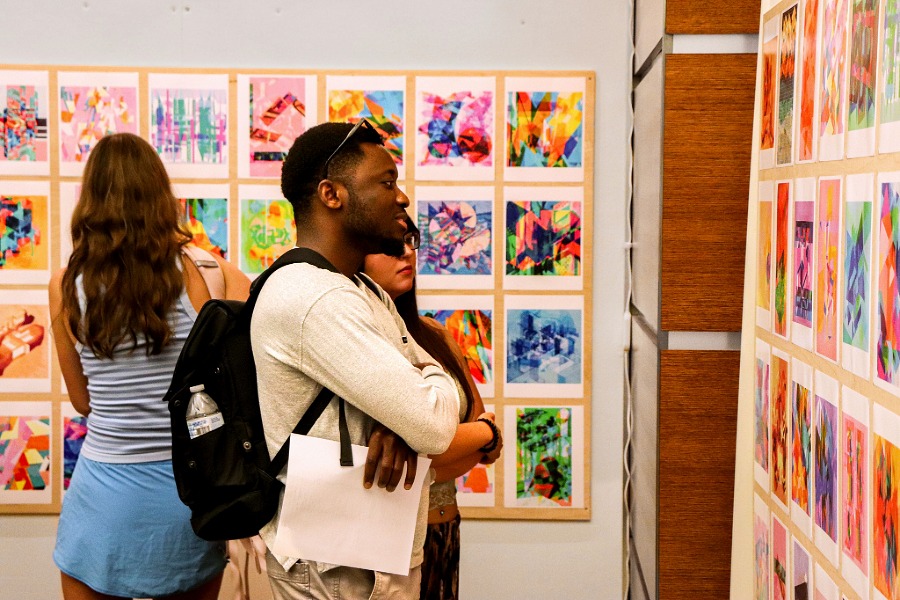
Gibbs College is pleased to present the exhibition 200 Digital Drawings by Professor Tiziana Proietti, currently on display in the Gould Hall Living Room.
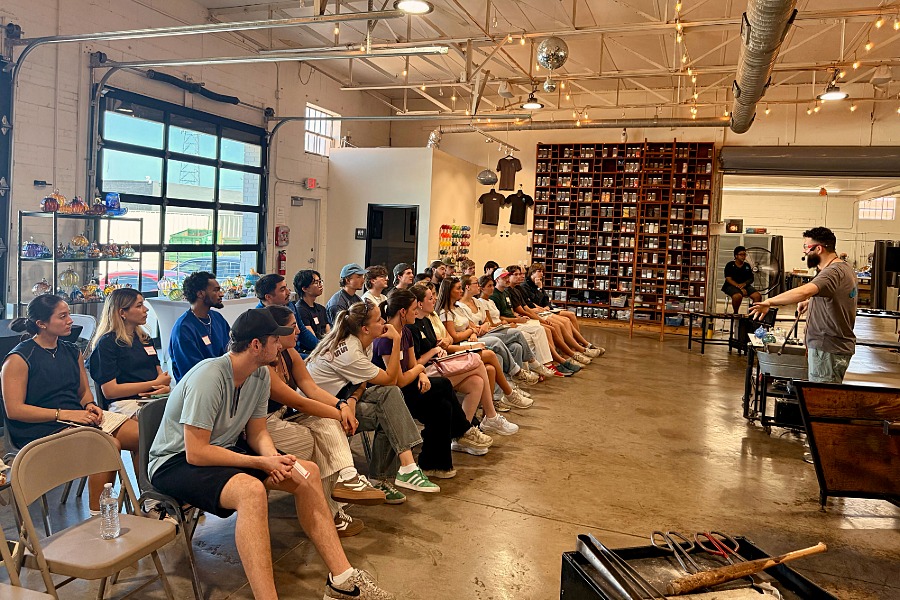
Gibbs College of Architecture Professors Amber Brown and Amy Leveno led 29 students to Dallas, Texas, in September for a learning experience as part of their Design 7 Studio course.
Christopher C. Gibbs College of Architecture professor and Institute for Quality Communities Director Dr. Amber N. Wiley’s book, Model Schools in the Model City: Race, Planning, and Education in the Nation’s Capital, has received two major honors from the Urban History Association.