Date
Professor Stephanie Pilat recently presented a paper on the work of American School architects at the Association of Collegiate Schools of Architecture (ACSA) fall conference in Marfa, Texas. Entitled, “Cold War on the Plains” the paper considered the work of American School architects including Bruce Goff, Mickey Muennig, Blaine Imel, Herb Greene and Frank Wallace. The Cold War had a profound effect on the American landscape, transforming everything from remote natural environments to the domestic realm. Thousands of acres of land, particularly in the west, were re-developed as military testing grounds and dotted with underground missile silos. At the same time, daily life for civilians was punctuated by bomb drills and the call to construct shelters at home.
Pilat’s paper considered how the legacy of WWII and the Cold War shaped architecture on the American Plains in the 1950s and ’60s. The region was home to a number of key military installations including: the Pantex Plant in Amarillo, Texas; a Navy Base in Norman, Oklahoma; and missile silos in Altus, Oklahoma. In other words, the culture, technology, and personnel of war came home to the American plains after 1945. Architects returning from WWII, such as Bruce Goff, Frank Wallace, and Blaine Imel, brought an awareness of military technology, resourcefulness, and survival into their postwar designs. “Cold War on the Plains” investigates how the constant and ubiquitous threat of nuclear war influenced design in the remote landscape of Oklahoma; how tension between the constant Cold War threat and postwar belief in progress led to designs that were both futuristic and apocalyptic.
Learn more about the American School.
Gibbs College is pleased to present the exhibition 200 Digital Drawings by Professor Tiziana Proietti, currently on display in the Gould Hall Living Room.
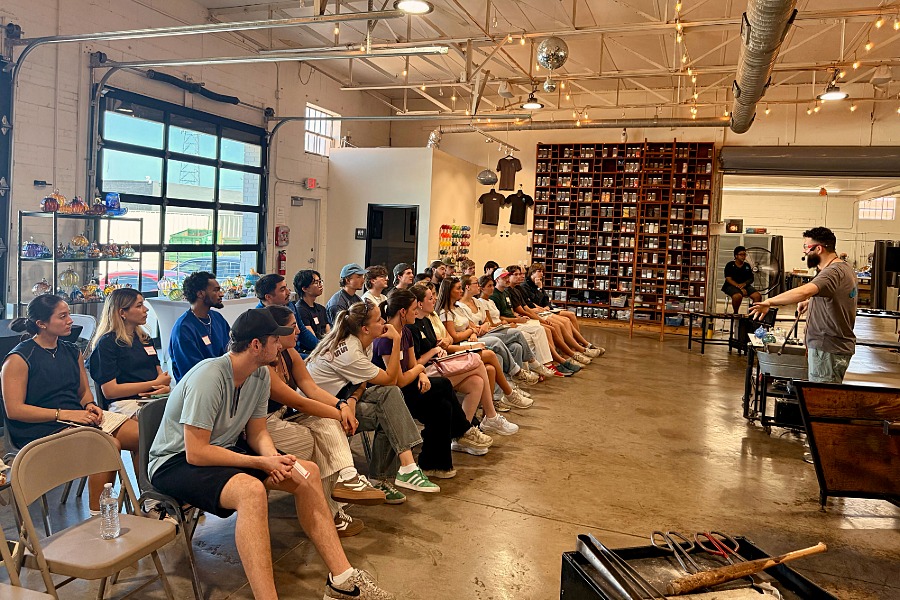
Gibbs College of Architecture Professors Amber Brown and Amy Leveno led 29 students to Dallas, Texas, in September for a learning experience as part of their Design 7 Studio course.
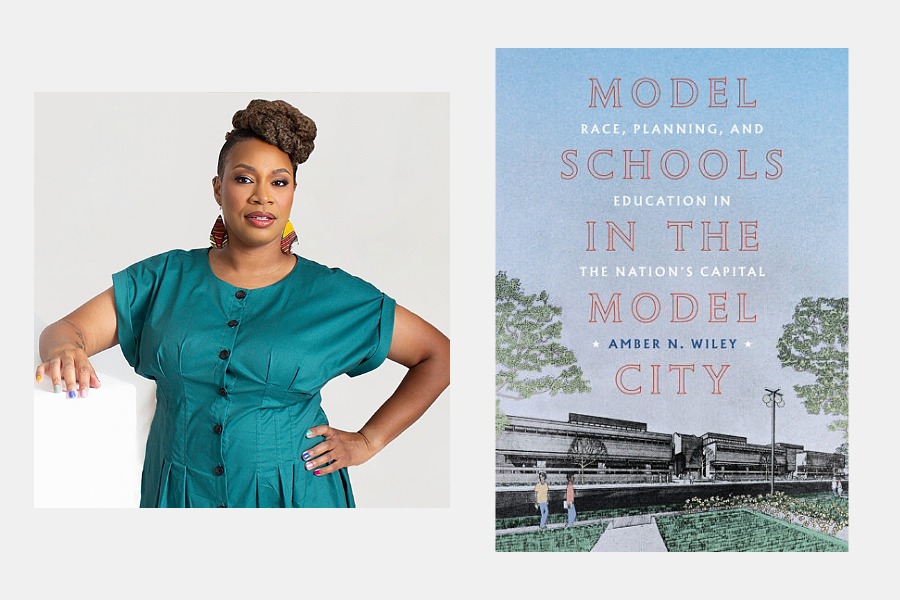
Christopher C. Gibbs College of Architecture professor and Institute for Quality Communities Director Dr. Amber N. Wiley’s book, Model Schools in the Model City: Race, Planning, and Education in the Nation’s Capital, has received two major honors from the Urban History Association.