By
Annette Price
Date
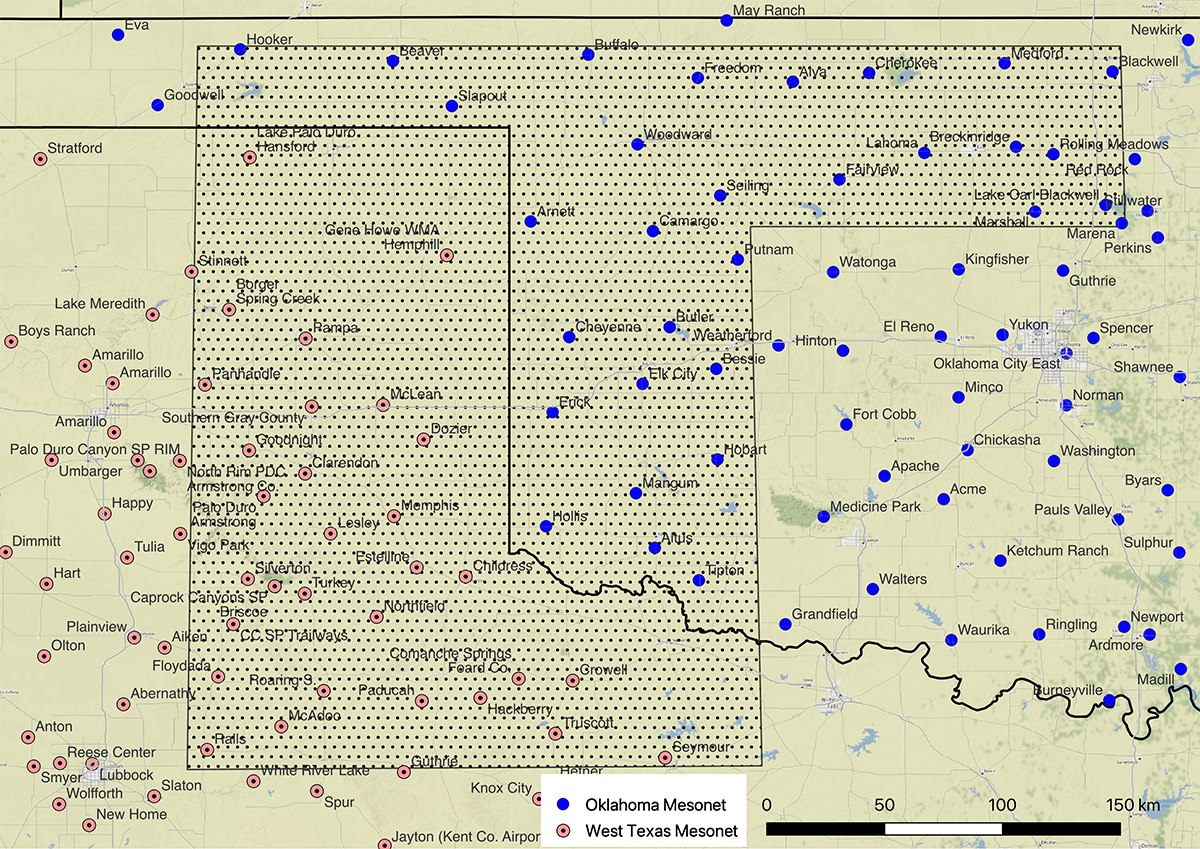
NORMAN, OKLA. – Scientists from the Cooperative Institute for Severe and High-Impact Weather Research and Operations (CIWRO) at the University of Oklahoma will embark on a new field study this summer to collect lower atmospheric observations prior to severe thunderstorms. The project, Oklahoma UAS Targeted Flights for Low-level Observations of Weather (OUTFLOW), will concentrate on portions of northern and western Oklahoma and the Oklahoma and Texas Panhandles. OUTFLOW is funded by the National Oceanic and Atmospheric Administration (NOAA) Weather Program Office.
Weather is often driven by atmospheric conditions such as temperature, moisture and winds just above the ground, an area known as the boundary layer. These help to determine when and where storms may form, as well as their potential hazards. As conditions near the ground can change rapidly, researchers expect more frequent sampling will improve the accuracy of severe weather forecasts. New drone technology now allows researchers to gather this more detailed data just before storms begin.
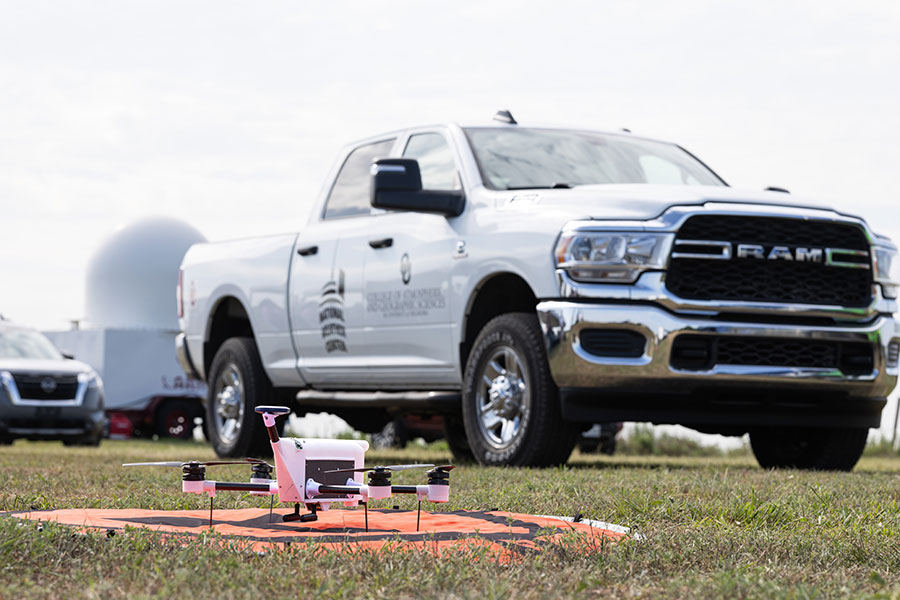
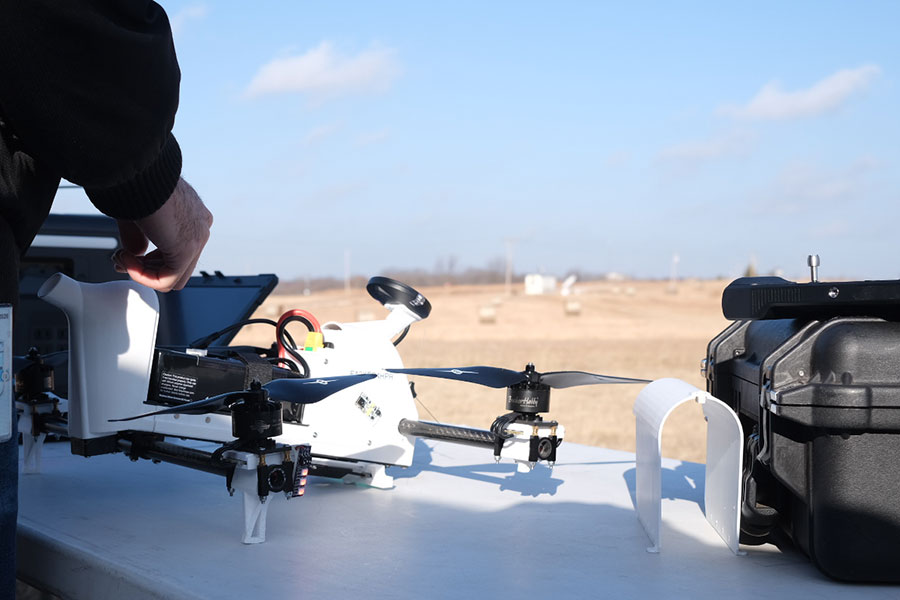
During OUTFLOW, researchers will observe the rapidly changing boundary layer, roughly the lowest kilometer of the atmosphere. Observations will occur near Oklahoma and west Texas mesonet stations using piloted CopterSondes, uncrewed aircraft systems (UAS) developed and built by CIWRO engineer Tony Segalés. Researchers’ goals are to utilize OUTFLOW observations to demonstrate a prototype 3-D mesonet concept and assimilate those observations into NOAA’s Warn-on-Forecast System (WoFS).
Nusrat Yussouf, a senior research scientist at CIWRO and the NOAA National Severe Storms Laboratory (NSSL), is the principal investigator for OUTFLOW. She believes the better representation of the near-storm environment in WoFS using the CopterSonde vertical profiles will improve the prediction of severe convective weather.
“We have observations at the surface, but there is a need to see how the boundary layer evolves when storms form. Currently we have National Weather Service balloon launches, which occur every 12 hours, and it's very sparse. We don't get a complete 3-D picture of the atmosphere frequently. The 3-D mesonet measurement will help us get that,” Yussouf said.
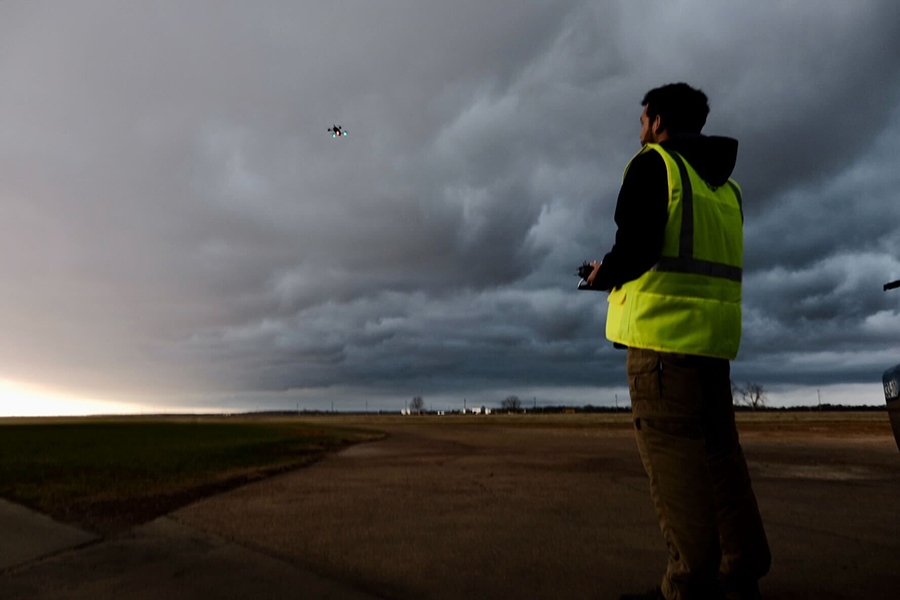
Researchers anticipate eight daytime operating periods for OUTFLOW, during the period of May 15 to Aug. 30, 2023. Four flight teams will monitor four different locations simultaneously through vertical-profile flights up to eight hours long. CopterSondes collect measurements of moisture, temperature and air pressure, and use a unique “wind vane mode” algorithm, which commands the CopterSonde to always face into the wind. This feature is essential to ensuring accurate measurements.
Tyler Bell, a research scientist at CIWRO and NOAA NSSL, will be leading the field portion of the project. He will be responsible for recruiting and training students and other researchers as well as securing the necessary permissions to fly the CopterSondes.
“Having four CopterSondes flying simultaneously is an enormous challenge both in terms of personnel and staying safe in the national airspace. However, we feel the data collected from the CopterSondes will provide a huge benefit to both models and forecasters. Multiple flight locations allow us to quantify how the lower atmosphere is changing both in time and space,” Bell said.
The National Weather Service has, for the first time, purchased vertical atmospheric profiles collected by drones — data collected by the University of Oklahoma (OU) and Meteomatics. The milestone is the next step forward for the Oklahoma 3D Mesonet.
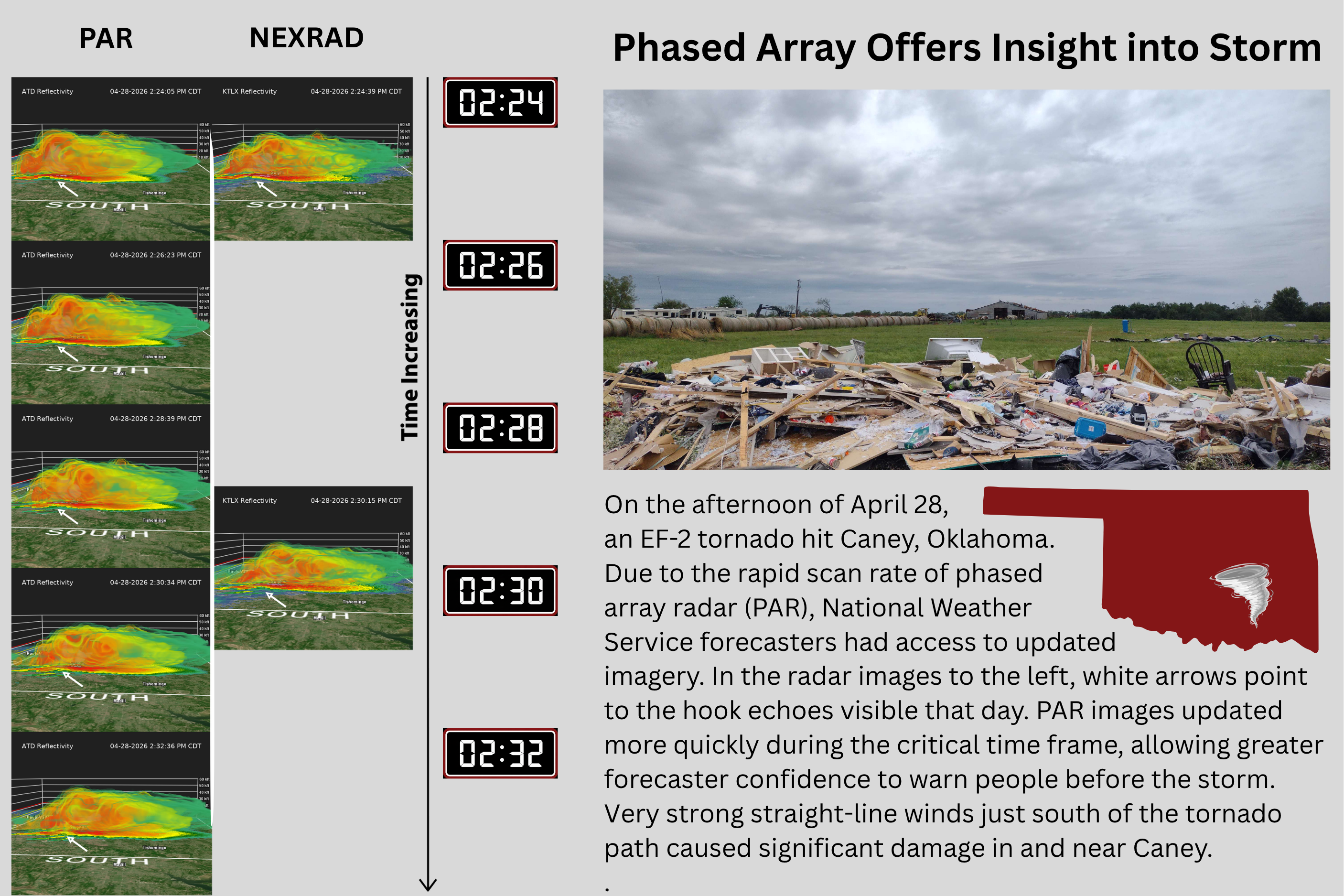
Meteorologists and engineers achieved a research milestone when phased array radar was used in operations for the first time ever to help National Weather Service forecasters warn of an EF-2 tornado.
The 3D Mesonet project aims to make advancements in gathering spatiotemporal atmospheric data in the United States, allowing scientists to better predict short-term, high-impact weather, like thunderstorms, severe winds and winter precipitation.