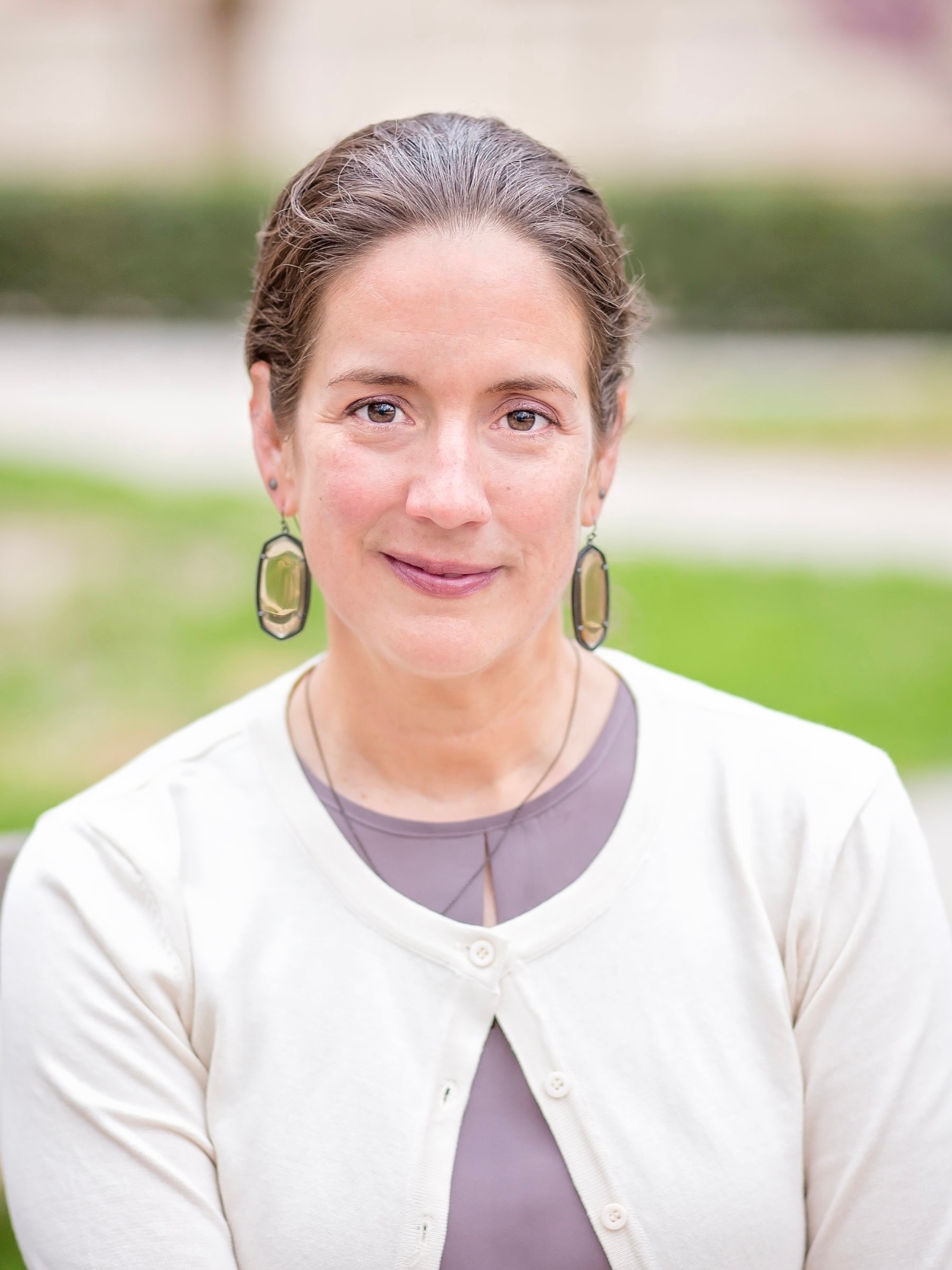
Rachel C. Jackson (Cherokee Nation of Oklahoma) is an Assistant Professor of Native American Literatures and Rhetorics in the Department of English. Her combined research and teaching interests bridge the Native American Literatures & Cultural Studies and Rhetoric and Writing Studies programs. Her research examines local activist rhetorical strategies in the context of historical rhetorical suppression, particularly as activist rhetorics continue to operate transrhetorically across cultural locations to build collective action for change. Her community-engaged projects focus on sustaining Native American languages and cultural literacies and forwarding Indigenous rhetorical and storytelling practices. She works with tribal leaders and community members across Oklahoma and beyond to develop and implement classes, workshops, and projects, including public digital storytelling workshops, the Kiowa Clemente Course in the Humanities, and kiowatalk.org – a community-engaged online archive of the Kiowa language and culture. Her monograph, Red State Reclaimed: The Transrhetorical Recovery of Resistance, is forthcoming with Penn State Press in 2028. Her work has appeared in College Composition and Communication, College English, Rhetoric Review, Community Literacy Journal, and Journal of Multimodal Rhetoric, as well as several chapters in critical edited collections. Her creative writing includes poetry, memoir, and historical fiction that center story and storytelling while leveraging the generative power of critical imagination as a tool for restoration and world-building. Her short stories and essays have been published in two regional collections, Ain’t Nobody That Can Sing Like Me: New Oklahoma Writing (2010) and Kansas Matters: Twenty-First Century Writers on the Sunflower State (2025).
She is a Ford Foundation Fellow (2015), a Fellow with the Newberry Consortium on American Indian Studies (2016), and a recipient of the 2017 Berlin Award for Outstanding Dissertation and 2017 Ohmann Award from the National Council of Teachers of English for Best Article in College English. Her article, co-written with Kiowa elder Dorothy Whitehorse DeLaune, "Decolonizing Community Writing with Community Listening: Story, Transrhetorical Resistance, and Indigenous Cultural Literacy Activism" received recognition as best article of the year from the Community Literacy Journal and was republished in the 2019 Best of Rhetoric and Composition by Parlor Press. Since 2018, she has been a Fellow and Writer-in-Residence for the New Mexico-based National Consortium on Environmental Rhetorics and Writing, an organizational affiliate of the Rhetoric Society of America.
“Decolonizing Dispossession: Transrhetorical Recovery, Settler Colonial Triads, and Reconfiguring the Triangulation of Race.” Literacies of/from the Pluriversal: Tools for Perseverance and Livable Futures. Ed. Ellen Cushman, Damian Baca, and Romeo Garcia. Forthcoming.
“Decolonial Directions: Rivers, Relationships, and Realities of Community Engagement on Indigenous Lands.” Journal of Multimodal Rhetorics. Special Issue: Curation. Ed. Ames Hawkins and Maria T. Novotny. June 2020.
“The Story of a Song: Transrhetorical Resistance, Decolonization, and Kiowa Rhetoric.” Rhetoric Review, 38:1. Special Issue: Decolonizing Rhetorics. Ed. Ellen Cushman and Heather Brooke Adams. Feb. 2019.
“Decolonizing Place and Race: Racial Resentments, Local Histories, and Transrhetorical Analysis.” Rhetoric Review, 36:4. Special Issue: Racial Resentments. Ed. Kathleen Welch and Meta Carstarphen. October 2017.
“Resisting Relocation: Placing Leadership on Indigenous Land.” College English, 79:5. Special Issue: Leadership. Ed. Tom Miller and Joddy Murray. May 2017.
“Locating Oklahoma: Critical Regionalism and Transrhetorical Analysis in the Composition Classroom.” College Composition and Communication, 66:2. Special Issue: Locations of Writing. December 2014.
“The People Who Live Here: Localizing Rhetorical Texts in Gl/Oklahoma Classrooms.” Working English in Rhetoric and Composition: Global-local Contexts, Commitments, Consequences. Eds. Bruce Horner and Karen Kopelson. Southern Illinois University Press. July 2014.