
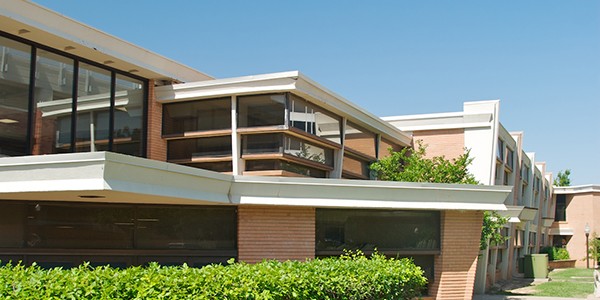
The graduate program in Communication at Oklahoma is designed to prepare students to conduct original research in one or more specialty areas exploring the process of human communication, with emphases on the social, psychological, political, and cultural effects of human interaction.
Given that the University of Oklahoma is one of only 115 Research One (R1) Doctoral Universities in the United States—designated by the Carnegie Classification System as engaging in the “Highest Research Activity"—our graduate program maintains a sharp focus on rigorous theory-driven research, and we encourage our graduate students to work closely in collaboration with our faculty as they explore and investigate areas of mutual research interest.
Within our department, students tend to concentrate in one area while exploring and incorporating key empirical and theoretical concerns in other areas, often combining research objectives at the intersection of several sub-disciplines; for example, intercultural and health communication; social influence and mass media; or organizational communication and international health, to name but a few possibilities.

Most of our doctoral graduates apply their degrees toward careers in academic teaching and research, or communication-related fields making use of their research skills and expertise. Our students, both at the master's and doctoral levels, generally enter the program with interests focusing on one or a combination of our six areas of specialization:
The following core curriculum (6 hours) is required of all Master’s students to insure uniformity and consistency in the quality of the Master’s program.
The Master’s student may follow one of two options in planning his or her program:
Students are encouraged to take some coursework outside of the department. However, a minimum of 24 coursework hours of the student’s M.A. must be in communication courses.
Upon entry, M.A. students are advised by the Director of Graduate Studies during orientations meetings and until they select a permanent advisor. Students may also contact the Academic Counselor to discuss their enrollment options and ask any questions. On-campus M.A. students are assigned a first-year mentor by the Director of Graduate Studies to aid with advising.
Students should select a permanent advisor from the department’s graduate faculty by the second semester. Students may but do not need to select their first-year mentor as their permanent advisor. Students must secure the agreement of the faculty member in question prior to listing that person as their advisor. The student, advisor, and Director of Graduate Studies must sign the Request for Appointment of Committee Chair form and turn it in to the department for inclusion in the student’s file.
With the help of the permanent advisor, the student will develop a program of courses and research to meet their individual needs.
No more than 25% of the credit hours required for the Master’s degree may be transfer credit from another department at the University of Oklahoma or from another university.
In order for transfer credits to be accepted toward a graduate degree, the transfer credit must:
If a transfer course has the same title as a course taken at OU, the content of the course must be substantially different to count both for credit. To make this case, the student must provide a syllabus and a letter from the Director of Graduation Studies illustrating that the classes covered different content. This letter must be submitted to the Graduate College with the Program of Study.
Transfer credit is considered neutral in computing the University of Oklahoma grade point average. No graduate credit may be earned by correspondence courses or advanced standing examinations. However, credit from a professional degree may be applied toward a graduate degree if it meets the criteria listed above. Credit hours may be counted toward satisfying the requirements for one Master’s degree only, with the exception of approved dual-degree programs.
A student registered in the Master’s program should complete all of the degree work within five calendar years after his or her first graduate enrollment at OU. When an additional year is needed to complete the degree, the student and advisor may petition the department for a one-year extension. The student, advisor, and Graduate Dean must be notified in writing of the department’s decision. If the decision is denied, the student will be dismissed. An extension of time beyond one year will require approval from the Graduate Dean. The department is required to describe how it will determine that the student is current in the field at the time the degree is awarded. This may involve re-examination or additional course work.
All Master’s degree students are required to maintain an overall 3.0 GPA in all graduate courses attempted.
One grade of C or lower will lead to a warning letter from the department. Should a student receive a second grade of C or lower or should their GPA drop below 3.0 for a term, the student will be placed on departmental academic probation and have a hold placed on their enrollment. To have this hold lifted, the student must propose a plan to improve their performance that needs to be approved by their advisor (or first year mentor) and the Director of Graduate Studies. The student will have a 9-hour probationary period (or the remaining number of hours in the program if less than 9 hours) during which they must not make lower than a B or earn a grade of U.
Should a student accumulate 3 or more grades of C, D, and/or F, they will be dismissed from the program. The Graduate College will stop a student’s enrollment if their GPA is less than 3.0 for more than one semester or if they earn a grade of U in two consecutive semesters. The Director of Graduate Studies will seek the input of the student’s advisor, their advisory committee, and the department chair to determine whether a recommendation should be made to the Graduate College for the student to be permitted to continue in the program. If all parties involved decide not to make such a recommendation, the student will be dismissed from the program. If all parties involved agree to make such a recommendation, a plan to remedy the student’s academic situation must be devised. The plan should outline all criteria, expectations, and conditions the study must satisfy to improve their performance. Should a student fail to fulfill these criteria, they will be dismissed from the program.
For the thesis option, the thesis committee must be comprised of at least three members from the Department of Communication. The committee members must be members of the graduate faculty. The student must, with the cooperation of his or her advisor, select a thesis subject no later than the semester in which the student plans to start thesis work.
The student then prepares a prospectus and submits it to the thesis advisory committee that will meet with the student to discuss the proposed study. The prospectus must be signed by committee members and filed in the student’s departmental folder. Once the prospectus is approved, the student must obtain a Thesis Title Card from the Graduate College. The card must be completed and signed by all members of the student’s thesis committee. The signed card must be returned to the Graduate College. If a change in thesis becomes necessary, a new Thesis Title Card must be processed.
Following initial enrollment in COMM 5980, which must be for a minimum of two hours, the Master’s student must maintain continuous enrollment during each fall and spring semester until the degree requirements are completed or candidacy is discontinued. If a student is actively working on a thesis, seeking committee advice, or using university facilities, thesis enrollment must be maintained during the summer semester as well. Requirements for full-time enrollment status are in effect while the student is engaged in thesis research. Taking no other course work and enrolling in only two hours of COMM 5980 does not constitute full-time status.
If a Master’s student does not comply with the continuous enrollment policy, the student must enroll during the semester in which graduation is expected in the exact number of hours of COMM 5980 that would have been completed with continuous enrollment. In addition, a late enrollment fee must be paid for each missed semester. The final determination of the number of COMM 5980 hours in which the student must enroll in the final semester in the degree program, along with the collection of the appropriate fees, is the responsibility of the Graduate College and Office of Admissions and Records.
The Master’s student must submit the Admission to Candidacy Form to the Director of Graduate Studies for approval prior to submitting it to the Graduate College.
A Master’s student who has done satisfactory graduate work and has maintained an overall GPA of 3.0 on all residence graduate level courses may be admitted to candidacy for a Master’s degree as soon as
he or she has enrolled in sufficient hours for the degree and has a committee selected. To apply for admission to candidacy, a student must complete and submit the Admission to Candidacy form provided by the Graduate College. An Admission to Candidacy form must be filed in the Graduate College no later than the first Monday in March (for summer graduates), the first Monday in April (for fall graduates) and the first Monday in October (for spring graduates). All listed coursework must have satisfactory grades and no incompletes. When appropriate, use the program-specific form.
One must obtain signatures from all committee members and the Director of Graduate Studies on the Application for Approval of the Master’s Thesis Topic and Committee Membership. This form is turned in to the Graduate College at the same time as the Admission to Candidacy form. Any changes in the topic or committee composition results in a new copy of this form being completed and turned in to the Graduate College. This must be approved at least 14 days before the defense by the Graduate College.
Change of thesis topic or committee membership needs signatures of all old (if relevant) and new members of the committee and the Director of Graduate Studies.
Students must file for graduation by the deadlines listed by the Graduate College each semester. When the student has completed the thesis to the satisfaction of his or her advisor, a copy of the thesis should be provided to every committee member at least two weeks before the defense to allow committee members sufficient time to read the thesis in preparation for the oral defense. Committee members may request a paper or electronic copy. The student must request authority from the Graduate College for the thesis defense. At the time the authorization is requested, the student presents a copy of the completed thesis (a final draft will be acceptable) to the Graduate College for review at least a week before the defense. If the thesis is acceptable, the student will be issued the Authority Report Form of the Thesis Defense. The student cannot defend until he or she has obtained this form. As each thesis defense is public, the student is also responsible for posting a notice announcing the impending defense several days before it is to be held.
The M.A. thesis defense meeting cannot be held when a student’s committee members are unavailable. Most faculty members are on 9-month appointments; therefore, summer thesis defenses will generally not be scheduled. Under extreme extenuating circumstances it may be possible to schedule a summer dissertation defense if the advisor and all the committee members are willing to do so. For example, exceptions may be possible if a student is being deployed for military service and needs to complete the degree requirements before the deployment date. In such cases, the student may make summer arrangements only after first receiving written permission from the Director of Graduate Studies and each member of his or her committee prior to the summer semester during which he or she wishes to schedule thesis defense meeting.
A unanimous vote of the examining committee is expected. However, on occasion some dissenting reports are received. If one member of the examining committee dissents, the dissent is recognized as a minority report, and the student is still considered to have passed the defense. When a committee consists of more than three members and two dissents, the Graduate Dean will investigate and make the final decision on the student’s performance. If two of a committee of three dissent, or more than two of a committee of more than three members dissent, the performance will be seen as a failure. Only one attempt is afforded the candidate in defending the thesis.
Within 72 hours after the thesis defense, the Authority Report Form of the Thesis Defense must be returned with the results and signatures of all committee members to the Graduate College. Within 60 days of the defense or by the deadline of the desired graduation semester (whichever is earlier), the student must deliver to the Graduate College a final version of the thesis in the form described in the instructions provided by the Graduate College to the SHAREOK system. If all is in order, the student can then be cleared for graduation.
| Step | Due | Required Paperwork |
|---|---|---|
| Selection of Advisor and Committee | 2nd Semester (full time) or Equivalent (part time) | Request for Appointment of Committee Chair (Dept. Office) |
| Present Prospectus | Semester prior to beginning research | Prospectus signed by all thesis advisory committee members (Dept. Office) |
| Thesis Topic Approval | After prospectus approval | Thesis Title Card (Grad College) |
| Apply for Graduation | 1st Monday in March (summer grads), 1st Monday in April (fall grads), and 1st Monday in October (spring grads) | Graduation Application |
| Admissions to Candidacy | 1st Monday in March (summer grads), 1st Monday in April (fall grads), and 1st Monday in October (spring grads) | Admissions to Candidacy Form and Application Approval of the Master's Thesis and Committee Membership (Grad College) |
| Thesis Defense Request | Along with Requiring Authority Form | Authority Report Form of the Thesis Defense (Grad College) |
| Submission of Thesis | Along with Requiring Authority Form | Three copies of final draft submitted to Graduate College Dean for review. Receive Thesis Receipt card which must be signed by Library Acquisitions and returned to the Graduate College. |
Nonthesis Master’s students follow the same Admission to Candidacy Form procedure described under the Thesis Option, but they are required to take a comprehensive examination instead of writing a thesis. The exam requires the student to undertake a general review and integration of all studies. The exam is organized around fields of study rather than around courses and is not intended to repeat the final exams of actual courses. Eight hours are scheduled for the exams, which are usually divided among two 3-hour areas and one 2-hour area as approved by the student’s committee. One exam area must relate to a core course. All exams are closed book. In preparation for the exam, students are expected to read and study beyond their course requirements. A student must be enrolled in at least two hours the semester he or she takes the exam. The examination typically consists of a written exam and may also include an oral portion if requested by any member of the examining committee.
To schedule the examination and obtain the proper paperwork, the student needs to contact the Academic Counselor, or Kristi Wright, Assistant to the Chair. The student requests the Authority Report Form for the Comprehensive Examination from the Graduate College at least one week prior to taking the exam. This form will be used by the student’s committee to show a satisfactory or unsatisfactory result on the exam. No form will be issued if the student has not filed an Admission to Candidacy Form. The student must have completed all required courses and 75% of coursework before taking the comprehensive exam. No Master’s comprehensive exam may be taken until all I’s (incompletes) have been resolved or while the student is on academic probation. Once authorization is secured, the student and advisor will set the date of exams. All exams are taken on the University of Oklahoma campus. Notify the Academic Counselor, or the Assistant to the Chair, Kristi Wright, to schedule a room to take the exam as soon as possible.
The comprehensive exam may not be held during the period of final course exams, when the university is not in session, or when a suitable committee cannot be assembled. The M.A. comprehensive exam cannot be held when a student’s committee members are unavailable. Most faculty members are on 9-month appointments; therefore, summer exams will generally not be scheduled. Under extreme extenuating circumstances it may be possible to schedule a summer dissertation defense if the advisor and all the committee members are willing to do so. For example, if a student is being deployed for military service and needs to complete the degree requirements before the deployment date. In such cases, the student may proceed to make summer arrangements only after first receiving written permission from the Director of Graduate Studies and each member of his or her committee prior to the summer semester during which he or she wishes to schedule the exam.
The examining committee consists of at least three members from the faculty of the Department of Communication. All committee members must be present if an oral portion is requested. Just as for the thesis option, the back of the Authority for Comprehensive Examination form must be returned to the Graduate College with the results and the signatures of all committee members within one week after the comprehensive exam is held. The same dissenting procedures apply to the nonthesis option. Unlike the one-shot chance at a thesis option, if a student fails the comprehensive exam, the exam may be repeated once in the following semester (at the earliest) at the discretion of the examining committee. The comprehensive exam may not be given a third time.
| Steps | Due | Required Paperwork |
|---|---|---|
| Selection of Advisor and Committee | 2nd Semester or equivalent | Request for Appointment of Committee Chair (Dept. Office) |
| Apply for Graduation | 1st Monday in March (summer grads), 1st Monday in April (fall grads), and 1st Monday in October (spring grads) | Graduation Application |
| Admission to Candidacy | 1st Monday in March (summer grads), 1st Monday in April (fall grads), and 1st Monday in October (spring grads) | Admission to Candidacy (Grad College) |
| Schedule Comprehensive Exam | Final Semester | Memo from Graduate Liaison requesting permission to administer examination (Department) Authority Report Form for Comprehensive Exam (Sent to the department from the Grad College). |
| Exam | Final Semester | |
| Oral Exam Defense | If requested by at least one committee member | |
| Pass/Fail | Immediately Following Defense | Return Authority Report Form for Comprehensive Exam within one week of completed exam or oral defense to the Grad College. |
The Ph.D. in the Department of Communication requires at least 96 semester hours beyond the baccalaureate degree. The 96+ hours must be in a planned course of study approved and overseen by the student’s advisor and advisory committee. At least 30 hours of coursework (excluding transfer credit and dissertation hours) must be in Communication.
All transfer credit must have a grade of A, B, or S. One cannot transfer a course with a grade of B-.
All students will undertake the Ph.D. program after having completed a Master’s degree in communication or a related discipline. The post-Master’s student’s advisory committee will determine which courses from the Master’s program may be appropriately counted as part of the Ph.D. program. If the student is transferring in 30 hours from their Master’s and post- Master’s work toward their Ph.D., the Graduate College can accept up to as many hours of thesis as counted for their Master’s degree. If the student is transferring between 31 and 44 hours of Master’s and post-Master’s work to apply to their Ph.D., then the limit of thesis hours that can be applied to the Ph.D. is four hours. The Department of Communication allows a maximum of 30 hours of Master’s degree credit to be counted toward the Ph.D. The grades in these courses and the student’s Master’s GPA do not count toward the student’s Ph.D. GPA.
If a transfer course has the same title as a course taken at OU, the content of the course must be substantially different to count both for credit. To make this case, the student must provide a syllabus and a letter from the Director of Graduate Studies illustrating that the classes covered different content. This letter must be submitted to the Graduate College with the Admission to Candidacy form.
On occasion the advisory committee may accept some graduate coursework completed beyond the Master’s degree. Up to 44 semester hours of a Master’s degree program plus post-Master’s course work may be applied toward a Ph.D. If students have a second Master’s degree, they can transfer up to 14 hours from this degree, as long as the total number of hours transferred from one’s Master’s degrees and the post-Master’s coursework do not exceed 44 hours. The advisory committee has complete discretion in determining the number of hours that may be applied to the prospective candidate’s Ph.D. program. All graduate hours transferred from other institutions must meet the criteria concerning transfer credit. Any courses taken at the University of Oklahoma which were not part of a completed Master’s degree cannot be more than five years old. One’s time limit for completion of the degree (one’s clock) is calculated based on the earliest course listed in this section.
No more than 18 hours of Ph.D. coursework beyond the Master’s (excluding Comm 6980, Research for Doctoral Dissertation) may be S/U graded coursework. Communication courses falling in this category are Independent Study and Research Task Force. Independent Study has a maximum of eight hours, and Research Task Force has a maximum of 15 hours. Students may take more than 18 hours of S/U coursework beyond the 96-hour requirement. Directed Readings is a letter-graded course, with a maximum of nine hours applicable to the 96 hours required for the Ph.D. degree. Regardless of how many hours of Comm 6980 (Research for the Doctoral Dissertation) are taken by the Ph.D. candidate, no less than two or more than 15 will be counted toward the 96 hours of coursework required for the Ph.D. degree.
The core courses required for the Master’s degree in the Department of Communication (or their equivalent) are required of all Ph.D. students. Students must also earn 32 hours of coursework in a major concentration (such as Communication).
The doctoral candidate should be able to demonstrate proficiency in statistics, ethnography, foreign language, linguistics, historiography, electronic media production, or any other tool found by the student advisory committee to be appropriate to the student's program and research needs.
Students must meet the requirements in place when they entered the program. The current requirements are:
In addition, COMM 5013 Introduction to Graduate Studies must be taken in the first year of studies in order to maintain enrollment.
Students who enter the Ph.D. program without a completed M.A. degree have until the end of their first semester to post their Master’s degree, or a stop will be placed on their enrollment and they will lose their assistantship and tuition waiver benefits.
Doctoral students who enter an OU graduate program with a baccalaureate degree are expected to pass the general examination within five calendar years of their first graduate status registration at OU.
Doctoral students who enter an OU graduate program with a Master's degree are expected to meet this requirement within four years. After passing the general examination, the doctoral candidate is normally expected to complete all degree requirements including the dissertation defense within five years of being admitted to candidacy. When warranted, the department may extend the time required to complete the doctoral degree for up to one additional year provided the Graduate Dean is notified in writing. An extension beyond one year requires the approval of the Graduate Dean. Approval of such extension requires the department to certify the student’s knowledge to be current and appropriate to the degree to be awarded.
All Ph.D. students are required to maintain an overall 3.25 GPA in all graduate courses attempted including tool courses. One grade of C results in a warning letter from the Graduate College. A GPA under 3.00 or two grades of C will put the student on academic probation. The student will then have a 12-hour probationary period. The student must not make lower than a B or a grade of U during this time. At the end of the 12-hour probationary period, the student must have raised his or her overall GPA to 3.0. Failure to meet either of these two conditions will result in the student being unable to continue enrollment in graduate classes. Should a student receive two or more Cs, an automatic stop will be placed on enrollment. To have this stop lifted, the student must submit a plan for improving his or her performance and petition the Director of Graduate Studies to stay in the program. If the student is permitted to reenroll, the student must still obtain an overall GPA of 3.0 by the end of 12 hours after the first C.
Should a student receive two Cs or give other indication to the advisor of inability to pursue successfully the course of study to the awarding of the degree, the advisor will call a meeting of the student’s advisory committee to determine whether the student should be permitted to continue work in the Department of Communication. A student admitted conditionally (low grades, course work deficiencies, or incomplete credentials) to the Ph.D. program who does not satisfy the terms specified in the Statement of Conditional Admission will be denied further enrollment. Ph.D. students who enter the program without a completed M.A. degree are considered to have incomplete credentials and will have one semester to complete the M.A. degree or be denied further enrollment.
Graduate students can have no more than 3 incompletes (or 9 hours of “I”) in order toretain a graduate teaching assistantship and to attain a satisfactory annual performance rating. Once a student has a 3rd incomplete, they have one semester to remove this incomplete or else jeopardize their annual performance rating and graduate teaching assistantship.
Ph.D. students entering the department’s graduate program for the first time in the fall term will be advised during the orientation meetings held prior to the beginning of classes. Students entering at other times should contact the Director of Graduate Studies for advising and can also contact Stephanie Terrazas, Academic Advisor, with any questions.
Self advising is most strongly discouraged, as it often leads to future difficulties for the student.
Students must obtain their permanent advisor from among the department’s graduate faculty. Permission to become a faculty member’s permanent advisee must be secured from the faculty member in question. Full-time Ph.D. students should obtain a permanent advisor within their first year of enrollment. Part-time Ph.D. students should secure a permanent advisor by the end of their first twelve hours of course work in the department. The student, advisor, and Director of Graduate Studies must sign the Request for Appointment of Committee Chair form included at the end of this handbook and turn it in to the department office for inclusion in the student’s file.
The permanent advisor and the student collaborate in selecting an advisory conference/doctoral committee for the prospective candidate typically by the end of the third semester in the program.
The advisory committee consists of a minimum of 3 departmental members and 1 Graduate College representative. The advisory committee may be more than 4 members as long as the number of department members outnumbers the members from outside the department. The student must have selected an advisor and committee members chosen prior to the Plan of Study meeting. The Graduate College representative must be at every meeting of the committee throughout the student’s doctoral program. This person cannot be from the College of Law, the Health Sciences Center, or be adjunct faculty or retired. If this person retires, he or she must be replaced.
Students can designate co-chairs, but one person must be designated the primary chair on all paperwork. In addition, the primary chair cannot be from outside the department. On thesis/dissertation signature pages, chair and co-chair can both be listed as co-chairs by petition.
Students should offer paper or electronic copies of anything they send to their committee members (e.g., Advisory Conference form, Dissertation proposal, and final dissertation reading copy) to allow the members their preference.
The first responsibility of the advisory committee is to meet with the student to assist in planning the student’s Ph.D. program, taking into consideration the student’s strengths and deficiencies and, if necessary, suggesting ways to overcome any deficiencies. The committee members decide how much of the Master’s program credit can be applied to the Ph.D., with a maximum of 30 hours. They select research tools and determine a tentative calendar for degree completion.
At a plan of study meeting, the student and his or her committee discuss the Report of the Advisory Conference Form. This form will list all of the classes a student will apply to his or her Ph.D. program. The committee must agree on the classes that will apply to a student’s Ph.D. program. The student will need to have an advisor and committee members chosen before they can have this meeting. Instructions for filling out the advisory conference report and form.
Students should have the plan of study meeting at least by the end of their third semester in the Ph.D. program. Otherwise, they chance either taking classes that will not apply to their program or that a committee member will request that a student take a class not originally planned, potentially lengthening a student’s time in the program.
After the advisory conference is held, the student must file the completed Report of the Advisory Conference. The report must be signed by the advisory committee, the advisor, and the Director of Graduate Studies. If any changes in the student’s program become necessary, a Request for Change in Doctoral Advisory Conference Report must be filed with and approved by the Graduate Dean. The request must be approved and signed by all members of the committee and the Director of Graduate Studies.
Ph.D. students who continue to enroll in courses not sanctioned by an advisory committee may find that they have taken courses that will not be accepted by their advisory committee or may be required to take more courses than they planned, potentially lengthening the time to their completion of degree.
Plan of Study Meetings will not be scheduled in the summer. Students can plan ahead to avoiud summer dates for these activities.
When a change in the membership of a student’s committee is contemplated, the student must show the signed approval of all original members and all new members on the Request for Change in Doctoral Advisory Conference Form if the outside member or chair is being replaced. Otherwise, only the chair, new committee member, and Director of Graduate Studies must sign the form. In either case, the form must be filed with and approved by the Graduate Dean.
No doctoral committee membership change is allowed within thirty days of the dissertation defense or general exam.
If a member of a student’s committee terminates employment with or retires from the university and wishes to continue to serve, that member in consultation with the student must request, in writing, permission from the Graduate Dean. This does not apply to the outside member, who must be replaced. If the chair retires, he or she can remain on the committee as a co-chair, and a current member of the departmental graduate faculty must be designated as the other co-chair for the committee.
The following criteria must be met for a member who is leaving the university to remain on a student’s committee:
When all research tools have been completed and all other course work has been completed, the prospective Ph.D. candidate should file in the Graduate College a completed Application for General Examination for the Doctor’s Degree. Application forms, and must be turned submitted no later than the end of the second week of the semester in which the exam will be taken. All members of the student’s doctoral committee must sign the form. Failure to have authorization prior to the exam will require the exam to be repeated. Individuals must complete both the written and oral exam in the semester in which it is authorized.
No Ph.D. general exam may be taken until all “I” (incomplete) grades have been resolved. The exam may not be scheduled during final examination periods or when the doctoral committee cannot be assembled. Most faculty members are on 9-month appointments; therefore, summer examinations will not be scheduled. The student must be enrolled in at least two hours of graduate credit during the semester he or she takes the exam.
After the Graduate Dean authorizes the exam, the student should arrange a time and place for the examination with his or her doctoral committee. There are limited rooms for exams. Rooms are assigned on a first-come, first-serve basis, so it is best to schedule it as early as possible. The student’s doctoral committee will prepare and conduct the general examination. The general exam will consist of a written portion followed by an oral portion in the presence of the entire committee.
Topics and hours for each question are developed by the student’s advisor in conjunction with the student. The adviser will send the other members of the student’s committee a list of topics and the number of hours allowed for each question. The student should set up a time to meet with each committee member to discuss the question and receive any reading list that the faculty may wish for the student to review.
The written portion of the exam is divided into two parts. These two parts together must be 16 to 18 hours in length:
Generally, students should orally defend their answers as soon as possible after the faculty have two weeks to read them. Any exceptions must have permission of the Director of Graduate Studies. Written and orals must be in the same semester. Within 72 hours after the oral portion of the exam, a written report signed by all members of the committee must be submitted to the Graduate Dean. The report should indicate whether the student passed or failed the examination. If the student passes the exam, the Graduate Dean will admit the student to candidacy for the doctoral degree. If all or any portion of the general exam is failed, a report must be submitted to the Graduate Dean indicating a failure on the examination. The student, at the discretion of the committee, may seek authorization from the Graduate College to repeat those portions of the exam failed the first time in a following semester.
If a student fails any portion of the general exam on the second attempt, he or she will be terminated from the doctoral program. No portion of the exam may be taken a third time. If a student’s performance is marginal, but not failing, and the examining committee wishes the student to complete further readings, course work, investigations, etc., in a set time period, the results of the exam can be held in abeyance with the approval of the Graduate Dean. At the end of the time limit (usually no more than one semester), the committee must file the report with the Graduate College.
The Graduate Dean will investigate any report received in the Graduate College without unanimous vote. The Dean may choose to confer with the dissenting member(s), with the committee chair, or with the entire committee. The course of action taken is dictated by each individual case.
If the authorized general examination is not held, a report indicating the reasons why it was postponed must be submitted to the Graduate College.
General Exams will not be scheduled in the summer. Students can plan ahead to avoid summer dates for these activities.
To obtain a Ph.D. from the University of Oklahoma, any research utilizing human participants must be approved by the University of Oklahoma—Norman Campus Institutional Review Board (OU-NCIRB), even if the individual is collecting data from participants at a location other than the University of Oklahoma. This approval must be obtained before any participants are recruited or data collected. If the dissertation utilizes participants from any other university or is affiliated with any other university, then permission must be obtained from that university’s IRB board as well.
Before one can obtain IRB approval, he or she must complete the Collaborative IRB Training Initiative (CITI), which is required for all investigators. Students should complete this training before submitting any IRB applications, as otherwise, the applications will be returned. For further information, see http://www.ouhsc.edu/irb-norman/training.asp. If the student plans to utilize the Department of Communication Research Subject Pool, he or she should reference the policies listed in the Graduate Handbook.
Any graduate student traveling outside of the United States for academic purposes (e.g., research) needs to notify the Graduate College by filling out a form available on the first page of the Graduate College website known as the International Travel For Academic Purposes Form. When a graduate student intends to travel to a country for which there is a State Department warning, the student is required to meet with the Dean of the Graduate College before the trip to discuss the circumstances of the trip and to sign a statement releasing the University from liability.
At some time, usually near the end of his or her program of study, the student, in collaboration with his or her major advisor, will determine a dissertation topic. After the general examination has been passed, the student will submit a prospectus for the dissertation to his or her doctoral committee. The committee will meet with the student to discuss the proposed study. The student is required to hold this meeting, and attendance by all advisory committee members is strongly encouraged. These meetings are open, and other interested faculty and graduate students are encouraged to attend.
When any problems have been resolved to the satisfaction of the committee, the doctoral committee will give the student permission to proceed with the study. The approved document from the defense of prospectus serves as a contract between the student and the committee. A copy of the approved prospectus, signed by all committee members, is filed in the student’s folder in the departmental office.
Dissertation proposal meetings will not be scheduled in the summer. Students can plan ahead to avoid summer dates for these activities.
Doctoral students in the Department of Communication may not enroll in dissertation hours until the general examination has been taken and successfully passed. Any exceptions must be cleared with the Director of Graduate Studies. The initial enrollment in Comm 6980 must be for at least two credit hours. Following the initial enrollment in Comm 6980, the graduate must maintain continuous enrollment in at least two hours of Comm 6980 during each regular semester until the requirements for the degree are completed or the degree candidacy is discontinued. The number of hours for each semester will be determined by the faculty on the basis of the amount of faculty and university services required by the individual student, with a minimum enrollment of two hours. A graduate assistant holding a 0.5 FTE appointment will be required to enroll in at least five hours of COMM 6980 during the fall and spring semesters in order to be considered a full-time student. A student should enroll in summer if doing at least one of the following: 1) Working on the dissertation, 2) Obtaining advice from advisor committee members, or 3) Using facilities of the university, such as the library. Regardless of the final number of hours of Comm 6980 accumulated during the period of dissertation research reading and writing, no less than two or more than 15 will be counted toward the Ph.D. requirements.
The final number of hours of Comm 6980 in which the student must enroll in the final semester of the degree program, along with the collection of the appropriate fees, is the responsibility of the Graduate College and the Bursar’s office.
Reading of the Dissertation/Preparation for the Final Oral Examination
Before defending one’s dissertation, one must:
If at least four committee members view the dissertation to be acceptable to proceed with oral defense, proceed with the planned defense.
If they reject it, the student will be given another opportunity to submit an acceptable dissertation to the committee.
In other words, the committee members should have the copies at least a month (20 business days) prior to the scheduled defense date. This is two weeks (ten working days) before he or she plans to turn in the Request for Authority for Defense of Dissertation to the Graduate College. This form must be turned in two weeks (ten working days) prior to the actual defense date.
This long lead-time for a defense is designed to protect the student. If the dissertation defense is unsatisfactory then:
The one-month lead time allows committee members to read the dissertation prior to turning in the Request for Authority to Defend and allows the defense to be delayed until it is considered defendable by the committee rather than resulting in an unsatisfactory defense. The reading copy should be in an acceptable dissertation format and must include all figures and tables, numbered pages, and a complete bibliography. It should not contain grammatical or spelling errors. Students should consult the Dissertation Instruction Packet available from the Graduate College.
During the first two weeks after they receive it, all members of the student’s doctoral committee read and determine whether the dissertation demonstrates the student’s ability to conduct original research and makes a significant contribution to the communication discipline prior to the submission of the Request for Authority to Defend. If they reject it, the student will be given another opportunity to submit an acceptable dissertation to the committee. If they accept it and a degree check indicates that the student has completed all course work with acceptable grades, the student may schedule the final oral examination by turning in the Request for Authority for Defense of Dissertation to the Graduate College at least ten working days (two weeks) before the dissertation defense date.
The defense must occur during the semester for which the authorization is given and no later than the last day of class (not during finals week). At least four members of the doctoral committee, including the outside member and the advisor, must be present to conduct the examination. Because faculty members are on 9-month appointments, they are not required to come into the office during the summer months. Therefore, summer dissertation defenses will generally not be scheduled. Under extreme extenuating circumstances it may be possible to schedule a summer dissertation defense if the advisor and all the committee members are willing to do so.
The final oral examination is a defense of the dissertation and is open to the public. The student is responsible for posting a notice of the impending dissertation defense several days before it is to occur.
The candidate applies to the Graduate College for the oral defense two weeks prior to the defense using the Request for Authority to Defend form. The candidate will be issued the Authority Report Form for the Dissertation Defense by the Graduate College. After the defense, the Committee must report its decision on the Authority Report Form for the Dissertation Defense to the Graduate College within 72 hours after the examination. A unanimous vote of the committee is expected. However, on occasion some dissenting reports are received. If one member of the committee dissents, the dissent is recognized as a minority report, and the student is still considered to have passed the defense. When there are two dissents, the Graduate Dean will investigate and make the final decision on the student’s performance. If more than two of a committee members dissent, the performance will be seen as a failure.
In most cases, even though the student’s committee has agreed that the student successfully defended the dissertation, the committee will request a number of changes to the dissertation prior to submitting it to the graduate school. These changes can range from very minor corrections of errors to more substantive changes in such as additional analysis or revisions of the discussion section. These changes will be specified at the defense. Once those changes are approved by the advisor and/or committee, the dissertation is ready for submission.
The instructions for submitting the final dissertation are regularly changed as the process becomes more automated. For example, printed copies are no longer accepted. As of 2018 all dissertations are submitted through the SHAREOK system. Consult with the Graduate College to make sure that you have met all of their requirements for submitting your dissertation and graduating including the submission deadline.
| Step | Due | Required Paperwork |
|---|---|---|
| Selection of Advisor | 2nd Semester (full time) or equivalent (part time) | Request for Appointment of Committee Chair (Department Form) |
| Selection of Committee and Plan of Study Meeting | 3rd semester or equivalent | Report of Advisory Conference (Graduate College) |
| General Exam | 3rd Year (i.e. ,6th semester) | Application for General Exam for Doctor's Degree (Graduate College) |
| Admission to Candidacy | 3rd Year (i.e., 6th semester) | Written report of exam results submitted to Graduate College Dean within 72 hours of oral exam |
| Prospectus | After completing general exams (i.e., 6th or 7th semester) | Form signed by committee members (Department Form) |
| Planning to Graduate | About midpoint of the final semester | Application for Graduation (Registrar Form) |
| Submission of Dissertation | Final semester four weeks prior to expected defense date | Complete dissertation correctly formatted to all committee members. Request for Degree Check (Graduate College) |
| Schedule Defense | Final semester two weeks prior to defense date after approval form the committee | Request for Authority to Defend (Graduate College) |
| Dissertartion Defense | Final semester prior to the last day of classes | Authority Report Form for the Dissertation Defense |
| Submit Dissertation | Final semester after successful dissertation defense prior to the submission deadline | Final Copy submitted to SHAREOK system. Embargo form (optional) |
| Cleared for Graduation | Per graduation requests |
Upon a foundational core curriculum of quantitative and qualitative methods, statistics, and history and theory of communication, our students build a concentrated program of research within their own specialized area of interest, through advanced courses, seminars, independent study, and research task force projects in their chosen content area.
Beyond two years of master’s study, course requirements at the doctoral level are ideally completed within three years, with the dissertation defended in the student's fourth year. Funding through the dissertation is generally for five or six years for those entering at the master’s level and continuing on at the doctoral level, and for four years for those entering at the doctoral level. An additional year of funding may be available, depending on student and departmental needs. Graduate awards and scholarships are also available for students excelling within the program at both the master’s and doctoral levels.
An undergraduate major in communication is not required; we welcome applicants from other academic backgrounds, and we accept students who hold baccalaureate as well as master's degrees. Our graduate committee reviews each candidate's complete application package to evaluate its promise for predicting a successful career in teaching and research. One’s academic course record, GPA, letters of recommendation, and statement of purpose, are all considered. GRE scores are not currently required but highly recommended, especially for those wishing to be considered for funding.
Our department places major emphasis on the conducting of research, therefore, students who are admitted to the Ph.D. program have generally been involved in independent research during the pursuit of their MA degrees. Although there are no course requirements for admission, all applicants should have sufficient foundational knowledge as undergraduates to prepare them for graduate level coursework, and to immediately begin conducting communication research.

Graduate admissions and requirements for the application process are available via the Graduate College's Website.
All admission materials for the Department of Communication must be submitted through the Graduate College's online system
The Department of Communication has two deadlines each year:
The application deadline is December 15th of each year for full funding consideration. If December 15th falls on a weekend, materials will be due on the following business day. Funding is unlikely for applications after December 15th. You may also apply by April 1st for fall admissions but with limited opportunities for funding. The department does not process regular admissions for the spring semester.
We encourage you to submit your application to pursue graduate work here in the Department of Communication at Oklahoma, and we look forward to receiving your application materials.

The application deadline is December 15th of each year for full funding consideration. If December 15th falls on a weekend, materials will be due on the following business day. Funding is unlikely for applications after December 15th. You may also apply by April 1st for fall admissions but with limited opportunities for funding.
We do not usually admit graduate students for the spring semester. Under exceptional circumstances, students may begin taking classes under unclassified status. Please contact the Director of Graduate Studies for further information.
All questions regarding TOEFL or English proficiency should be directed to the Office Admissions. You can contact them via telephone at 405-325-2252 or check their website for details
You can also email them at gradadm@ou.edu
International Students who wish to receive a teaching assistantship must be certified to instruct in English prior to the beginning of the semester. Additional information is available on the Graduate College website.
Yes, please visit the International Student Services Office website. Or contact them via phone number at (405) 325-3337.
No, the GRE is not required. We strongly encourage you to submit such scores with your application. Official GRE scores must be sent to the Graduate College from Educational Testing Service (ETS). You may provide a copy of your unofficial scores, but you will need to have official scores sent to the university if admitted.
The school code is 6879; the Department of Communication code is 4599.
We advise you to take the GRE well in advance of the December 15th deadline. Both Education Testing Service and the University of Oklahoma may take several days/weeks to process the before we receive them in the department. Please do not wait until the last minute to take the test.
No, you will only be considered for the M.A. degree. Once you are in our M.A. program, you may apply for our Ph.D. program.
No. The application for the Department of Communication is an automatic request for a graduate assistantship unless you state otherwise
You can decline consideration for an assistantship in the online application.
Assistantships are awarded on a competitive basis, so it depends on the number of applications we receive. The number of available assistantships also varies each year.
Approximately 5-15 students are usually admitted every year.
Letters of acceptance or denial will be sent around the end of February for the January 5 deadline. Letters for the May 5 deadline are usually sent out by the end of that month.
You should contact the Director of Graduate Studies, Dr. Norman Wong, if you want to set up a campus visit. They can best be reached via email at nwong at ou.edu
Email the Director of Graduate Studies, Dr. Norman Wong, nwong at ou.edu

