
Skip Navigation

Bachelor of Science, Health Information Systems | OU Polytechnic Institute

Bachelor of Science:
Health Information Systems

Health Information Systems Program Overview

Healthcare relies on people, and data is what connects them. As the healthcare sector continues to advance through innovations in technology, data analytics, and cybersecurity, the demand for professionals capable of integrating information systems with patient care has never been greater.

The Bachelor of Science in Healthcare Information Systems equips students with the technical competencies, analytical capabilities, and regulatory knowledge essential for modern healthcare environments. Through hands-on, in-person coursework at the OU–Tulsa campus, students develop applied experience with electronic health records (EHRs), clinical decision support tools, and data management systems that improve patient outcomes and enhance organizational performance.

Students learn to effectively manage, analyze, secure, and govern healthcare information using current technologies and compliance frameworks that define today’s healthcare landscape.

Prepare to become the vital link between technology and patient care—and contribute to meaningful, system-wide impact.

Why Study Healthcare Information Systems at OUPI?

The OU Polytechnic Institute developed the Healthcare Information Systems program in collaboration with healthcare and technology partners across Oklahoma to meet the growing need for professionals skilled in healthcare data management, analytics, and cybersecurity.

The program emphasizes hands-on learning with electronic health records, clinical decision support, and compliance systems, ensuring students gain practical experience with the tools and standards driving healthcare transformation.

Graduates will be equipped to improve data accuracy, strengthen information security, and apply data-driven insights to enhance patient care and organizational decision-making. Designed with evolving industry needs in mind, OUPI’s Healthcare Information Systems program prepares students to lead innovation and improve outcomes across healthcare ecosystem.

Bachelor Degree Completion Program Requirements

  • Completed OUPI Application
  • Minimum 2.5 GPA
  • Minimum 24 credit hours earned at the time of application

This is a bachelor's completion program. Students traditionally transfer to OUPI once they have earned an associate's degree or taken at least 24 hours from an accredited institution, such as a community college.

Sign up for email updates

Healthcare Information Systems Program Curriculum

This 60-hour bachelor’s degree completion program is designed to be completed in two years and developed with the needs of local, state, and regional healthcare employers in mind.

Upon graduation, students will hold a Bachelor of Science in Healthcare Information Systems from the University of Oklahoma.

Your OU degree in Healthcare Information Systems will prepare you to meet the growing demand for technology professionals in healthcare by combining information management, analytics, and cybersecurity expertise with hands-on experience in clinical and administrative systems.

Through applied learning, students gain practical experience with electronic health records, clinical decision support, and compliance frameworks, building the skills needed to modernize healthcare data systems, enhance information security, and improve patient outcomes.
Courses in the curriculum will include:
  • Health Information Systems and Applications
  • Ethics in Medical Informatics
  • Web Systems Development
  • Healthcare Organizations: Clinical Roles, Tasks, and Workflows
  • Medical Information Retrieval and Digital Knowledge Sources
  • Clinical Decision Support Systems for Evidence-Based Care
  • Artificial Intelligence, Natural Language Processing, and Machine Learning for Healthcare
  • Foundations of Programming for Emerging Technologies
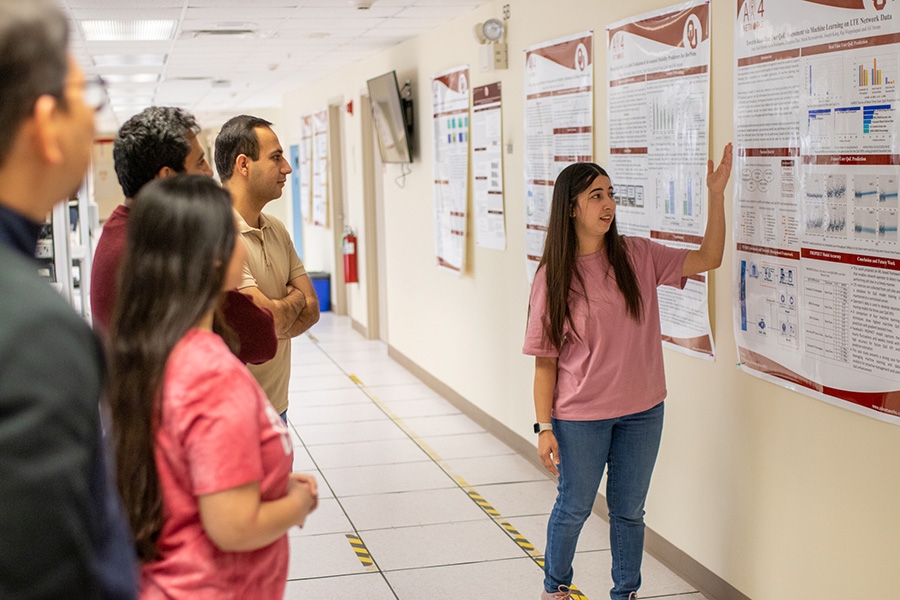
student presenting poster to audience.

Accreditation Objectives & Outcomes

The Applied Artificial Intelligence program is not currently ABET-accredited. OUPI plans to seek initial ABET accreditation after the program’s first graduating cohort, as required by ABET.

Program Educational Objectives

Within 3 - 5 years of graduation, alumni of the Healthcare Information Systems program will:

1. Core Competencies in Healthcare Information Systems

Graduates will develop a strong foundation in healthcare information systems, including electronic health records (EHR), clinical decision support, and healthcare IT infrastructure. They will be prepared to support the implementation and management of technology that enhances patient care and healthcare operations.

2. Data Analytics & Decision Support in Healthcare

Graduates will learn to collect, manage, and analyze healthcare data using industry-standard tools. They will apply statistical analysis, predictive modeling, and machine learning to support clinical decision-making, improve efficiency, and contribute to data-driven healthcare improvements.

3. Integration & Interoperability of Healthcare Systems

Graduates will understand how to integrate healthcare information systems into existing healthcare environments. They will develop skills in system interoperability, data exchange standards, and workflow optimization to improve communication and coordination across healthcare teams.

4. Healthcare Cybersecurity, Ethics, & Regulatory Compliance

Graduates will be able to navigate the complex legal and ethical landscape of healthcare information management. They will ensure the security and privacy of healthcare data by applying industry regulations such as HIPAA, HITECH, and GDPR while addressing cybersecurity risks in digital healthcare systems.

5. Innovation & Problem-Solving in Digital Healthcare

Graduates will develop critical thinking and problem-solving skills to address challenges in healthcare technology. They will explore emerging innovations such as artificial intelligence, telehealth, and blockchain, applying them to improve healthcare delivery and patient outcomes.

Student Outcomes

Graduates of the program will have an ability to:

  1. Analyze a complex computing problem and apply principles of computing and other relevant disciplines to identify solutions.
  2. Design, implement, and evaluate a computing-based solution to meet a given set of computing requirements in the context of the program’s discipline.
  3. Communicate effectively in a variety of professional contexts. 
  4. Recognize professional responsibilities and make informed judgments in computing practice based on legal and ethical principles.
  5. Function effectively as a member or leader of a team engaged in activities appropriate to the program’s discipline.

OUPI Class Schedules

At the OU Polytechnic Institute on the OU-Tulsa campus, most classes are strategically scheduled only two days a week, with some variations. Class days are grouped together and may vary by semester to accommodate program needs. This schedule allows students to complete their degree while balancing time for work, internships, and personal growth.

Scholarships

The University of Oklahoma offers various scholarships to admitted and enrolled transfer students in the OU Polytechnic Institute based on criteria such as academics, leadership, and community involvement. OUPI students are eligible to receive any of these scholarships for which they qualify. In addition, a fund has been established to provide stipends necessary for technology purchases including laptops or software. Qualified OUPI students can receive stipends of up to $1,000 for technology purchases.


Graduate Skills

Brand divider line.
  • Manage and maintain healthcare information systems to ensure accuracy, accessibility, and efficiency across healthcare environments.
  • Analyze healthcare data using analytical and machine learning tools to support clinical and administrative decision-making.
  • Integrate and optimize interoperable systems for seamless communication and data exchange within and across healthcare organizations.
  • Apply cybersecurity and compliance frameworks, including HIPAA and HITECH, to protect sensitive healthcare information.
  • Evaluate ethical, legal, and societal issues in healthcare technology and make informed, responsible decisions.
  • Collaborate effectively with clinical and IT professionals to design and implement technology solutions that improve patient outcomes.

Career Paths

Brand divider line.

Some typical career paths include:

  • Health Information Technologist
  • Clinical Informatics Specialist
  • Healthcare Data Analyst
  • Telehealth Technology Coordinator
  • Interoperability Specialist
  • Application Specialist
  • Healthcare IT Consultant
  • Database Administrator
  • Cybersecurity Specialist for Healthcare IT
  • Electronic Health Record Systems Administrator
  • Data Quality Manager
  • AI & Machine Learning Specialist in Healthcare

Industries

Brand divider line.

OU Polytechnic Institute graduates will be qualified for positions in:

  • Hospitals and Health Systems
  • Public Health Agencies
  • Health Insurance Providers
  • Medical Software Companies
  • Telehealth and Remote Monitoring Organizations
  • Healthcare Consulting Firms
  • Research Institutions

Take the Next Step

Your degree in Applied Artificial Intelligence from OUPI can open doors that set you off on a journey of a lifetime.

Applications are now open. Join our mailing list to learn more about application deadlines, scholarships, and courses.

Student wearing OUPI shirt standing on campus in front of a bench and an OU flag.
