NEWS

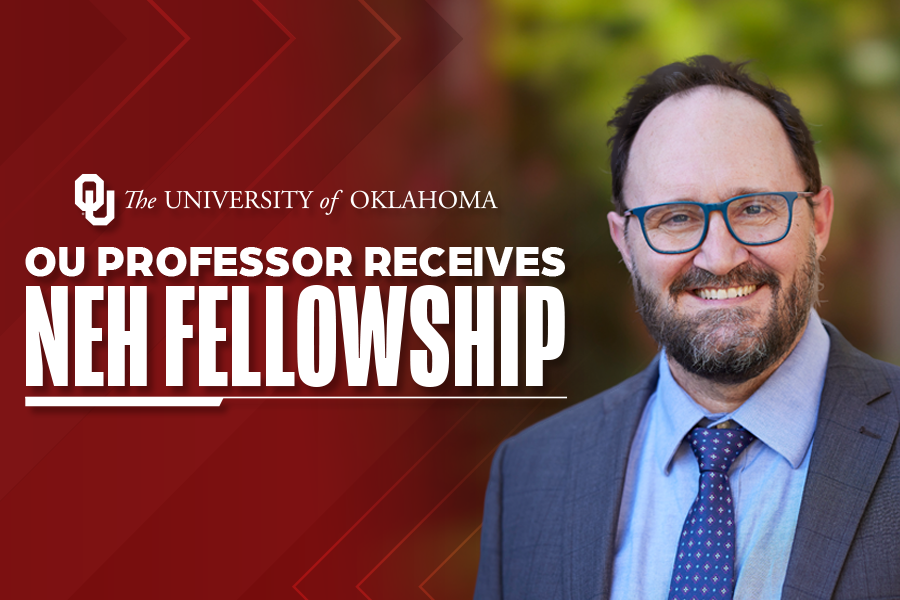
NORMAN, Okla. – The National Endowment for the Humanities (NEH) has awarded University of Oklahoma Professor Rangar Cline with a one-year faculty fellowship for his project, “Attestation Pilgrimage: Roman Travelers in Search of the Gods.”
Cline is an associate professor in the Department of Religious Studies in the Dodge Family College of Arts and Sciences. Through the NEH fellowship, he will continue work on his book project examining the pilgrimage practices of Christians, Jews and polytheists during the late Roman and early Byzantine Empires.
Religious pilgrims travel to sites such as tombs and places of worship around the world, providing them with personal encounters meaningful to their faith. They may also take souvenirs from these locations as reminders or evidence of their visits.
Cline will examine the motivations and experiences of these third- to seventh-century travelers, exploring the roots of a practice that has carried into the modern day. He said a significant aspect of pilgrimages is how they verify religious accounts for the faithful.
“There are places that polytheist Romans went to, where they believed the hoofprints of Castor and Pollux's horses were left near Rome,” said Cline, who also teaches courses about pilgrimage, Roman religion and Mediterranean archeology at OU. “You touch these things and see them, and that demonstrates the truth of the story.”
The NEH funding will help Cline continue his research and writing for this project, which includes traveling to see historical sites and artifacts and investigating “graffiti” from pilgrims marking their or loved ones’ names at destinations.
Cline said his career has included both studying texts and working on archaeological projects, and that this book project combines those two worlds. He added that, thanks to the grant allowing him to focus on his project, he hopes to have a draft of the book ready by September.
“I’m really appreciative of the award,” Cline said. “It’s nice to have support for humanities projects, and this is a project that speaks to those of different religious traditions. It can seem remote in time, that you’re going all the way back into ancient Rome and the early Byzantine period, but many of those traditions are ones that are still popular today.”
About the research
“Attestation Pilgrimage: Roman Travelers in Search of the Gods” is funded by a $60,000 award from the National Endowment for the Humanities, Award No. FEL-308523-26.
About the University of Oklahoma
Founded in 1890, the University of Oklahoma is a public research university located in Norman, Oklahoma. As the state’s flagship university, OU serves the educational, cultural, economic and health care needs of the state, region and nation. For more information about the university, visit www.ou.edu.
The University of Oklahoma has received a transformative gift from Jon and Shannon McCartney, which will name the McCartney Family Tunnel of Champions, the McCartney Family Gate of the Gaylord Family - Oklahoma Memorial Stadium and the McCartney Family Grand Lecture Hall in the Michael F. Price College of Business. The gift will also support the Inspiring Champions and the Athletic Director’s Discretionary Fund, in addition to establishing the McCartney DFW Career Trek program at Price College.
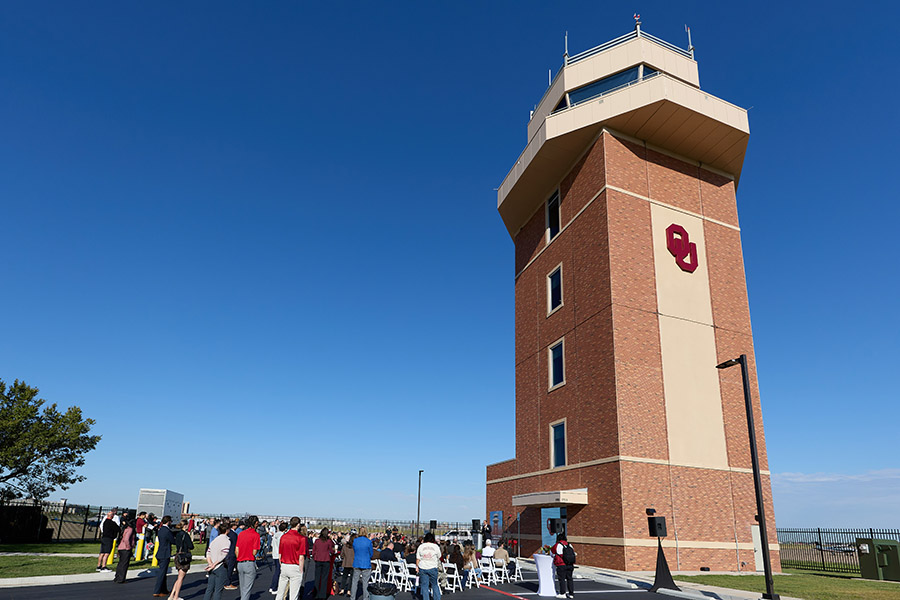
The University of Oklahoma today celebrated the opening of a new air traffic control tower at the OU Max Westheimer Airport. Standing 106 feet tall, more than double the current 52-foot facility, the new tower will modernize air traffic control operations and improve safety for pilots and students operating in the airspace.
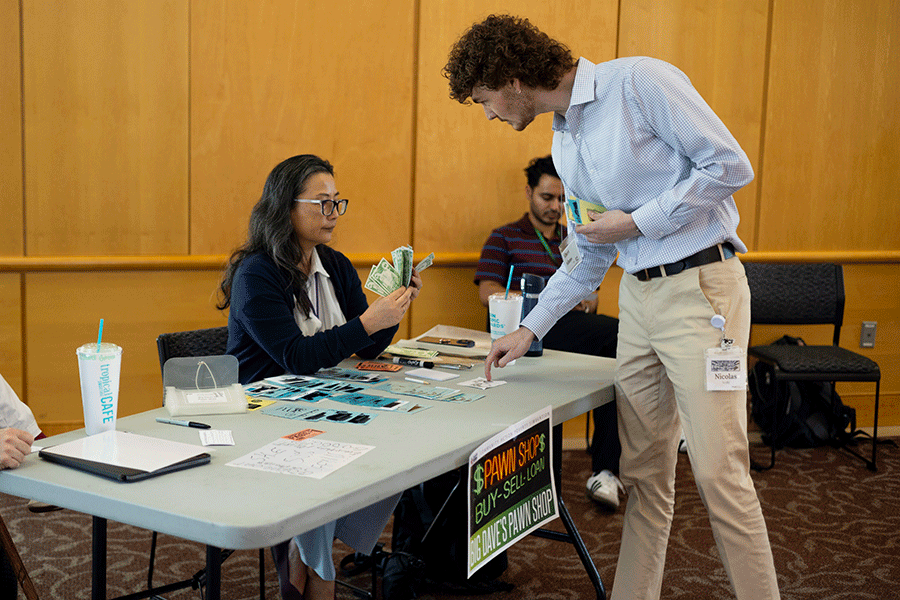
Do I buy groceries or pay the electric bill? Should I pawn some of my belongings to afford my prescription? My child is sick, so I will have to miss work to take care of him. Those are just a few of the difficult choices that OU-Tulsa health professional students confronted during the Community Access to Resources Experience. The role-playing activity challenged students to navigate the financial, family and other pressures that can affect a person’s health and ability to follow medical advice. Held annually during the SCM Institute orientation week, the experience is designed to generate understanding and build empathy.