NEWS

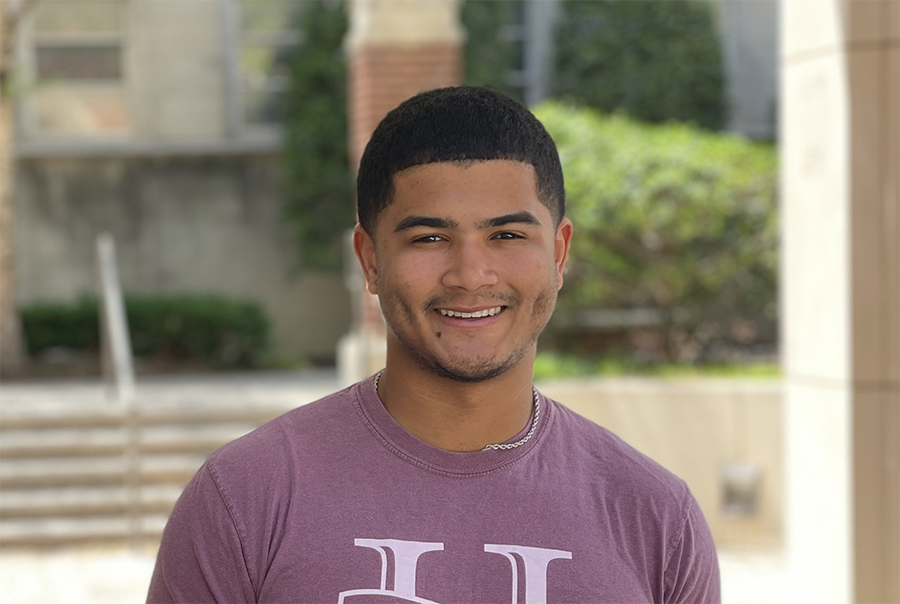
NORMAN, OKLA. – As a child growing up in Atlanta, Curtis Harris would ask his mom to arrive at the airport hours early so he could sit by the window and watch airplanes take off and land. Today, at age 22, he is directing aircraft as a certified air traffic controller after graduating from the University of Oklahoma’s enhanced air traffic controller training program.
Harris, who graduated from OU in 2025, is the first graduate in the nation of the Federal Aviation Administration’s Enhanced Air Traffic-Collegiate Training Initiative program to achieve Certified Professional Controller status. He is also the first student from OU’s Enhanced Air Traffic-Collegiate Training Initiative (AT-CTI) program to earn the certification. He now works at Addison Airport near Dallas.
The FAA approved OU’s enhanced program as part of a national effort to accelerate the training of qualified air traffic controllers. Traditionally, controller candidates attend the FAA Academy in Oklahoma City before reporting to an FAA facility. Under the enhanced AT-CTI model, qualified graduates can bypass the academy and proceed directly to FAA facilities for on-the-job training.
“Being one of the first people through the program is exciting, but for me, the biggest thing was completing the training,” Harris said. “There were a lot of eyes on our class because we were among the first students in the nation to go through the program. It is good to know we have shown that the AT-CTI program works.”
Harris completed his degree in just three years and went straight to Addison Airport for on-the-job training. After completing certification requirements, he now works independently as an air traffic controller.
“Now there is nobody sitting behind me listening to every transmission,” he said. “That is a big change from training.”
Harris’ interest in aviation began long before college. Growing up near Hartsfield-Jackson Atlanta International Airport, the world’s busiest airport by passenger traffic, he initially considered becoming a pilot. After attending aviation camps and speaking with an air traffic controller in the Dallas-Fort Worth area, he discovered OU’s air traffic management program. One of those experiences, the Lockheed Martin Aviation Camp, further fueled his interest in aerospace and aviation careers.
“I wanted a career where every day was different,” Harris said. “Air traffic control is like solving a puzzle. Every day you come in, there’s a different problem to solve. It’s incredibly rewarding.”
At OU, he credits faculty and staff members with helping prepare students for the demands of controller training. He praised flight instructor Gary Wescott, who joined OU after working at the FAA Academy, for helping him understand the expectations of professional controller training.
“He brought a sense of urgency and realism that really helped us prepare for what was ahead,” Harris said.
OU air traffic control lab techs Alex Estrada and Evan Lambeth spent countless hours outside class helping him sharpen his skills through additional simulator sessions.
“They were there whenever we needed extra practice,” he said. “I cannot overstate how much that helped us succeed.”
Harris said one of the most important lessons he learned at OU and during FAA training was confidence.
“Pilots have to trust you,” he said. “If you sound uncertain, they are going to feel uncertain. You have to make decisions confidently and communicate clearly.”
The success of graduates like Harris helps validate the FAA’s decision to expand enhanced AT-CTI programs as the FAA works to strengthen the nation’s controller workforce, said Stephen West, director of Air Traffic Management for OU.
For Harris, the milestone represents both a personal achievement and a promising sign for future students. “I feel like this is just the first proof point,” Harris said. “Now people can look at the program and say, ‘Yes, it works.’”
Learn more about the School of Aviation in the College of Atmospheric and Geographic Sciences.
About the University of Oklahoma
Founded in 1890, the University of Oklahoma is a public research university located in Norman, Oklahoma. As the state’s flagship university, OU serves the educational, cultural, economic and health care needs of the state, region and nation. For more information about the university, visit www.ou.edu.
The University of Oklahoma has received a transformative gift from Jon and Shannon McCartney, which will name the McCartney Family Tunnel of Champions, the McCartney Family Gate of the Gaylord Family - Oklahoma Memorial Stadium and the McCartney Family Grand Lecture Hall in the Michael F. Price College of Business. The gift will also support the Inspiring Champions and the Athletic Director’s Discretionary Fund, in addition to establishing the McCartney DFW Career Trek program at Price College.
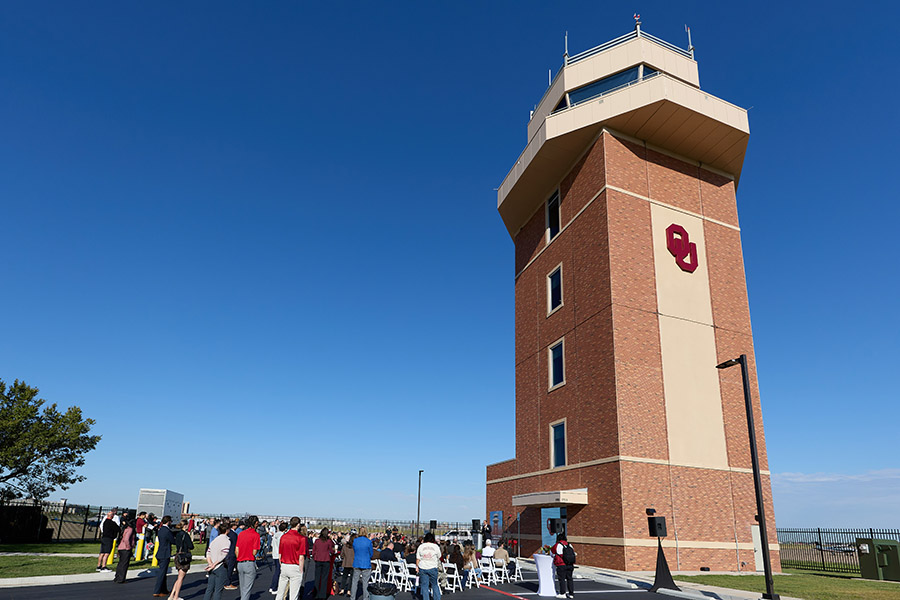
The University of Oklahoma today celebrated the opening of a new air traffic control tower at the OU Max Westheimer Airport. Standing 106 feet tall, more than double the current 52-foot facility, the new tower will modernize air traffic control operations and improve safety for pilots and students operating in the airspace.
Do I buy groceries or pay the electric bill? Should I pawn some of my belongings to afford my prescription? My child is sick, so I will have to miss work to take care of him. Those are just a few of the difficult choices that OU-Tulsa health professional students confronted during the Community Access to Resources Experience. The role-playing activity challenged students to navigate the financial, family and other pressures that can affect a person’s health and ability to follow medical advice. Held annually during the SCM Institute orientation week, the experience is designed to generate understanding and build empathy.