NEWS

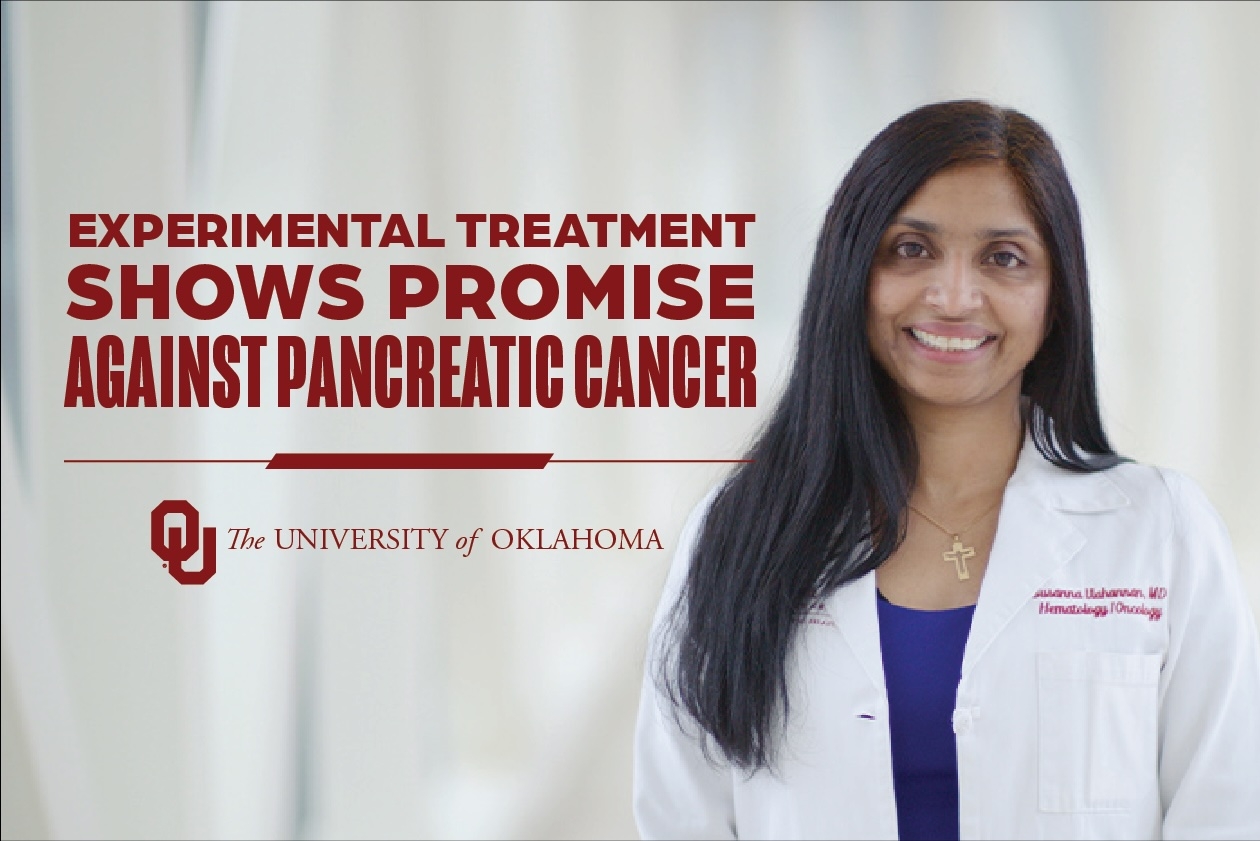
OKLAHOMA CITY – An experimental treatment strategy for metastatic pancreatic cancer may help patients live longer by making tumors more visible to the immune system, according to a study published in Nature Medicine. OU Health Stephenson Cancer Center enrolled patients on the clinical trial, which studied a new drug called quemliclustat.
Pancreatic cancer tumors can “hide” from the body’s immune system by creating a chemical called adenosine, which essentially tells the immune cells to stand down. Quemliclustat works by blocking an enzyme (CD73) that helps make adenosine, potentially allowing the body to better recognize and attack cancer cells.
Researchers tested quemliclustat in combination with standard chemotherapy. Patients receiving the combination had a median overall survival of approximately 19 months, compared with historical survival of 9 to 10 months with chemotherapy alone. In addition, quemliclustat was generally well-tolerated and did not appear to cause substantial side effects beyond chemotherapy.
“This is a novel way of treating pancreatic cancer, and it is unusual to find a drug that works without significant side effects,” said Susanna Ulahannan, M.D., OU Health oncologist and associate professor in the OU College of Medicine, who was the principal investigator for the trial at OU Health Stephenson Cancer Center. “We want to add a drug that prolongs life without taking away quality of life.”
Some patients also received an immunotherapy drug called zimberelimab. Those patients did not appear to benefit as much as patients who received the quemliclustat-chemotherapy combination alone.
“That was a surprising result. Additional drugs don’t always mean a better outcome,” Ulahannan said.
Researchers also identified a group of patients who appeared to respond especially well to quemliclustat and chemotherapy: those with a high NR4A signature, a gene associated with immune system function. The finding suggests the signature could help identify patients most likely to benefit from the drug.
Pancreatic cancer is considered a “cold” tumor, meaning it does not usually respond to immunotherapy drugs, which prompt the body’s immune system to attack cancer. Quemliclustat is not a traditional immunotherapy drug. Instead, it is a targeted treatment designed to block a pathway that tumors use to suppress the immune system. Sometimes called “immuno-oncology,” it is part of a growing class of drugs aimed at changing the tumor environment rather than directly killing cancer cells.
The results are encouraging but preliminary, so the research continues in a larger Phase 3 clinical trial. Arcus Biosciences developed quemliclustat and sponsored the trial. For more information, visit the clinical trials website at https://clinicaltrials.gov/study/NCT04104672.
About the project
The paper, “Quemliclustat and chemotherapy with or without zimberelimab in metastatic pancreatic adenocarcinoma: a randomized phase 1 trial,” can be found at https://www.nature.com/articles/s41591-026-04283-z.
This project was also supported by Oklahoma's Tobacco Settlement Endowment Trust (TSET), a primary funder of the Stephenson Cancer Center and TSET Health Promotion Research Center at the University of Oklahoma and by the Oklahoma Shared Clinical and Translational Resources through an Institutional Development Award from the National Institute of General Medical Sciences (grant no. U54GM104938).
About the University of Oklahoma
Founded in 1890, the University of Oklahoma is a public research university with campuses in Norman, Oklahoma City and Tulsa. As the state’s flagship university, OU serves the educational, cultural, economic and health care needs of the state, region and nation. In Oklahoma City, the OU Health Campus is one of the nation’s few academic health centers with seven health profession colleges located on the same campus. The OU Health Campus serves approximately 4,000 students in more than 70 undergraduate and graduate degree programs spanning Oklahoma City and Tulsa and is the leading research institution in Oklahoma. For more information about the OU Health Campus, visit www.ouhsc.edu.
One in eight Oklahomans has type 2 diabetes, and an estimated one-third of the state’s adult population has undiagnosed prediabetes. University of Oklahoma researchers are developing a digital outreach program to help people understand their risk and connect with resources to help prevent the disease.
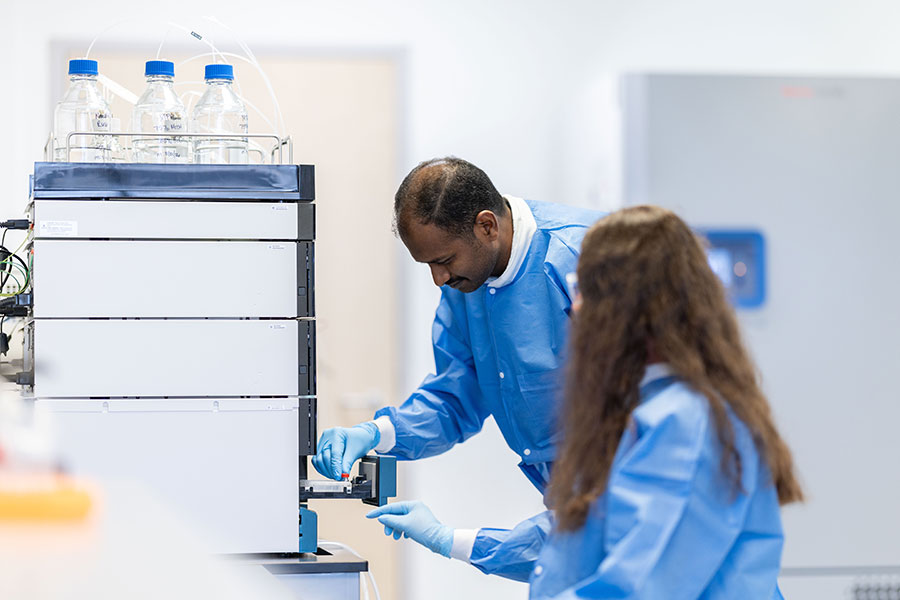
The Presbyterian Health Foundation has provided a grant for the University of Oklahoma College of Pharmacy to obtain its first liquid chromatography mass spectrometry equipment system. This acquisition expands the health campus’s ability to turn research into real-world impact.
Armed with a new five-year, $3.4 million grant from the National Institutes of Health, OU healthcare leaders are building the first chronic pain mHealth intervention app made with and for Native Americans.