NEWS

NORMAN, OKLA. – Three University of Oklahoma students took a class assignment beyond the classroom, developing a large-scale solar energy plan that could help reduce electricity costs at the Sulphur Veterans Home.
Nicolas Skuja, Zachary Bell and Wolfgang Yarbrough, students in OU’s Sustainable Energy Systems program, evaluated the technical and economic feasibility of adding solar power at the home. The work was part of a larger collaboration between OU and the Oklahoma Department of Veterans Affairs coordinated through the Institute for Quality Communities.
The students began with the facility’s actual utility bills, using its electricity consumption and costs to determine whether on-site generation could provide meaningful savings, said Scott Greene, Ph.D., emeritus professor of geography and environmental studies.
Over the course of a semester, they looked at available space, solar resources, equipment options and grid integration. Initially, they considered placing solar panels on the rooftop, but during a visit to the home, they learned the roofs could not support the additional load.
“So, we scrapped the rooftop analysis, not from an electricity generation standpoint, but from a roof safety standpoint,” Greene said.
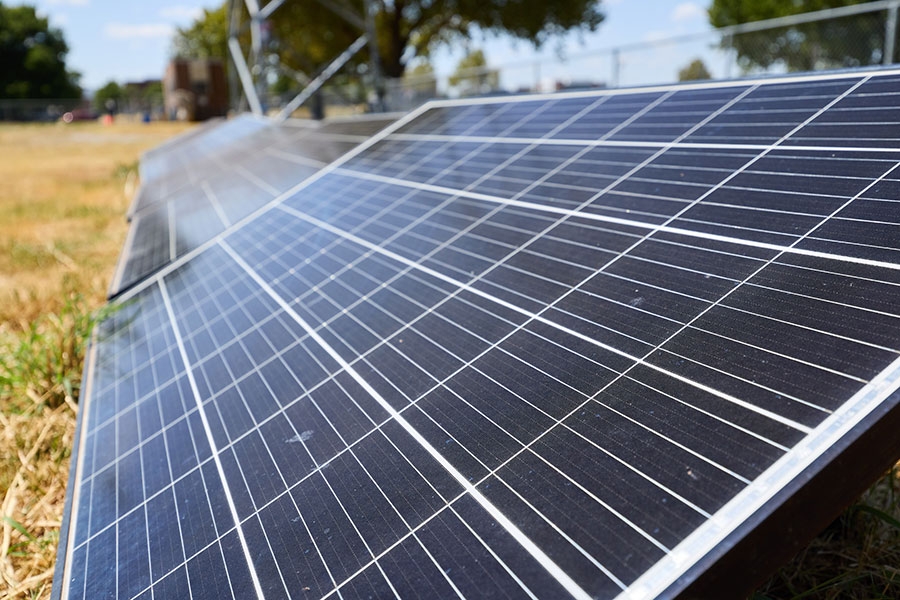
Instead, the students designed a fixed-tilt, ground-mounted system using about 1.6 acres of available land. Their proposed system included 1,008 solar panels with approximately 535 kilowatts of direct-current capacity. Modeling projected the system could produce approximately 841 megawatt-hours annually, offsetting about 34% of the East Wing’s annual electricity demand.
The students also looked at costs, estimating the system could pay for itself in about 13 years. In addition, they evaluated battery storage but excluded it because the extra costs could not be offset by projected energy savings.
The project differed from the energy plans Greene’s students typically create in class because its results had a potential audience beyond their professor.
“In most sustainable energy systems classes, students are asked to create an energy plan for a small Oklahoma town. It’s a thought exercise,” Greene said.
This time, students knew their calculations could potentially inform future decisions or funding requests by the veteran’s home.
“We told the students, ‘The VA is counting on you. These numbers could potentially be used to do something or go into a grant,’” Greene said. “We tried as much as possible to think of ourselves as energy-efficiency consultants who were going to give them something they could use.”
Greene said OU’s interdisciplinary approach is increasingly important in Oklahoma, where energy production and demand continue to evolve. About 43% of the state’s electricity comes from wind, he said, while growing electricity demand from data centers and new solar projects are creating challenges for the state’s energy infrastructure.
To learn more about the Sustainable Energy Systems program at OU, visit ou.edu/mcee/ses.
To learn more about the Institute for Quality Communities in the Christopher C. Gibbs College of Architecture, visit iqc.ou.edu.
About the University of Oklahoma
Founded in 1890, the University of Oklahoma is a public research university located in Norman, Oklahoma. As the state’s flagship university, OU serves the educational, cultural, economic and healthcare needs of the state, region and nation. For more information about the university, visit www.ou.edu.
The University of Oklahoma has received a transformative gift from Jon and Shannon McCartney, which will name the McCartney Family Tunnel of Champions, the McCartney Family Gate of the Gaylord Family - Oklahoma Memorial Stadium and the McCartney Family Grand Lecture Hall in the Michael F. Price College of Business. The gift will also support the Inspiring Champions and the Athletic Director’s Discretionary Fund, in addition to establishing the McCartney DFW Career Trek program at Price College.
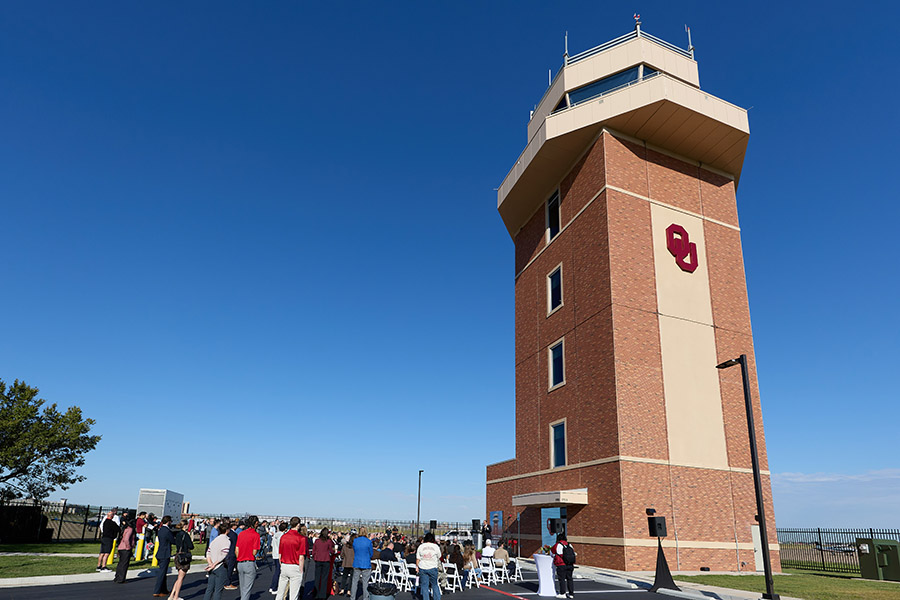
The University of Oklahoma today celebrated the opening of a new air traffic control tower at the OU Max Westheimer Airport. Standing 106 feet tall, more than double the current 52-foot facility, the new tower will modernize air traffic control operations and improve safety for pilots and students operating in the airspace.
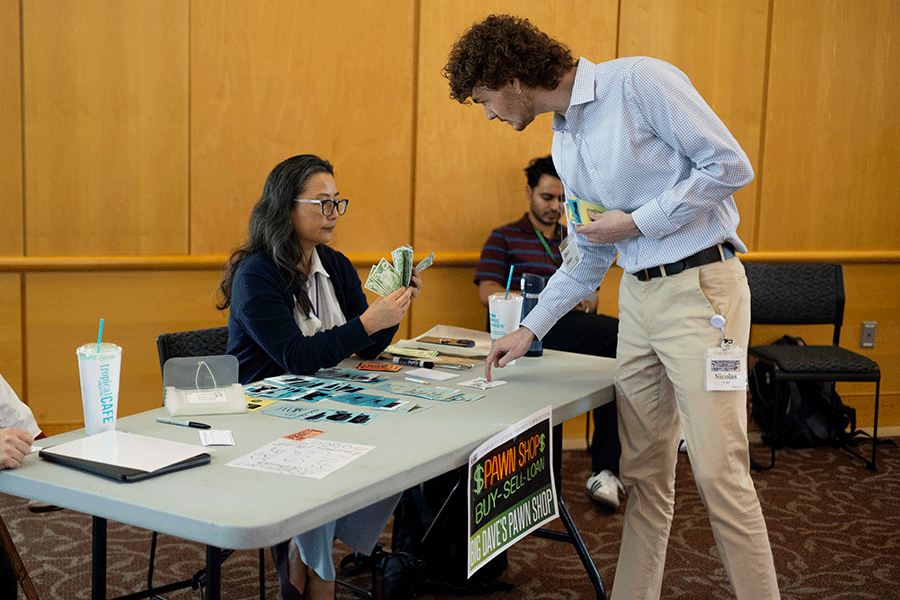
Do I buy groceries or pay the electric bill? Should I pawn some of my belongings to afford my prescription? My child is sick, so I will have to miss work to take care of him. Those are just a few of the difficult choices that OU-Tulsa health professional students confronted during the Community Access to Resources Experience. The role-playing activity challenged students to navigate the financial, family and other pressures that can affect a person’s health and ability to follow medical advice. Held annually during the SCM Institute orientation week, the experience is designed to generate understanding and build empathy.