NEWS

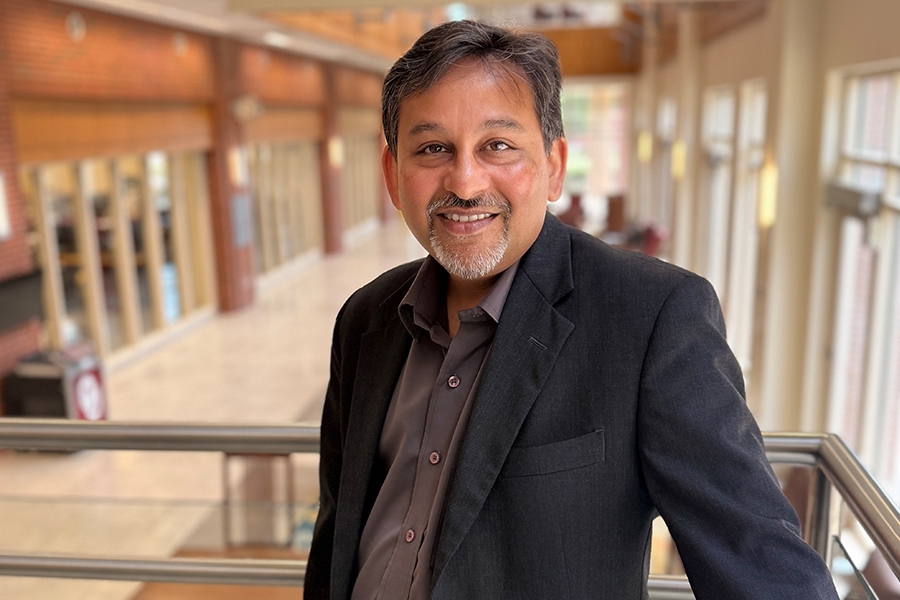
NORMAN, OKLA. – The University of Oklahoma has announced Shishir Shah, Ph.D., as director of the School of Computer Science in the Gallogly College of Engineering. Shah, who also serves as the university's first Chief Artificial Intelligence Officer, brings extensive expertise in computer vision, machine learning and AI innovation to the role.
"Dr. Shah is a visionary leader in computer science and artificial intelligence, and we're excited to have him guide our School of Computer Science as it advances its mission of excellence in education and research," said John Klier, Ph.D., dean of the Gallogly College of Engineering.
Under Shah's directorship, both the School of Computer Science and OU's broader AI initiatives are poised to expand their impact in advancing cutting-edge research and preparing students for the evolving landscape of technology. His appointment comes at a defining moment for OU, as the university leans into AI as a key priority of the "Lead On, University: The Next Phase" Strategic Plan.
Prior to joining OU, Shah served as professor and chair of the Department of Computer Science at the University of Houston. While there, he founded and led UH's Quantitative Imaging Laboratory. His research is focused on computer vision and machine learning, with particular specialization in person re-identification, human motion and behavior analysis, and microscope image analysis. He earned a B.S. in mechanical engineering and his master’s and doctoral degrees in electrical and computer engineering from the University of Texas at Austin.
About the University of Oklahoma
Founded in 1890, the University of Oklahoma is a public research university located in Norman, Oklahoma. As the state’s flagship university, OU serves the educational, cultural, economic and health care needs of the state, region and nation. For more information about the university, visit www.ou.edu.
The University of Oklahoma has received a transformative gift from Jon and Shannon McCartney, which will name the McCartney Family Tunnel of Champions, the McCartney Family Gate of the Gaylord Family - Oklahoma Memorial Stadium and the McCartney Family Grand Lecture Hall in the Michael F. Price College of Business. The gift will also support the Inspiring Champions and the Athletic Director’s Discretionary Fund, in addition to establishing the McCartney DFW Career Trek program at Price College.
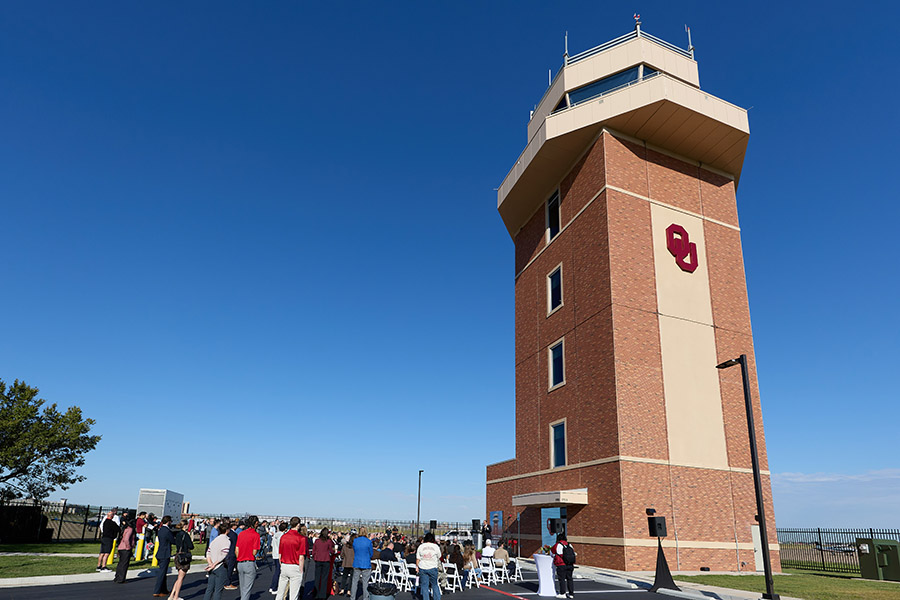
The University of Oklahoma today celebrated the opening of a new air traffic control tower at the OU Max Westheimer Airport. Standing 106 feet tall, more than double the current 52-foot facility, the new tower will modernize air traffic control operations and improve safety for pilots and students operating in the airspace.
Do I buy groceries or pay the electric bill? Should I pawn some of my belongings to afford my prescription? My child is sick, so I will have to miss work to take care of him. Those are just a few of the difficult choices that OU-Tulsa health professional students confronted during the Community Access to Resources Experience. The role-playing activity challenged students to navigate the financial, family and other pressures that can affect a person’s health and ability to follow medical advice. Held annually during the SCM Institute orientation week, the experience is designed to generate understanding and build empathy.