NEWS

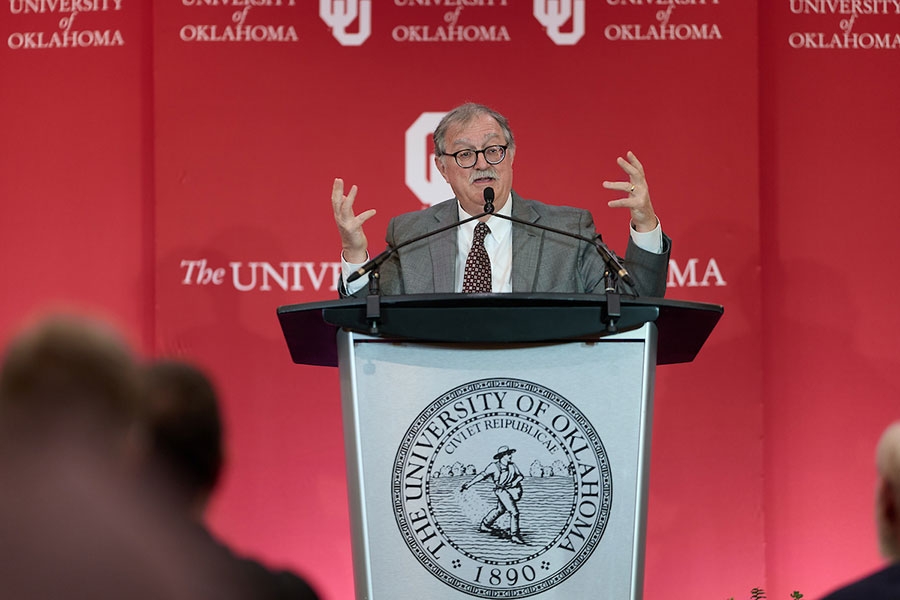
NORMAN, Okla. – As part of its fifth-annual Free Speech Week celebration, the University of Oklahoma hosted Hillsdale College professor and author Wilfred M. McClay for its keynote address. The event took place in the Oklahoma Memorial Union — open to university students, faculty, staff and alumni and the public — and included a watch party at the Robert M. Bird Health Sciences Library.
McClay’s lecture, “Speech as a Middle Ground,” covered topics such as conversation, the importance of free speech on college campuses and the differences between expression and speech. OU President Joseph Harroz Jr. gave opening remarks at the event, alongside a keynote introduction from William Selinger, the interim director at OU’s Institute for the American Constitutional Heritage and the Wick Cary Associate Professor of Constitutional Studies at the Dodge Family College of Arts and Sciences.
McClay is OU’s former G.T. and Libby Blankenship Chair in the History of Liberty and former director of the Center for the History of Liberty. He currently holds the Victor Davis Hanson Chair in Classical History and Western Civilization at Hillsdale. Among his accolades, McClay received the 1995 Merle Curti Award of the Organization of American Historians for the best book in American intellectual history and is a member of the U.S. Semiquincentennial Commission, which is planning America’s 250th birthday celebration for 2026.
The keynote address served as the latest headliner in OU’s recognition of Free Speech Week, a national nonpartisan event that raises awareness of the importance of freedom of speech and of the press. The university’s annual celebration highlights its commitment to upholding and emphasizing First Amendment liberties and providing a campus culture that embraces civil and constructive discourse.
In 2022, OU adopted the Chicago Statement on free speech, further codifying the rights of students and faculty to participate in protected activities around free speech and expression. During his opening remarks at the keynote address, President Harroz commended the OU Board of Regents and Faculty Senate for their support of the statement during its adoption.
“That is a level of respect and understanding that freedom of expression is essential for us to move forward, and I’m beyond proud of that,” Harroz said.
OU’s 2025 Free Speech Week also included the College of Law panel discussion, “Free Speech: Contemporary Issues, Challenges, and Opportunities.” Hosted in the school’s Bell Courtroom, the event featured constitutional scholars Professor Carla D. Pratt, the Ada Lois Sipuel Fisher Chair in Civil Rights and Justice, Adjunct Professor Michael Smith, Associate Professor of Law Noah C. Chauvin and Visiting Assistant Professor Stan J. West.
The Gaylord College of Journalism and Mass Communication also formally opened its exhibit, “An Age of Dreamers and Storytellers: Media, Mass Communication, and the University of Oklahoma,” available to the public through Mar. 2026 at the Bizzell Memorial Library’s first-floor exhibition space. Dean Andrea Miller and Associate Professor of Advertising Ray Claxton gave remarks at the exhibit’s reception, highlighting the 25th anniversary of Gaylord College and discussing the First Amendment rights of freedom of speech and freedom of the press.
About the University of Oklahoma
Founded in 1890, the University of Oklahoma is a public research university located in Norman, Oklahoma. As the state’s flagship university, OU serves the educational, cultural, economic and health care needs of the state, region and nation. For more information about the university, visit www.ou.edu.
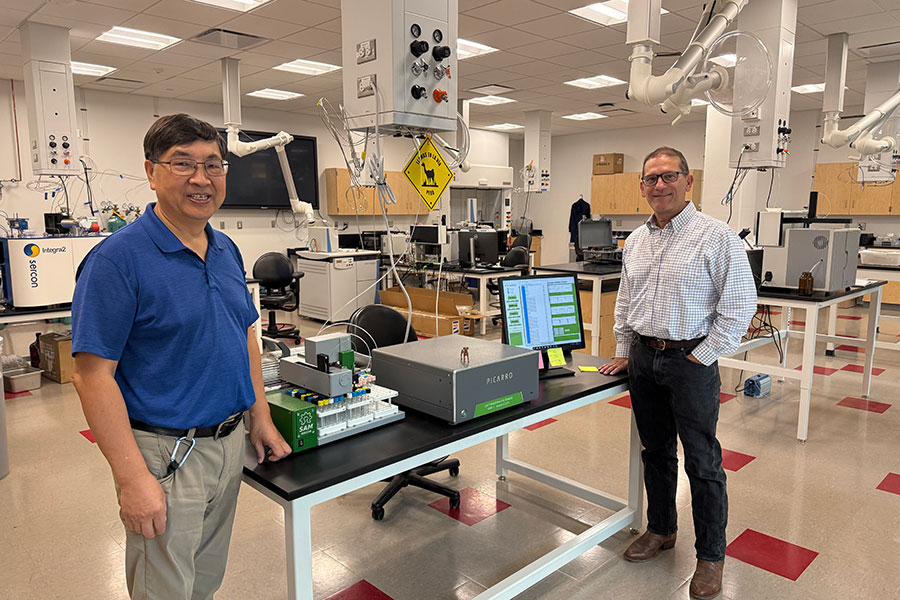
A team of researchers headquartered at the University of Oklahoma is taking an innovative approach toward advancing grassland conservation and management, with grant support from the the U.S. National Science Foundation. The project brings together experts and observatory sites from across the state.
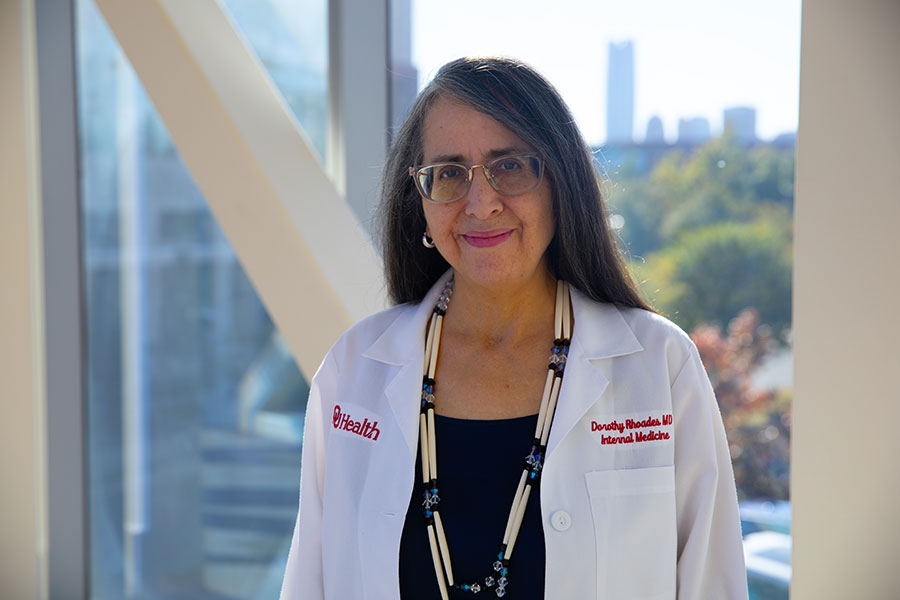
Dorothy A. Rhoades, M.D., M.P.H., has been recognized for her impact on improving Native American health outcomes. She was honored by the Association of American Indian Physicians at its 54th Annual Meeting & Health Conference.
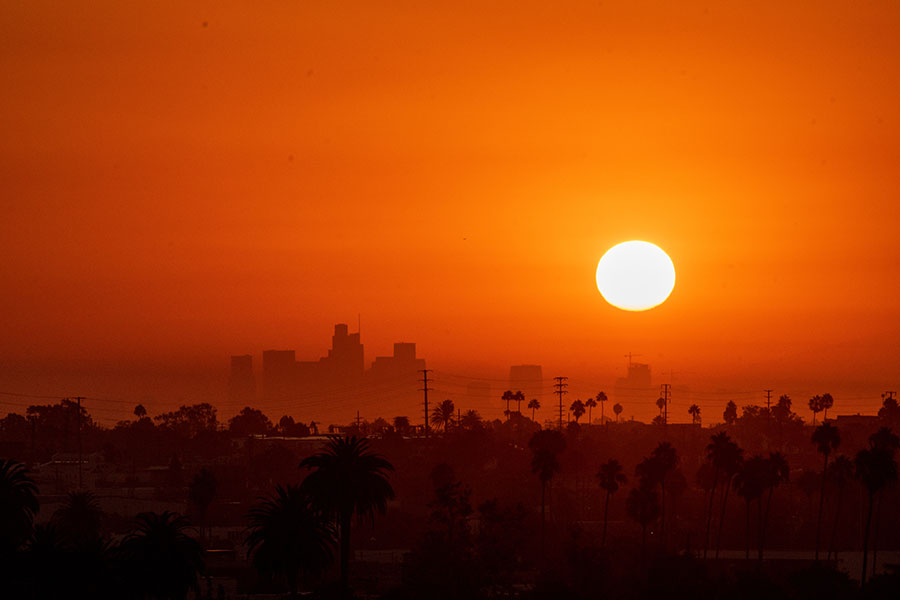
New research from the University of Oklahoma shows how unusual atmospheric conditions linked to tropical cyclones can contribute to compound extreme heat and ground-level ozone pollution, even far from the storm, increasing risks to human health.