NEWS

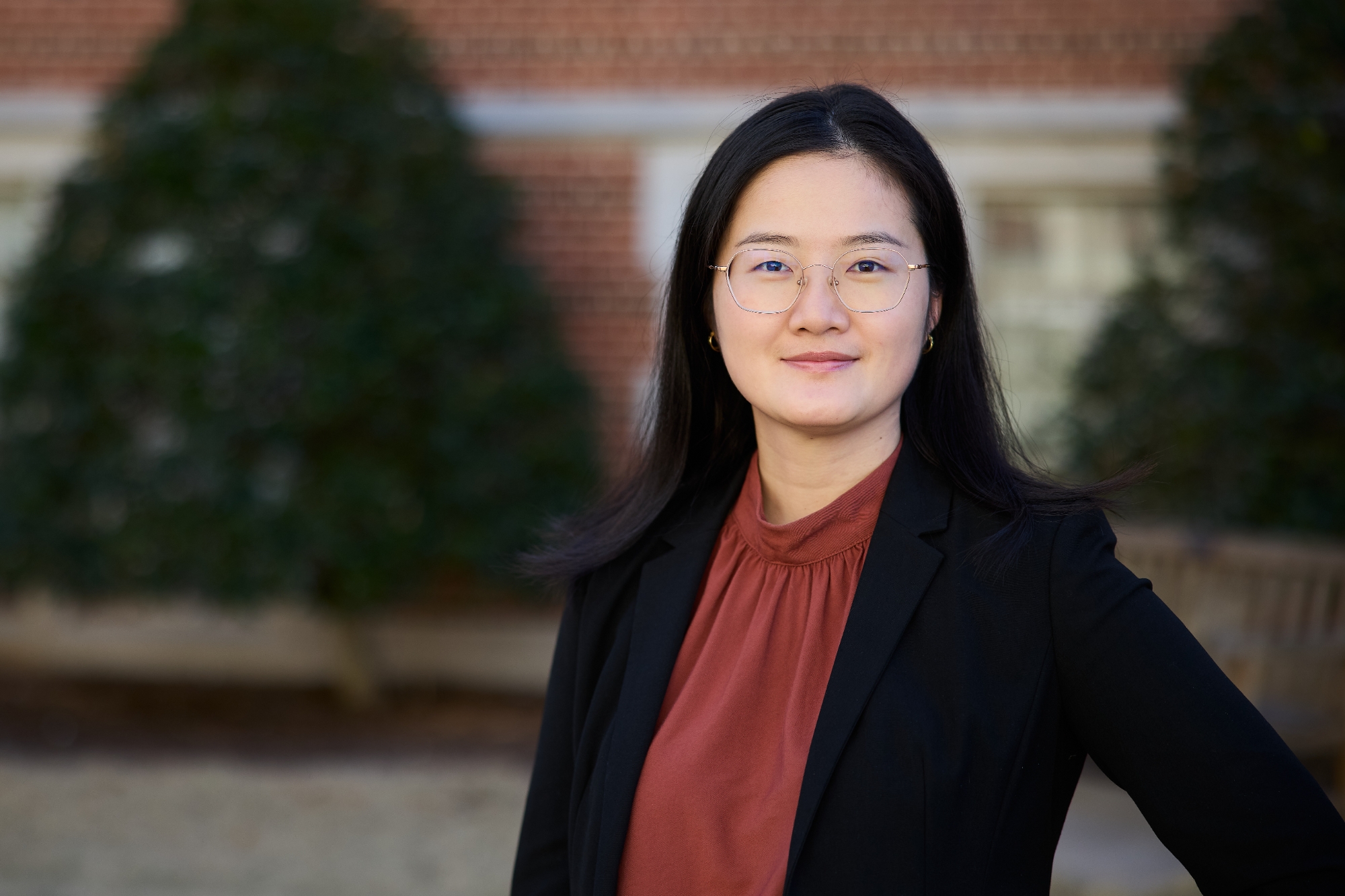
NORMAN, OKLA. – Cardiovascular disease affects nearly half of the adults in the United States, posing a significant public health challenge. To improve the diagnosis and treatment of one such cardiac condition, Rui Zhu, Ph.D., an assistant professor in the School of Industrial and Systems Engineering at the University of Oklahoma, has received a National Science Foundation Faculty Early Career Development Program award to uncover the mechanisms behind cardiac arrhythmias.
A healthy human heart beats in a regular rhythm, but cardiac arrhythmia disrupts this pattern due to malfunctioning electrical impulses in the heart’s muscular tissue. Zhu’s research focuses on modeling complex systems, and she plans to apply that expertise to tackle the challenge of modeling diseased hearts.
“Multiphysics simulations can give us a more realistic way to understand how arrhythmias work,” said Zhu. “But these simulations have mostly been built for healthy hearts. This is because, in reality, diseased hearts can be very different in anatomy, pathology, etc. That makes it difficult for conventional simulations to capture these conditions accurately.”
To address that challenge and provide a clearer understanding of the electrical, mechanical and fluid dynamics in arrhythmic hearts, Zhu will build off her previous modeling work with cardiac electrical activity and integrate deep-learning techniques with these computational simulations of the heart to understand how the multi-physical factors can contribute to arrhythmic conditions.
Zhu’s plans are unique because current practice mainly focuses on understanding the heart’s electrical activity. As such, the primary diagnostic tool for identifying arrhythmias is a 12-lead electrocardiogram, or ECG, which measures the electrical activity of the heart by recording the heart’s electrical signals projected onto the body surface. Zhu’s examination of electrical, mechanical and fluid dynamics and their interdependencies will give a broader picture of what is happening in arrhythmic hearts.
Zhu is excited about the educational components of the project. “The goal of the educational activities is to foster a highly skilled health care workforce with a deep understanding of the arrhythmia physiology and the advanced methodologies developed in this project,” she said. With support from collaborators across educational and healthcare institutions, Zhu’s work will help train the next generation of the health care workforce to better understand a disease that affects millions of people in the United States.
Zhu’s research has been honored with several paper awards at the Institute of Industrial and Systems Engineers and the Institute for Operations Research and the Management Sciences conferences. She earned a B.S. in industrial design and an M.S. in human factors in design from Harbin Institute of Technology and received her doctoral degree in industrial engineering from Pennsylvania State University.
NSF CAREER awards support early career faculty to serve as role models in research and education and lead advances in organizations. It is the organization’s most prestigious award for early career faculty.
About the Project
“CAREER: Decoding Cardiac Arrhythmias: Integrating Multiphysics Simulations and Deep Learning Models to Uncover Multi-physical Contributions and Arrhythmia Initiation” is funded by the NSF from Feb. 1, 2025 to Jan. 31, 2030.
About the University of Oklahoma
Founded in 1890, the University of Oklahoma is a public research university located in Norman, Oklahoma. As the state’s flagship university, OU serves the educational, cultural, economic and health care needs of the state, region and nation. For more information about the university, visit www.ou.edu.
Do I buy groceries or pay the electric bill? Should I pawn some of my belongings to afford my prescription? My child is sick, so I will have to miss work to take care of him. Those are just a few of the difficult choices that OU-Tulsa health professional students confronted during the Community Access to Resources Experience. The role-playing activity challenged students to navigate the financial, family and other pressures that can affect a person’s health and ability to follow medical advice. Held annually during the SCM Institute orientation week, the experience is designed to generate understanding and build empathy.
Thanks to more than $5 million in funding through a National Institutes of Health initiative, the University of Oklahoma's College of Nursing will support four maternal health research projects over the next four years.
A University of Oklahoma physician-researcher recently received $2.9 million in funding from the National Cancer Institute to study whether RedHill Biopharma’s drug opaganib, given after CAR T-cell therapy, can help the immune cells fight cancer more effectively.