NEWS

Date
Media Contact
April Wilkerson
april-j-wilkerson@ouhsc.edu
Oklahoma City – With winter weather already bringing low temperatures to the state, the Oklahoma Poison Center is urging residents to take extra precautions to avoid carbon monoxide (CO) poisoning as they begin heating their homes for the winter season. Carbon monoxide is a colorless, odorless gas that can be deadly when inhaled in large quantities, and it poses a heightened risk as people rely on heating devices for warmth during cold weather.
Don't Heat Your Home with Dangerous Devices:
When temperatures drop, many people will use grills, stoves or other fuel-burning appliances to heat their homes. The Oklahoma Poison Center strongly advises against using any gasoline or charcoal-burning devices indoors, including portable generators, charcoal grills, camp stoves or space heaters not designed for indoor use. These devices produce carbon monoxide and should never be used in confined spaces like homes, basements, garages or near windows.
What You Need to Know About Carbon Monoxide:
Carbon monoxide is produced when fuels such as natural gas, gasoline, charcoal, propane, wood or oil are burned. It can build up quickly in an enclosed or poorly ventilated area, causing poisoning symptoms that can range from mild to life-threatening. Early signs of CO poisoning include:
Severe Symptoms May Include:
What to Do if You Suspect Carbon Monoxide Poisoning:
If you suspect carbon monoxide exposure or if your CO detector sounds, get to fresh air immediately and call the Oklahoma Poison Center at (800) 222-1222 for advice. Anyone experiencing moderate or severe symptoms should seek medical attention right away by calling 911 or going to the nearest emergency department.
Preventing CO Poisoning:
The Oklahoma Poison Center encourages residents to take the following safety measures to prevent CO poisoning:
If the Carbon Monoxide Detector Goes Off:
Save the Poison Center's Number:
In case of suspected poisoning, call the Oklahoma Poison Center at (800) 222-1222, available 24/7. Pharmacists and registered nurses are on hand to provide immediate assistance. The Oklahoma Poison Center is a program of the University of Oklahoma College of Pharmacy at OU Health Sciences. For more information on carbon monoxide safety and prevention, visit OklahomaPoison.org.
About the University of Oklahoma
Founded in 1890, the University of Oklahoma is a public research university located in Norman, Oklahoma. As the state’s flagship university, OU serves the educational, cultural, economic and health care needs of the state, region and nation. For more information about the university, visit www.ou.edu.
The University of Oklahoma has received a transformative gift from Jon and Shannon McCartney, which will name the McCartney Family Tunnel of Champions, the McCartney Family Gate of the Gaylord Family - Oklahoma Memorial Stadium and the McCartney Family Grand Lecture Hall in the Michael F. Price College of Business. The gift will also support the Inspiring Champions and the Athletic Director’s Discretionary Fund, in addition to establishing the McCartney DFW Career Trek program at Price College.
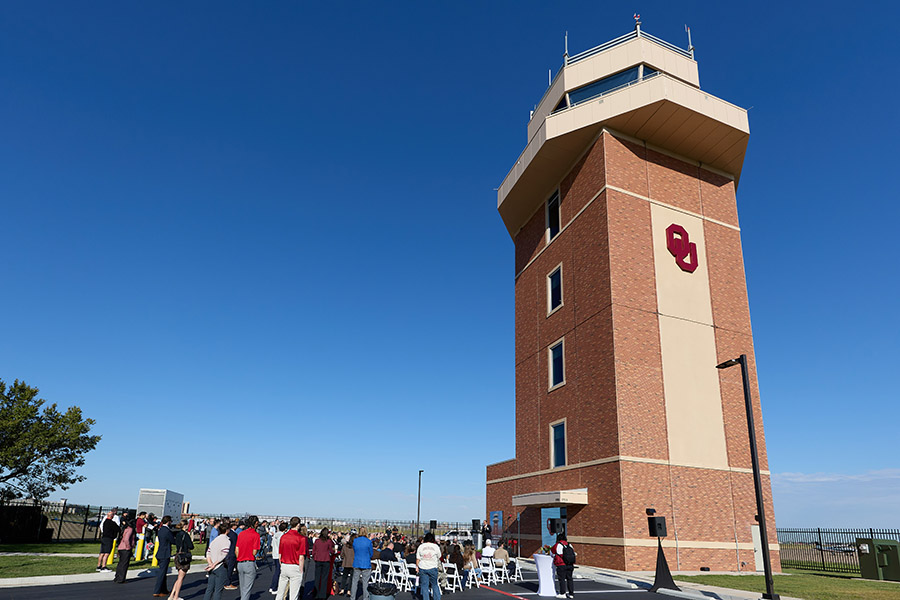
The University of Oklahoma today celebrated the opening of a new air traffic control tower at the OU Max Westheimer Airport. Standing 106 feet tall, more than double the current 52-foot facility, the new tower will modernize air traffic control operations and improve safety for pilots and students operating in the airspace.
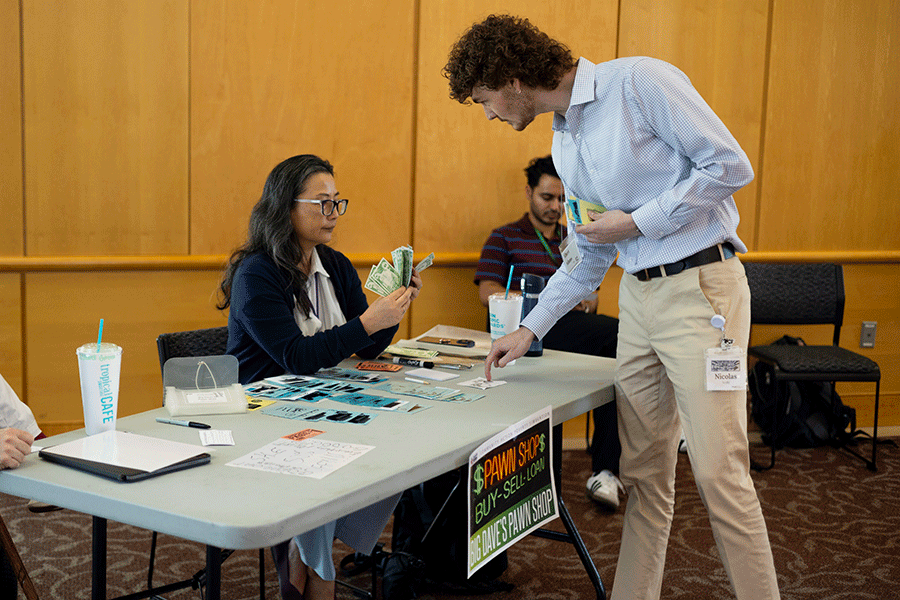
Do I buy groceries or pay the electric bill? Should I pawn some of my belongings to afford my prescription? My child is sick, so I will have to miss work to take care of him. Those are just a few of the difficult choices that OU-Tulsa health professional students confronted during the Community Access to Resources Experience. The role-playing activity challenged students to navigate the financial, family and other pressures that can affect a person’s health and ability to follow medical advice. Held annually during the SCM Institute orientation week, the experience is designed to generate understanding and build empathy.