NEWS


NORMAN, OKLA. A study led by University of Oklahoma scientists gives new insight into pressure monitoring of the Arbuckle Group, a deep wastewater disposal reservoir in the mid-continental United States. The findings indicate that over three-and-a-half years, pressure in the Arbuckle has decreased while injections continue.
From late 2016 until early 2020, data was collected from 15 wells across eight counties in Oklahoma to examine pressure in the subsurface. The study provides a wider perspective on injections and pressure than most recent studies on the topic, says Benjamin Allen, a research assistant at the Oklahoma Geological Survey and the lead author of the paper, published in the Journal of Geophysical Research: Solid Earth. According to Allen, most studies are conducted on just a single well or site over a few months. The 15 wells used in this study spanned over 200 kilometers.
The study aims to better understand these subsurface pressure conditions in a major regional disposal reservoir. According to the study, industrial wastewater disposal and other activities, such as CO2 sequestration, depend on these pressure conditions. The research paints a complex picture of the subsurface, with varying pressure changes over space and time. According to Allen, through the well data, he could identify earthquake signals from around the world, indicating that the Arbuckle Group pressure responded to quakes in places like Peru, the Philippines and the state of Alaska. Well pressure changes were also caused by more local earthquakes.
In 2020, injections decreased by approximately 50% from 2015, and earthquakes also decreased in that time. In 2015, there were over 4,000 earthquakes in Oklahoma greater than a magnitude 2, even more than in California, says Allen. Now, about 200 or so occur a year.
“There was one well with an earthquake above a kilometer and a half away, and there was a very visible change. The water [in the well] changed by approximately 15 meters in 2 minutes. It just dropped, presumably because space opened nearby, and the water was able to flow into it,” said Allen.
Over the next two months, the water level slowly returned to its previous height. Examining those responses to earthquakes across the globe is one of the angles through which Allen would like to continue this research.
In short, Allen says that pressure in the Arbuckle Group is not homogeneous, though generally decreasing over time. Despite a high volume of fluid injections over a decade, the layer remains underpressured, meaning the pressure is lower than expected for the depth of the Arbuckle. One reason for this, Allen hypothesizes, is a scenario that he compares to an overfilled bathtub: when a bathtub is overflowing, the pressure is relatively consistent because water constantly flows out, but when a bathtub is just starting to fill, the pressure changes quite a bit because it’s building and building. Another possibility is that the injections could leak into fractures and faults, causing earthquakes.
The insights provided by this study and future use of this data could be instructive for those looking to use the subsurface for storage products such as carbon dioxide or cleaner-burning fuels like hydrogen.
About the research
“Pressure Monitoring of Disposal Reservoirs in North-Central Oklahoma: Implications for Seismicity and Geostorage” is published in the Journal of Geophysical Research: Solid Earth at https://doi.org/10.1029/2024JB029200.
About the University of Oklahoma
Founded in 1890, the University of Oklahoma is a public research university located in Norman, Oklahoma. As the state’s flagship university, OU serves the educational, cultural, economic and health care needs of the state, region and nation. For more information about the university, visit www.ou.edu.
The University of Oklahoma College of Medicine has honored two residents with the Lloyd Rader Award, which recognizes outstanding clinical and research achievements in residency.
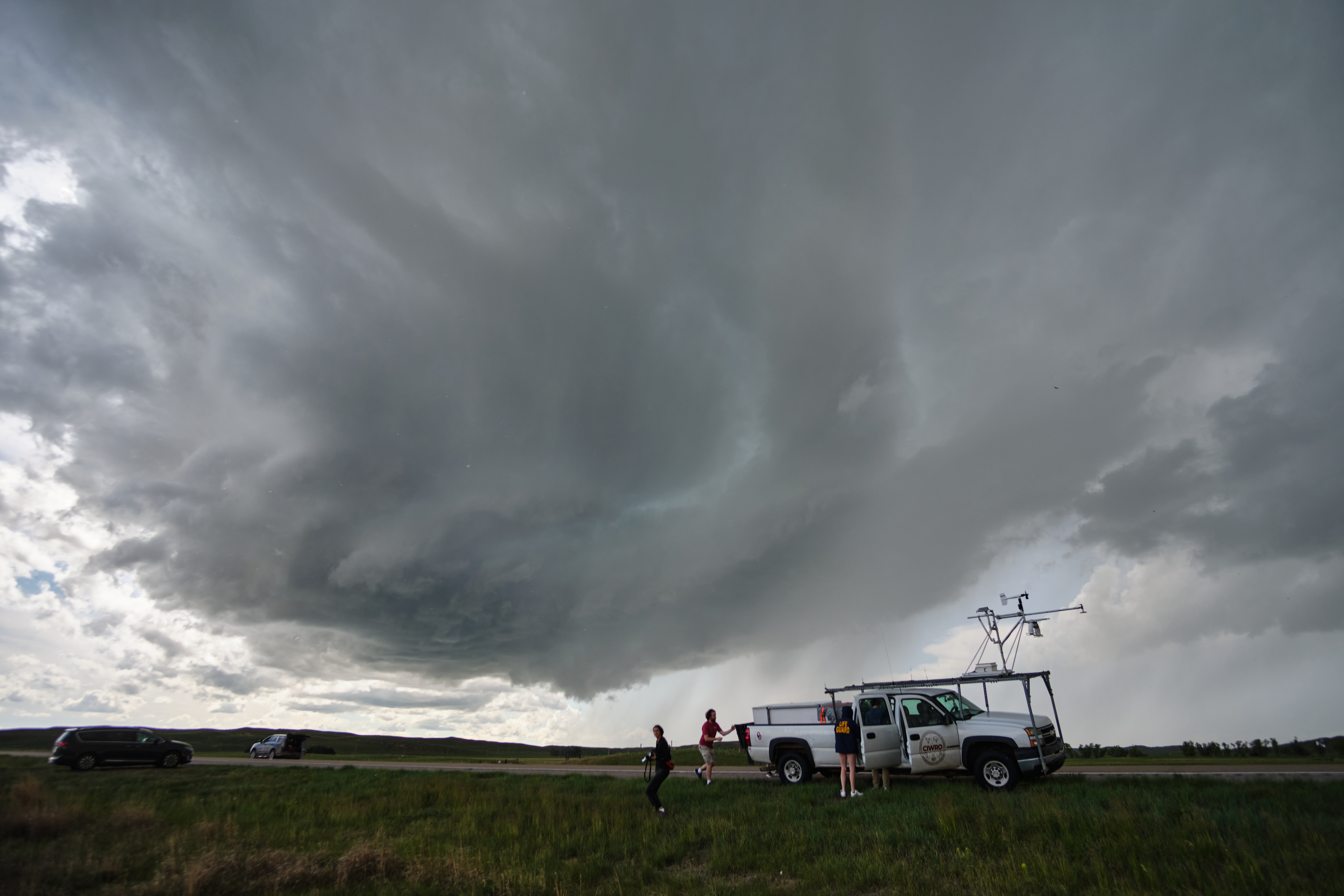
The University of Oklahoma will receive up to $220 million over five years from the U.S. Department of Commerce and the National Oceanic and Atmospheric Administration to continue the life-saving weather research led by the OU-NOAA Cooperative Institute for Severe and High-Impact Weather Research and Operations, extending a nearly 50-year partnership that has helped give Americans earlier, more accurate weather warnings
The OU Food Pantry won the annual Red River Food Fight, collecting 31,815.9 pounds of shelf-stable food and drinks to top UT Outpost’s 22,567 pounds. OU has won the competition four years in a row.