NEWS

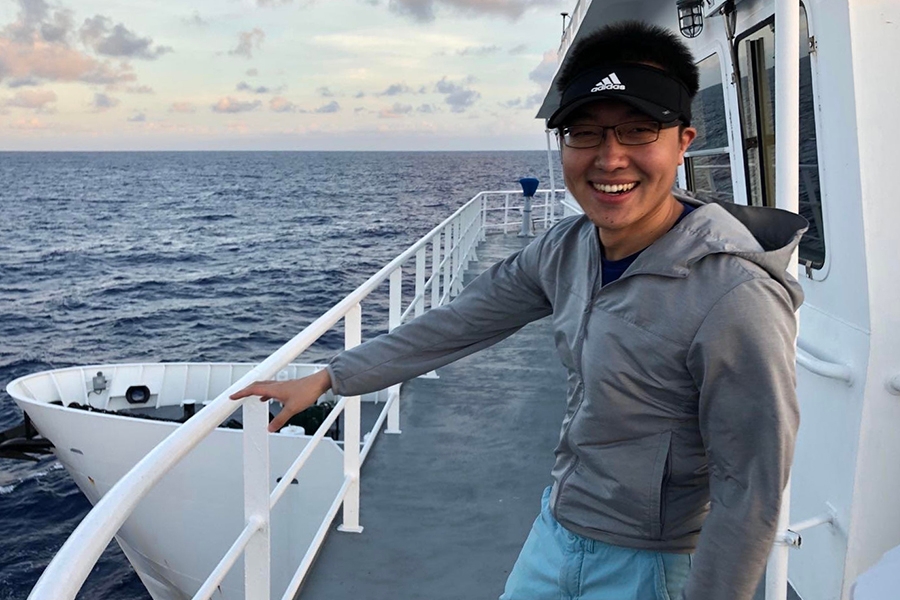
NORMAN, OKLA. – Wei Qin, an assistant professor of microbiology at the University of Oklahoma, will study marine microbial ecology in the North Pacific thanks to a combined $3.5 million grant from the National Science Foundation and the University-National Oceanographic Laboratory System. This three-year project will involve both lab study and field research conducted through a Pacific Ocean scientific cruise.
“As you can imagine, getting an oceanography grant in Oklahoma is not easy. But this award proves that OU researchers can study many different environments, not just inland environments,” he said. “This grant will allow us to study the changing climate’s impact on the biogeochemical cycling happening in the ocean.”
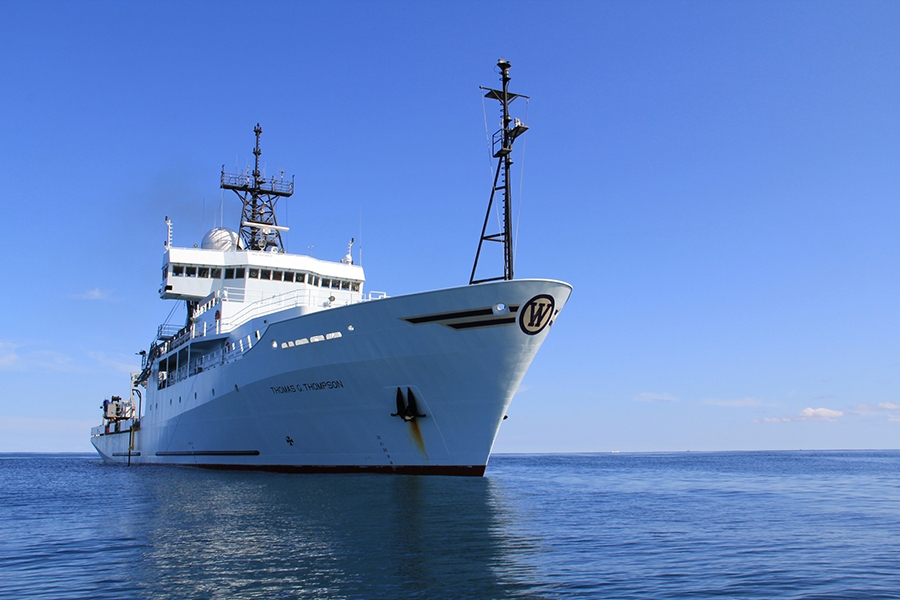
As lead principal investigator, Qin will serve as chief scientist on a month-long scientific cruise sailing from Seattle to Hawaii, covering two major transects in the Pacific Ocean. Collaborating with researchers from the University of Southern California, his team will study how nitrifying microbes, a unique group of organisms that utilize nitrogen as energy sources and account for approximately 30% of all microbes in the ocean, will respond to global climate warming.
“Nitrogen and trace metals are major limiting factors that control microbial processes in the ocean. This cruise will cover two major areas of the Pacific Ocean that include different nitrogen nutrients and trace metal concentrations. We plan to test the impacts of ocean warming on the microbial diversity and activity extending to a depth of 150 to 300 meters – where these nitrifying microbes are most abundant and active,” he said. “Previous global ocean warming research only focused on the surface ocean because it is more prominently affected by temperature rises. We want to investigate how the warming ocean impacts microbial processes at deeper depths.”
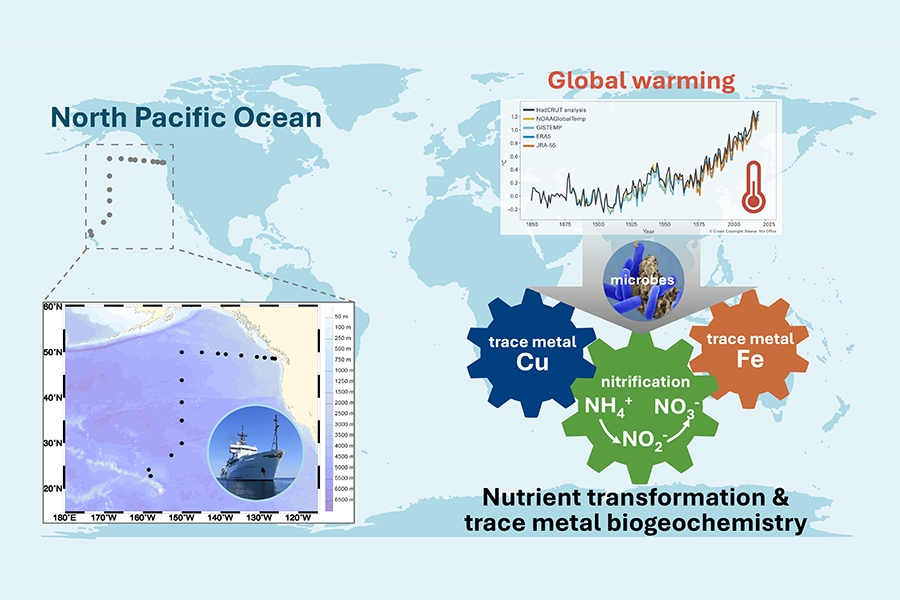
A unique aspect of this cruise is the use of trace metal-clean sampling techniques. These will allow Qin’s team to collect samples without contaminating them with the metal from traditional sampling methods. Back on dry land, Qin’s team will then utilize facilities at the Institute for Environmental Genomics to build the first trace metal-clean room at the University of Oklahoma.
“A major goal of ours is to study the warming effects on the trace metal utilization of these abundant marine nitrogen-cycling microbes,” he said. “Traditional laboratory conditions can easily cause trace metal contamination, making it impossible to perform growth experiments under trace metal limitation or accurately measure cellular trace metal concentrations. Thus, we will conduct our experiments in trace metal-clean environments, both on board the ship and back at OU."
Throughout this project, one postdoctoral researcher, three graduate students, and numerous undergraduate students will receive training in microbial physiology and ecology, bioinformatics, trace metal biogeochemistry and oceanography. Qin’s team will also conduct K-12 education and outreach activities through the University of Oklahoma STEM-to-Store Academy and Sooner Upward Bound programs.
“A warming climate changes the vulnerability of biodiversity, so this research can provide a very important contribution to society,” Qin said. “Plus, including and training the next generation of researchers is fundamental to the work done at the University of Oklahoma.”
About the project
The project, “Collaborative Research: The impact of ocean warming on bioactive trace metal requirements and use efficiencies of marine nitrifying microorganisms,” is funded by an expected $2 million grant from the National Science Foundation’s Biological Oceanography Program with an additional $1.5 million from the NSF and University-National Oceanographic Laboratory System to cover the cost of the research cruise, OCE 2336533, 2336534. Wei Qin will work alongside three co-principal investigators, David Hutchins, Feixue Fu and Seth John, from the University of Southern California. The project began on May 1, 2024, and is expected to conclude on April 30, 2027.
About the University of Oklahoma
Founded in 1890, the University of Oklahoma is a public research university located in Norman, Oklahoma. As the state’s flagship university, OU serves the educational, cultural, economic and health care needs of the state, region and nation. OU was named the state’s highest-ranking university in U.S. News & World Report’s most recent Best Colleges list. For more information about the university, visit ou.edu.
The University of Oklahoma has received a transformative gift from Jon and Shannon McCartney, which will name the McCartney Family Tunnel of Champions, the McCartney Family Gate of the Gaylord Family - Oklahoma Memorial Stadium and the McCartney Family Grand Lecture Hall in the Michael F. Price College of Business. The gift will also support the Inspiring Champions and the Athletic Director’s Discretionary Fund, in addition to establishing the McCartney DFW Career Trek program at Price College.
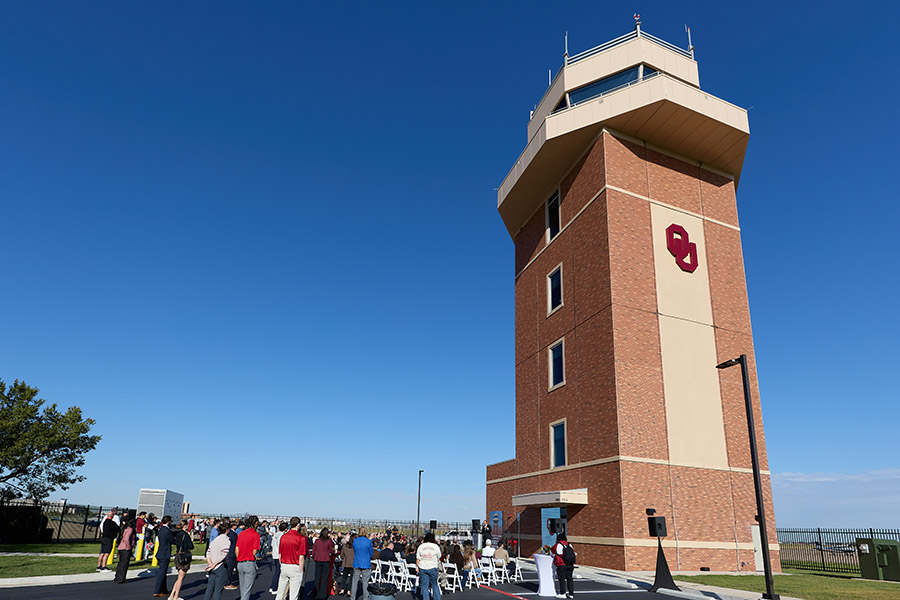
The University of Oklahoma today celebrated the opening of a new air traffic control tower at the OU Max Westheimer Airport. Standing 106 feet tall, more than double the current 52-foot facility, the new tower will modernize air traffic control operations and improve safety for pilots and students operating in the airspace.
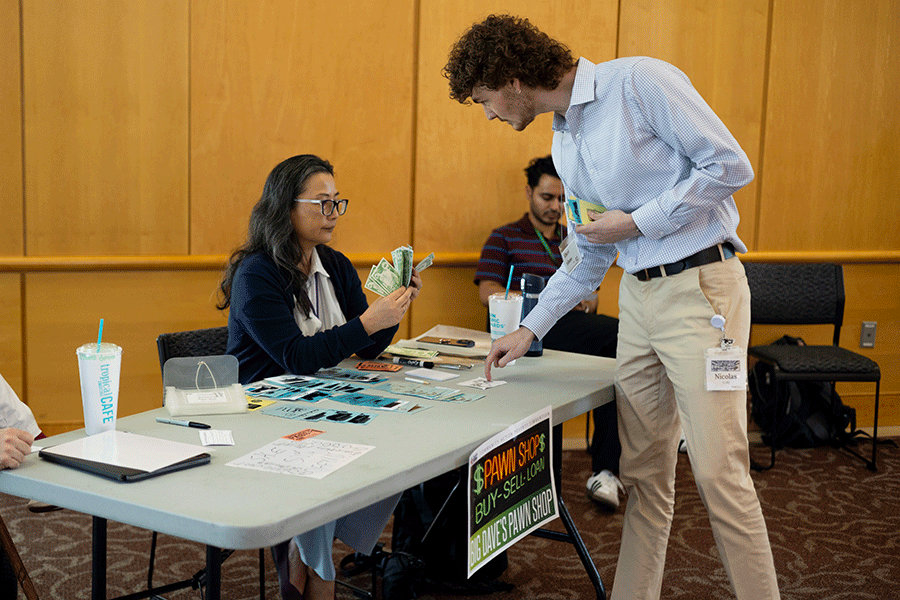
Do I buy groceries or pay the electric bill? Should I pawn some of my belongings to afford my prescription? My child is sick, so I will have to miss work to take care of him. Those are just a few of the difficult choices that OU-Tulsa health professional students confronted during the Community Access to Resources Experience. The role-playing activity challenged students to navigate the financial, family and other pressures that can affect a person’s health and ability to follow medical advice. Held annually during the SCM Institute orientation week, the experience is designed to generate understanding and build empathy.