University of Oklahoma Gibbs College of Architecture Dean Hans E. Butzer returned to one of his most significant works on December 15, joining survivors and past and present board members for the groundbreaking of a $15.8 million expansion of the Oklahoma City National Memorial & Museum.
The event brought together the design team of Butzer, his wife and design partner Torrey Butzer, and exhibition designer Patrick Gallagher, alongside Bob Johnson, the memorial foundation's first chairman, and others who have been connected to the project since its inception following the April 19, 1995, bombing that claimed 168 lives.
Speaking to attendees on a cold December afternoon, Dean Butzer outlined how the expansion will transform the visitor experience by creating stronger connections between the museum's interior spaces and the outdoor memorial elements.
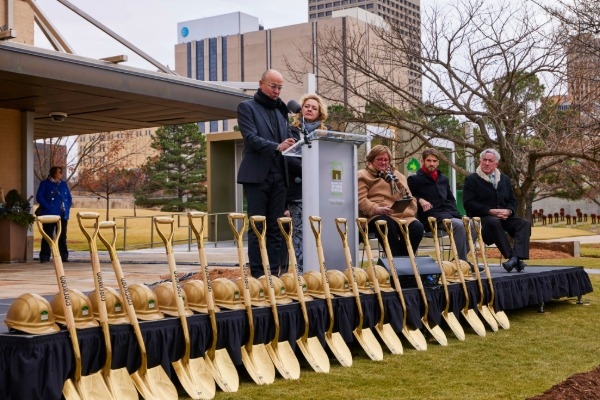
Above: Hans and Torrey Butzer speak during the groundbreaking ceremony.
"We will be expanding outwards, moving out from the historic building closer to the street, to better engage the public, to be more welcoming," Butzer explained. The reconfigured entrance and children's area will provide two and a half times more space for visitors.
The expansion's design incorporates salvaged materials from the original Alfred P. Murrah Federal Building. Granite that has been preserved in storage since 1995 will greet visitors at the new entrance, while Vermont slate from the current children's area will be restored and repurposed. Even the existing entry tiles and signage will find new homes within the expanded facility.
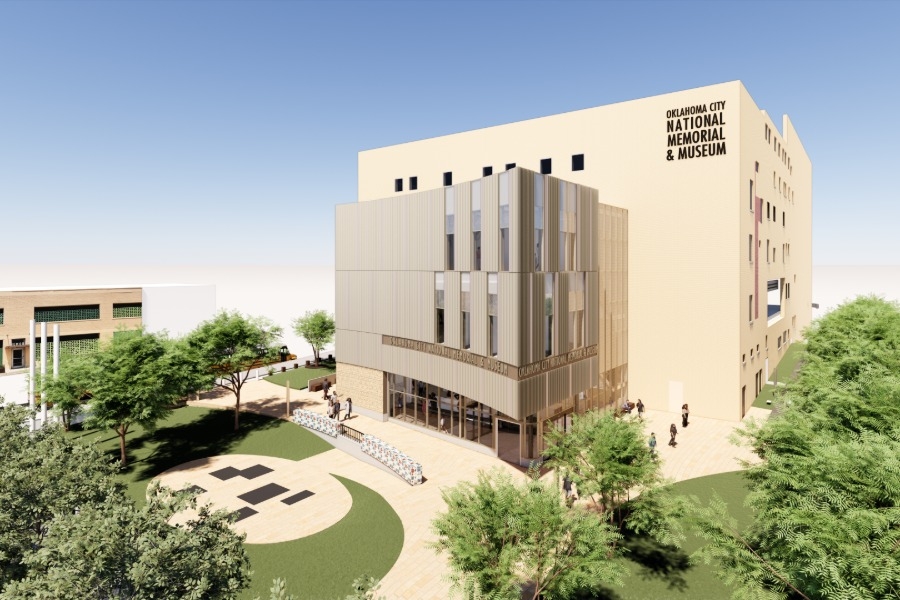
A new southwest-facing entrance will open directly toward the memorial's Gates of Time, connected by a glass elevator and grand staircase spanning three floors. The ground level will house an expanded lobby and retail space, while the second floor will feature a Civic Lab and recording studio. On the third floor, a new orientation gallery will help visitors understand the moments before 9:02 a.m. on that April morning.
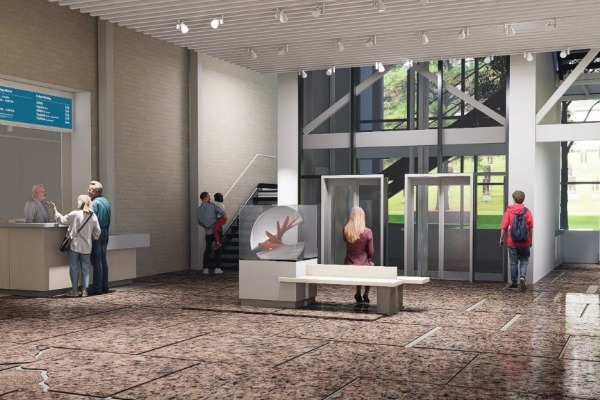
Above: Butzer Architects and Urbanism’s design of the expanded lobby.
The expanded lobby will accommodate large groups as they learn the story of the bombing, many for the first time. While most of the current exhibition spaces within the historic brick walls of the museum will remain intact, the addition will allow visitors to discover this story like never before.
Torrey Butzer emphasized the team's attention to continuity with the existing memorial. "We chose materials that felt like they belong, that they were of this place," she said, noting how the metal facade echoes the Gates of Time and the base stonework matches materials around the Survivor Tree.
A temporary lobby and limited gift shop are now open as site work progresses on what will be an approximately 16-month construction schedule.
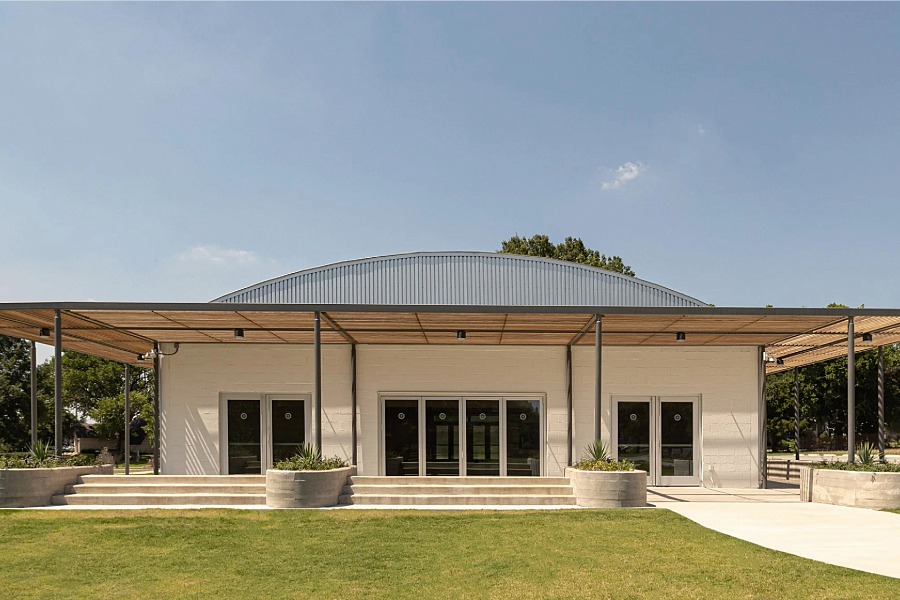
Christopher C. Gibbs College of Architecture assistant professor Amy Leveno and Mark Leveno, co-founders of OFFICIAL Design, have received a 2026 AIA Central States Region Design Award for the firm’s Granger Annex Community Center project in Garland, Texas.
Construction Industry Speaker Series welcomed Stephen Evans from the Oklahoma City National Memorial & Museum to give a lecture on better conversations and relationship building.
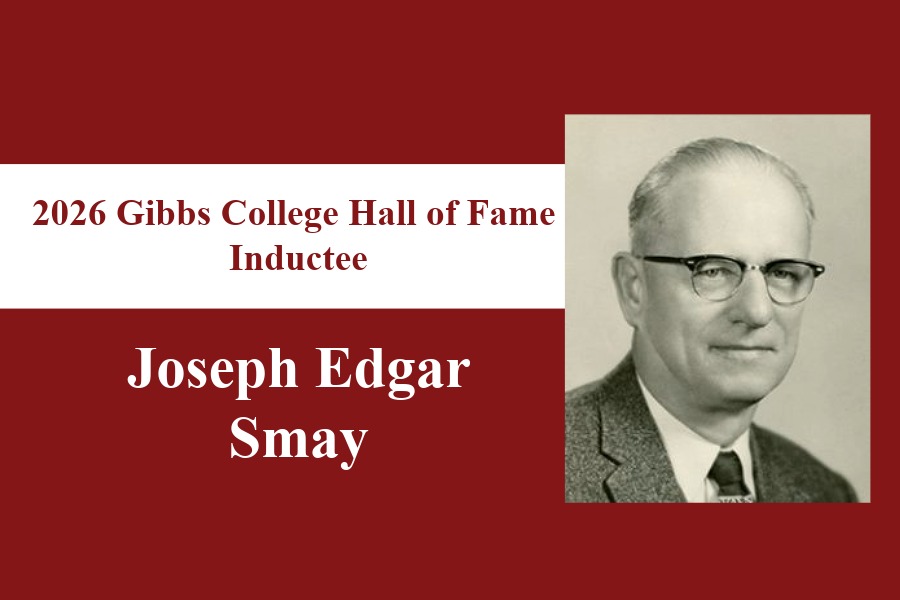
The University of Oklahoma Christopher C. Gibbs College of Architecture Hall of Fame recognizes a select number of high-character individuals who have made a significant and lasting positive impact on Gibbs College, its students, staff, faculty, alumni and/or to communities across the globe. The impact may have been, or continues to be, in the form of service and mentorship, sustained professional excellence, and/or advancement and financial support. Joseph Edgar Smay is part of the 2025 Hall of Fame class.