Students in the Regional and City Planning (RCPL) program’s studio course are putting their skills to work in Taft, Oklahoma, one of thirteen remaining Black townships in the state. This multi-semester project is focused on helping the town develop a zoning framework that reflects its unique history and future goals.
Last semester, students, led by Professor Vanessa Morrison, engaged with Taft’s residents and local leaders, gathering data to understand the town’s land use, infrastructure, and community priorities. Through site visits, interviews, and analysis, students built a foundation for recommendations that would support Taft’s growth while preserving its historic identity.

Planning students and Taft stakeholders setting up for a community engagement event.
Now, in the spring semester, the studio is shifting from research to action. With a focus on delivering tangible, usable solutions, students are working closely with the community to refine their findings into actionable recommendations. Their final deliverables will provide Taft with a framework to guide future development, balancing economic opportunity with the town’s long-standing traditions and needs.
“This isn’t just about zoning—our work can have a real impact on Taft’s future,” said one student involved in the project. “We want to ensure that what we provide is practical, adaptable, and truly beneficial for Taft’s current and future residents.”

Planning students and Taft stakeholders during a community engagement event.
The RCPL studio is designed to give students hands-on experience solving real-world planning challenges over the course of two semesters. Professor Morrison clarified this semester’s focus saying, “Our partnership with Taft has provided students with an opportunity to learn and collaborate alongside residents while gaining a deeper appreciation for the vital role that urban planning tools play in supporting community-defined priorities.”
As the project moves forward, students will present their final recommendations to town officials and residents, equipping Taft with tools to help shape its future. This partnership exemplifies how Regional and City Planning students are making a meaningful impact across Oklahoma, using their expertise to support communities in building a stronger, more sustainable future.
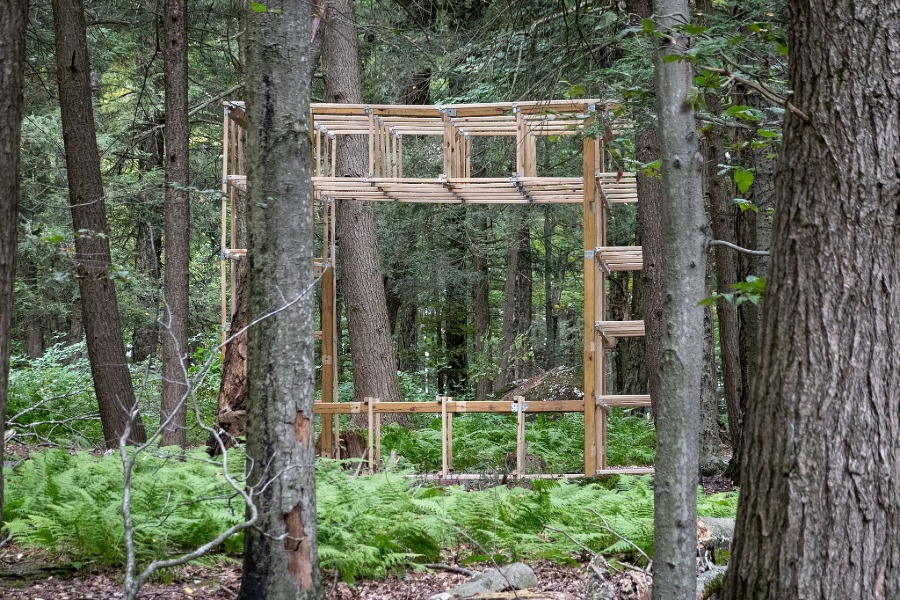
A project designed by Gibbs College of Architecture faculty member Austin Lightle has been selected for BuildFest 2026, a national art and architecture festival held at the Bethel Woods Center for the Arts in New York, on the historic grounds of the 1969 Woodstock Music Festival.
Two Christopher C. Gibbs College of Architecture alumni are helping shape recommendations that could influence affordable housing design and construction across Oklahoma.
The University of Oklahoma Libraries recently welcomed Carl Siegel as an Architecture Librarian and Archivist and Assistant Professor. In his role, Siegel supports students, faculty and staff across the Gibbs College of Architecture while also serving as archivist for the American School of Architecture Archives.