OU Architecture lecturer René Peralta is featured in the University of Houston’s Gerald D. Hines College of Architecture exhibition Is Housing Still Housing? Houston’s Single-Family House through his firm Generica Architecture, along with firm co-director Monica Fragoso, OU Architecture instructor Andrew Stone, and 3rd-year architecture student Ty Brown-Field. The exhibition is on display from March 3rd to April 11th.

A model of Generica Architecture's design.
The exhibition challenges designers to rethink the evolving definitions and frameworks of housing and development. Designers consider whether the the long-standing parameters that shape what is possible in residential architecture have shifted so significantly that the term housing, particularly the single-family home as a distinct building type, financial asset, and economic site, still serves as a productive model for shaping the future of shelter.
Through Is Housing Still Housing?, the exhibition questions whether the existing nomenclature remains relevant or if new terminology is needed to address the broader climate, economic, and social forces reshaping shelter in the coming decades. It questions whether innovation still takes place within existing structures, or if entirely new scales and methods of housing production are needed. As metropolitan land prices rise and job markets fluctuate, the exhibition invites reflection on whether traditional housing models remain viable or if alternative approaches must be explored.

Side view of Generica Architecture's model.
Participants are encouraged to re-think Houston’s housing typologies by considering a range of “ecologies”—socio-economic resilience, technology, responsive systems, extreme climate change, energy, health, and relevant housing policies. This exhibit has been conceived as a new chapter in the 1998 Houston, Texas based project 16 Houses: Owning a House in the City. It is, however, a fully new start.
Generica Architecture's featured design envisions Houston’s neighborhoods as interconnected, adaptive ecosystems where resilience and equity shape the future of housing. The project introduces modular, self-built housing systems that utilize locally sourced materials. This approach fosters sustainability and adaptability while addressing climate vulnerabilities. Designed for collective living and resource sharing, the homes incorporate a ground level that accommodates flooding and integrates community-oriented programs like small businesses and urban farming. Houston can provide more inclusive, sustainable living spaces through localized, community-driven construction.
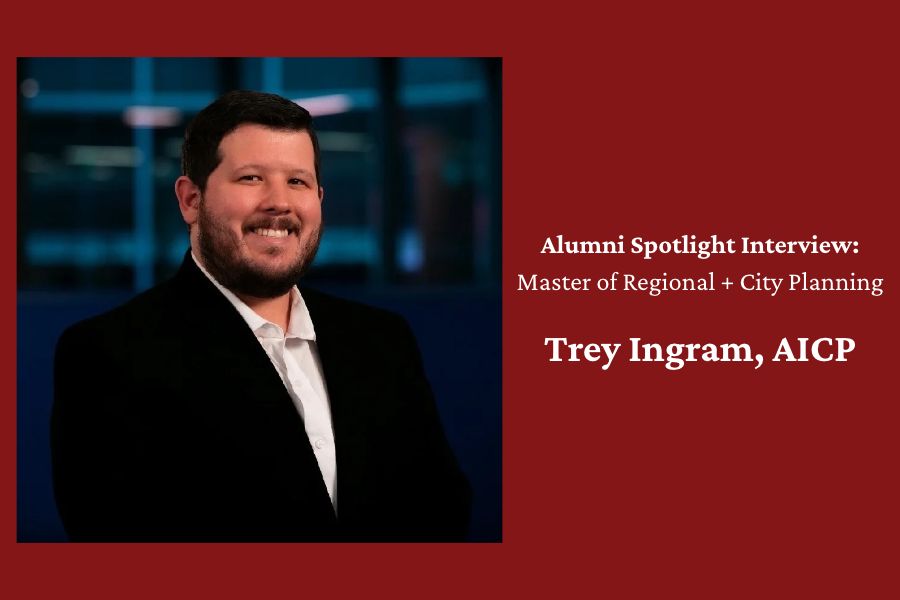
Planning, Landscape Architecture, and Design (PLAD) alumni Trey Ingram, AICP recently spoke with current PLAD student and graduate media assistant Molly Strobel to share his experiences with the Regional and City Planning program and current work with the Toyota Mobility Foundation.
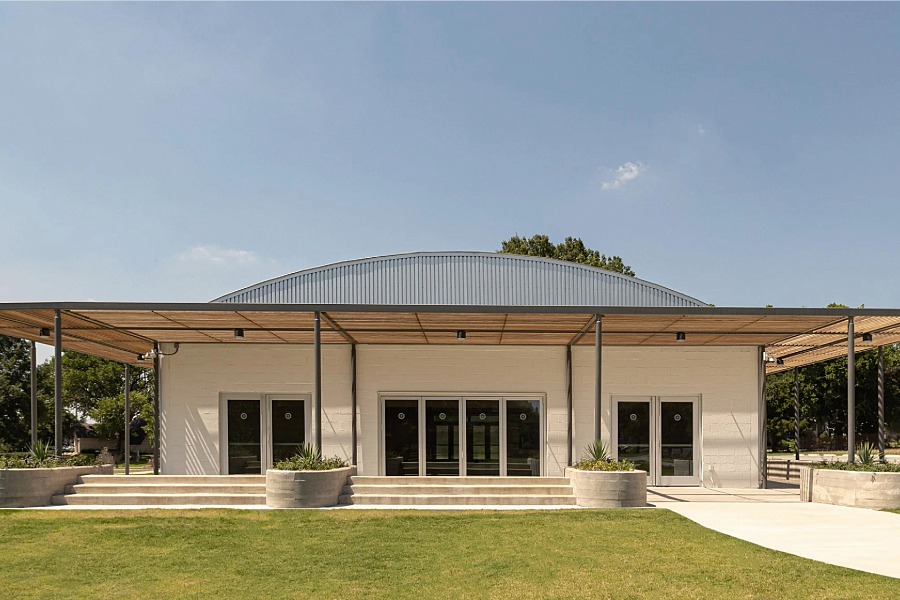
Christopher C. Gibbs College of Architecture assistant professor Amy Leveno and Mark Leveno, co-founders of OFFICIAL Design, have received a 2026 AIA Central States Region Design Award for the firm’s Granger Annex Community Center project in Garland, Texas.
Construction Industry Speaker Series welcomed Stephen Evans from the Oklahoma City National Memorial & Museum to give a lecture on better conversations and relationship building.